

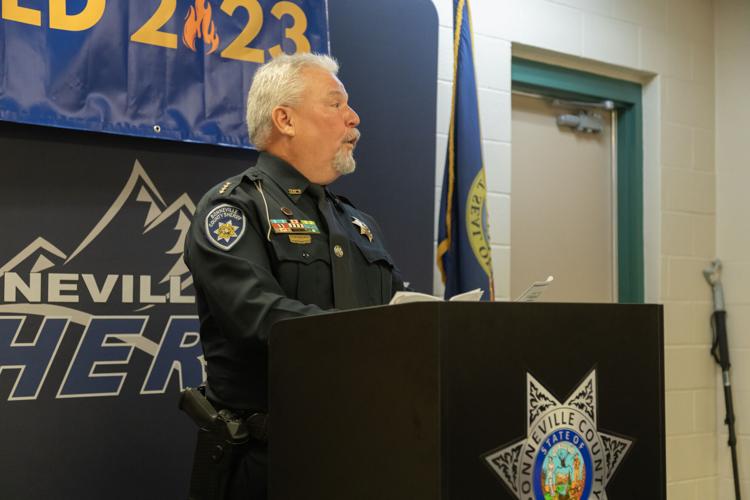

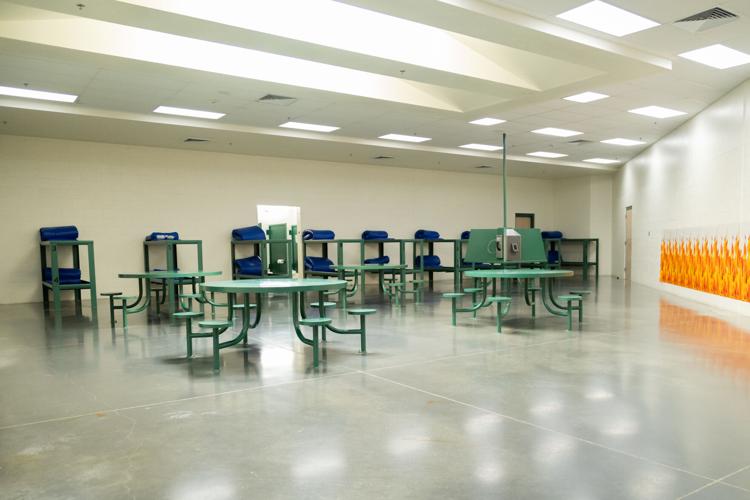

Bonneville County will be the first in Idaho and the eighth state in the nation to implement the IGNITE program in its jail.
The Inmate Growth Naturally and Intentionally Through Education is a National Sheriff’s Association initiative.
According to Bonneville County Sheriff Same Hulse, funding for this program comes from inmates’ commissary accounts from when they get money deposited to their accounts. Technology for this is provided with tablets that are funded through the commissary funds.
Hulse said the IGNITE program started a couple of weeks ago by getting the Financial Advocates of Southeast Idaho GED program in the facility and the Education Over Obstacles, a free program, servers in the jail.
“That’s really what IGNITE is about is recognizing that people do possess the ability to change, and it’s about reducing recidivism in our communities,” Hulse said.
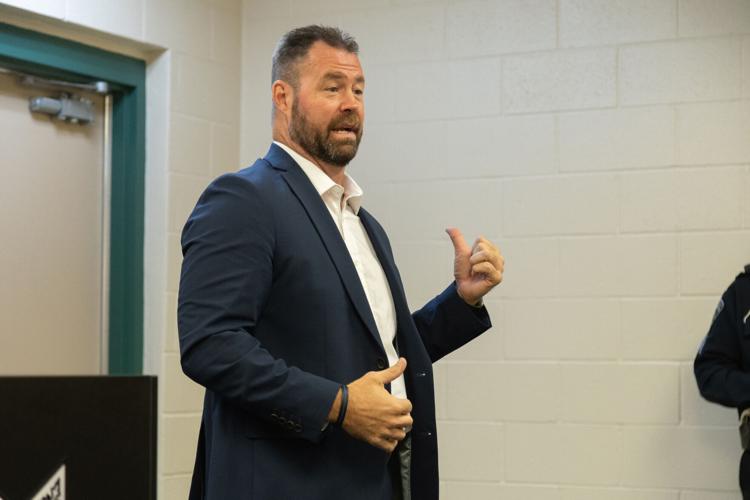
Sandusky County, Ohio, Sheriff Christopher Hilton, who has become an advocate for this program, visited Flint, Michigan, to see what Genesee County Jail started and the goal of the program for its inmates.
“This is a rough statistic that covers the country, but 90% of the people in this facility will be your neighbors when they are released. What are we doing to make them better people?” Hilton said.
Hilton said the program can be whatever the sheriff or the IGNITE coordinator wants.
“So some of the things that we teach inside my facility. Some of it is basic numbers and letters and colors,” Hilton said. “We do substance abuse and mental health education, which have been wildly successful.”
Hilton said how IGNITE will work is completely voluntary, and the goal is to get more inmates to come to those classes. The other part is reinforcing everything the inmates do positively.
“Every time they do something positive, do what they’re supposed to do, you do something for them,” Hilton said. “It can be something as grandiose as we’re going to have a pizza party on Friday night.”
Some of the other programs that Hilton has done in the Sandusky County Jail have been parenting classes, yoga, financial literacy, how to grocery shop and how to cook.
“These are basic life skills that most people in this room take for granted,” Hilton said. “When you’re teaching them that stuff, and you’re telling them good job and guess what, you’re going to get a certificate or if you’re going to graduate at the end of this. It’s amazing.”
According to Hilton, the program aims to end a generational incarceration cycle through a culture change but noted that not everyone will want to go through the program.
“You can’t save everybody, but you’ve got to give everyone the same opportunity,” Hilton said.
Anne Johnson, administrator for FASI GED, which is part of Financial Advocates of Southeast Idaho, said the organization can now come twice a week and offer General Educational Development test classes to inmates.
“The sheriff wants a start-to-finish GED program where he’s in the process of setting up Bonneville County Jail as a certified GED Testing Center,” Johnson said.
Johnson said the only other certified GED testing center in this area is at the College of Eastern Idaho.
Another part of the program is allowing those who are done with their sentence to continue getting their GED once they’re out of jail.
“People need education. If you have addiction issues, if you are now a felon, or have a criminal record, you have to have something to help you feel like life is not going to be completely hopeless anymore,” Johnson said.

(0) comments
Welcome to the discussion.
Log In