

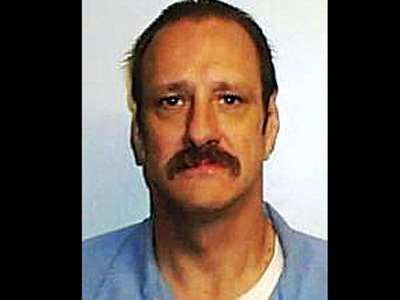

A district judge denied a motion to quash the death warrant issued in the case against former Blackfoot resident Richard A. Leavitt on Wednesday — just two weeks before the 53-year-old man is set to be executed for the 1984 murder of Danette Elg, who was found stabbed multiple times and sexually mutilated.
Leavitt’s attorneys, Andrew Parnes and David Nevin, filed the motion asking Judge Jon J. Shindurling to withdraw the death warrant due to pending federal litigation in the case and their concerns about the way the warrant was issued. But the judge denied their motion following a teleconference hearing on Wednesday.
“Due process has been had in this case,” Shindurling said, adding that he doesn’t believe he has any authority to stop the execution at this point.
The judge’s decision means that the June 12 execution date still stands, but Leavitt’s attorneys aren’t giving up yet.
They have already filed a petition with the Idaho Supreme Court in hopes of a judgement that will require Shindurling to vacate the warrant. There is also a possibility that they could request an injunction in federal court.
During the conference on Wednesday, Nevin expressed concerns about pending federal litigation, which he feels should be resolved before an execution date is set. The defense attorneys have asked a federal judge to reexamine a claim alleging ineffective assistance of trial counsel in light of a recent U.S. Supreme Court ruling they feel applies to this case.
Nevin also argued on Wednesday, that the death warrant was issued inappropriately since Deputy Attorney General Lamont Anderson represented the state in obtaining the warrant rather than Bingham County Prosecutor Scott Andrew, who has represented the state in the case. He also said that Leavitt should have had counsel present at the meeting that took place between Anderson and Shindurling when the death warrant was signed.
But Scott Andrew argued that a recent change in Idaho law negates the requirement that the county prosecuting attorney make the application for the warrant. And since the state was required to issue the warrant based on the fact that the Idaho Supreme Court has affirmed the death sentence and the United States Court of Appeals for the Ninth Circuit has issued a mandate, he said that the meeting between Anderson and Shindurling was strictly ministerial.
Shindurling agreed with that point, and said counsel didn’t have a right to attend the meeting that wasn’t a hearing.
“There is no hearing required (to set an) execution date,” Shindurling said.

(0) comments
Welcome to the discussion.
Log In