

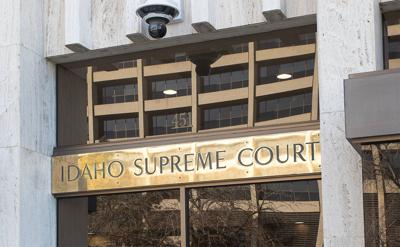
BOISE — The Idaho Supreme Court has heard oral arguments in a case that will determine how Idahoans’ November ballots present an initiative to expand abortion access in the state.
The case arrived at the Supreme Court this week after Idahoans United sued Idaho Attorney General Raúl Labrador and Idaho Secretary of State Phil McGrane over ballot language used for the Reproductive Freedom & Privacy Act, or this year’s Proposition One. As constitutional officers for the executive branch, they are jointly responsible for creating the yes and no initiative statements that voters see in November.
The group behind the initiative has alleged that “misleading” language has been employed in statements explaining what a yes or no vote on the ballot constitutes. The group has held that the attached “no” statement has typically been 11 words long and read “A No vote would make no change to current Idaho law.”
The “No” language drafted by the state is as follows:
A “no” vote opposes creating a right to reproductive freedom and privacy, declaring that the state can regulate abortion after the point of fetal viability, except in cases of medical emergency, and stating that the government can not interfere with personal decisions about reproductive healthcare.
The “Yes” language is of a similar length:
A yes vote would create reproductive rights, including a right to abortion before a fetus’s ability to survive and after a fetus’s ability to survive in cases of a medical emergency and provide liability protections for healthcare providers.
Melanie Falwell, the executive director of Idahoans United, said last week the group was unaware of the language until Aug. 31, when the voter pamphlet for November had already been sent to print.
According to court documents, the language needs to be finalized by Sept. 11 in order to reach military and overseas voters in time.
As grounds for their case, Idahoans United has pointed to existing Idaho election statute outlining ballots “shall include a clear and concise statement as to the effect of a ‘yes’ or ‘no’ vote.”
The group has requested language more similar to some past initiatives, which say a vote in favor would change existing law while a vote against would make no change to existing law.
“These statements must be clear and concise,” Jennifer Aiko, an attorney representing Idahoans United, said. “The proposed statements are neither.”
Pointing to the “no” statement in particular, Aiko said the statements “recasts” the current lack of exception for abortion in Idaho law in cases where the mother’s health is at risk when Idaho law only permits abortion in cases to prevent death.
Justice Gregory Moeller responded that it seemed to be a “waste of time” to have associated statements that simply say “yes” means a proposition passes and “no” means it fails, referring to the preferred ballot language proposed by Idahoans United.
Echoing this reasoning, Justice Colleen Zahn noted that while a yes vote would “obviously” indicate favor for the proposition, it was less obvious how simply saying “yes means pass” adequately acquainted voters with the effects of their initiative vote.
Referring to the prior statute, Justice Robyn Brody questioned whether the legislature’s aims were being met when amending the statute in 2003 in what was an effort to address ballot confusion.
With the appellants’ arguments presented, attention turned to attorneys representing Labrador and McGrane, who contended the drafted language was clear, concise and operating in service of informing voters on the effects of their vote.
Zahn, however, described the yes and no statements as being a “partial” encapsulation of the effects of a no vote, but “not a complete statement.” This, Zahn said, is due to the no-vote language leaving out that practitioners can be subject to felony charges and license discipline for violating Idaho’s current abortion laws and omitting the current lack of exception for the health of the mother.
“The primary command of the statute is to inform the voters of the effects,” Zahn said. Given this, Zahn said she couldn’t see how a “clear and conscience” objective was met when the ballot language only partially disclosed the effects of a vote.
Though Deputy Attorney General Candice Spector said the yes and no statements drafted by the executive officers were attempting to include “as much language as they could,” Moeller noted the only thing giving the law teeth are the felony provisions that weren’t mentioned despite the executive branch being tasked with enforcing and preserving the law.
To make his case, Moeller referred to the attempted marijuana ballot initiative from earlier this year. If ballot language didn’t make explicit a “yes” vote would make possession of marijuana no longer illegal, “it wouldn’t make any sense,” he said.
James Craig, who serves as the attorney general’s chief of civil litigation and constitutional defense, responded that the cascading effects of the abortion initiative and the variety of laws passed in the state pertaining to abortion makes an all-encompassing, concise statement on the effects of a vote “impossible” in this case.
Referring to the case made by Idahoans United, Moeller questioned why the appellants’ approach was not wiser, as it doesn’t “pick and choose” on effects in favor of neutrality.
In April of last year, Idahoans United went before the Idaho Supreme Court to challenge ballot language around the initiative pertaining to its ballot title and stated fiscal impact. That case saw the court find there were four distinct changes brought by the initiative: a right to abortion before fetal viability, a right to abortion after viability to protect the mother’s health, protections for healthcare providers and a broad right to freedom in making reproductive healthcare decisions.
Zahn questioned how those four traits were adequately being addressed in the language as the “no” statement in particular doesn’t provide an indication that health practitioners will still be subject to felony charges for violating current abortion law.
Craig said it was “on the voter” to read through both the yes and no statements to be fully informed of the effects of their vote. Moeller responded, saying that, in practice, it is often the case someone only reads whichever statement they initially agree with and not read further as, unlike for jury instructions, voters aren’t given a ballot and instructed to read everything.
In closing, Chief Justice G. Richard Bevan returned to the argument of “impossibility” brought forward by the state. Aiko said disagreement remained as the prior litigation of the ballot initiative saw a similar argument raised and resulted in the court ordering revisions.
Following the hearing, Melanie Falwell, the executive director of Idahoans United, expressed disappointment with the matter being litigated close to when ballots are due to be printed. Falwell said the core aim of litigating the matter is “seeking clear language for Idaho voters, nothing more.”
She also reiterated the disagreement maintained by Aiko, that requiring the state to have all-encompassing yes and no statements was an impossibility.
“I think that’s a great argument for it would make no change to Idaho law,” Folwell said, in reference to the group’s preferred ballot language.
In a statement issued after the hearing, Labrador said the intent of the yes and no statements is to inform on the effects of their vote.
“We do not tell Idahoans how to vote; we tell them what their vote will do,” Labrador stated. “The yes statement reflects the sponsors’ own initiative language, and the no statement reflects Idaho law as it stands today. The sponsors are entitled to advocate for their initiative, but they are not entitled to dictate the official ballot language.”
With the Sept. 11 deadline for final ballot language in place, a decision from the court is expected on the matter in the next week.

(0) comments
Welcome to the discussion.
Log In