



BOISE — The House and Senate adjourned for the year at 4:20 p.m. Thursday.
This ends a session that went more than two weeks longer than originally hoped, much of which was marked by fighting over what sort of restrictions to put on the Medicaid expansion initiative voters passed last year and whether to raise the threshold to put an initiative on the ballot.
A bill to request federal waivers to add work requirements and put other restrictions on Medicaid expansion was signed by Gov. Brad Little earlier this week. However, Little also vetoed a bill to raise the initiative threshold, and a last-minute attempt to pass at least some of it as four separate bills didn’t go anywhere in the last days of the session.
The 95-day session was the longest since 2009 and the third-longest in the last 26 years.
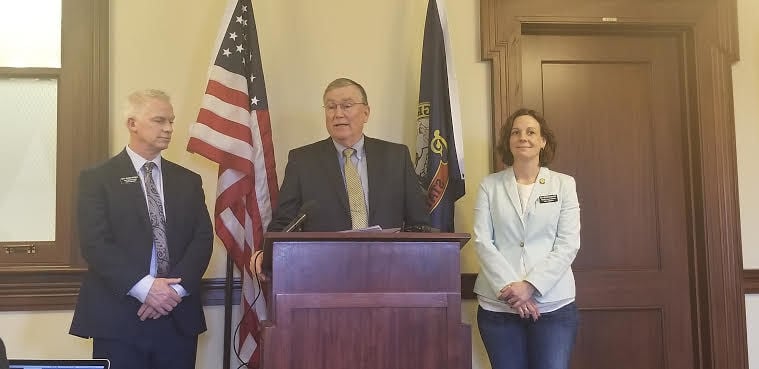
“In all seriousness, I don’t feel like we wasted time this year,” House Speaker Scott Bedke, R-Oakley, said at a news conference right after adjourning.
“We had a slate of contentious, complicated issues. We left a few things on the table, arguably because of that complexity.”
Lawmakers ended the year without passing, as they have in past years, a bill codifying the administrative rules legislators reviewed earlier this year. That means the rules will expire on July 1. Little can re-propose them as temporary rules, but they will then be reviewed by the Legislature again next year.
House Republicans had wanted to amend the rule-making process to require both chambers of the Legislature to approve new rules. Only one chamber needs to approve a new rule now, so rules can take effect even if one chamber rejects them. However, the Senate didn’t hear any bills on changing the process.
Bedke said that while letting the state’s administrative rules lapse wasn’t his first choice, the attorney general’s office told him earlier Thursday that the rules approval process the state has been using violates a 2016 constitutional amendment.
And in a sense, this means the House will get what it wanted come January, as just one body of the Legislature can kill a temporary rule. Senate and House members plan to meet after the session to discuss what the process will look like going forward.
“This gives us one time to reset the clock and make sure our statutes are constitutional,” said Majority Leader Rep. Mike Moyle, R-Star.
The Legislature’s various committees spend much of the first half of the session reviewing new administrative rules proposed by various state agencies, and passing the bill codifying them is usually one of the final acts of the session. While most rules are fairly mundane or technical, a few end up being hugely controversial. This year, for example, a new rule to require students entering 12th grade to be vaccinated for meningitis ran into a lot of opposition and barely passed.
Assistant Minority Leader Rep. Ilana Rubel, D-Boise, said the House Republicans’ action means that the work done in the rules review process was wasted and that the state will now have to spend money re-posting the same rules.
“It is unfortunate but perhaps fitting that we are leaving the building today on one final note of failure by the majority party,” she said.
On the last day of the session, the House voted unanimously to not agree with the Senate’s amendments to a bill that would have legalized interstate transport of hemp, killing it for the year. One of the bill’s sponsors Rep. Judy Boyle, R-Midvale, said hemp could still be legalized next year, so long as the state accepts the federal government’s plan for regulating hemp by next session. However, the Idaho State Board of Pharmacy would also need to remove hemp from Idaho’s Schedule 1 controlled substance list.
Several budget bills passed on the last day, including one to pay to apply for federal waivers for Medicaid expansion and to fund work requirements. The Senate voted down an appropriations bill to buy back a building across the street from the Capitol the state sold in 2016 and also killed a bill that would have provided funding to remodel the ground floor of the Capitol to provide House members with private offices.
“The constituents in my district would be very disappointed to learn that elected officials used their tax dollars to build themselves nicer offices that will be used three months out of the year,” said Sen. Ray Mosman, who was filling in for Dan Johnson, R-Lewiston. “This is a very self-serving and unnecessary bill.”
Bedke said it was a productive session despite the fighting, pointing to water legislation, increased education spending including teacher pay raises and early childhood literacy funding, work on reducing regulations and Medicaid expansion.
“There’s no more important thing we could be doing than laying the groundwork for public schools in Idaho,” he said.
Bedke and the Republican leadership defended the Medicaid expansion work requirements bill. While the feedback at public hearings overwhelmingly opposed it, they said this wasn’t reflective of what many of them heard in their more rural and conservative districts.
“Just because it’s said in the auditorium in Boise or Ada County doesn’t necessarily reflect the feelings in the greater part of the state,” said Majority Caucus Chairwoman Rep. Megan Blanksma, R-Hammett.
Rubel praised the many people who worked to get Medicaid expansion passed and who came to the Capitol to testify against the Medicaid “sideboards” and initiatives bills.
“I cannot remember a session that did more damage to the faith of people in their government or that was so consistently marked by the Republican majority’s total disregard for the will of the people of Idaho,” Rubel said.
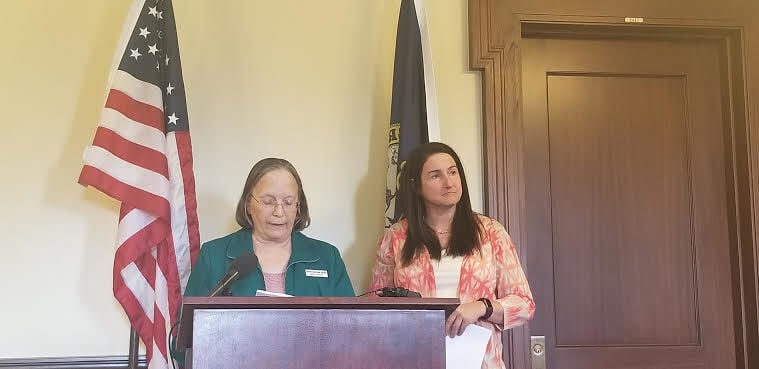
Rubel and Sen. Maryanne Jordan, D-Boise, did point to a few Democratic-sponsored bills that passed as bright spots, including ones to extend the time frame for employees to file wage theft claims, to extend workers’ compensation coverage for first responders with psychological injuries and to increase the testing of sexual assault kits.
“We are a super-minority of seats in this Legislature, but we have driven a disproportionate amount of legislation that actually helps Idahoans,” Jordan said.
As the Senate prepared to adjourn, Sen. Chuck Winder, R-Boise, said he was proud to be majority leader. He highlighted some of this year’s achievements, including Medicaid expansion and education funding.
“It was tough. ... It was hard,” Winder said. “But I think we moved the ball forward, and I think probably 60,000 to 70,000 people that weren’t covered before now will be covered. I think we did accomplish a lot of good things, and I’m proud of each of you.”
Senate Minority Leader Michelle Stennett, D-Ketchum, said she always reminds herself that Idaho senators, in everything they do, try to come from a place of heart, respectfulness and integrity.
“Even if we disagree. ... I think that’s why we are the deliberative body that we are,” Stennett said. “In the end, we are all friends, and we try to the best of our ability to understand the positions we come from.”
Idaho Press reporter Savannah Cardon contributed.


(0) comments
Welcome to the discussion.
Log In