

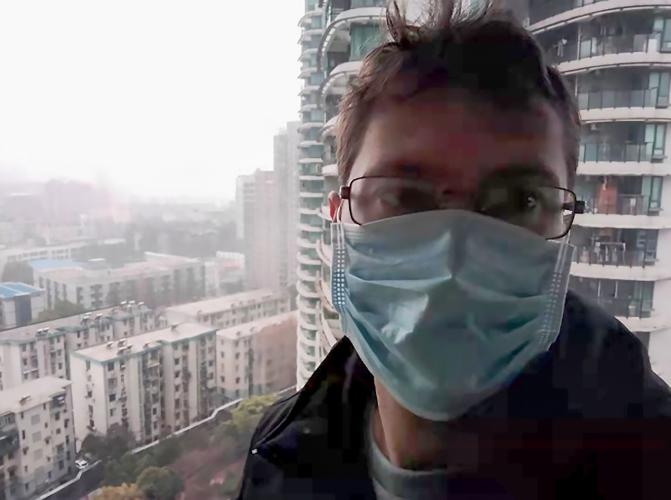


As an Army veteran with tours in both war-torn Iraq and Afghanistan under his belt, Spencer Case is no stranger to international travel in less-than-ideal conditions.
But even for the experienced world traveler, getting out of the epicenter of the deadly coronavirus outbreak — a feat that required an incredibly trusting taxi driver, navigating military roadblocks and 17 continuous hours aboard a cargo plane – was a harrowing ordeal.
“I didn’t have any impression that this would be as relevant to my life as it has been,” Case, a Pocatello native and graduate of Pocatello High School and Idaho State University, said.
After receiving his doctorate in 2018 from the University of Colorado Boulder, Case accepted a post-doctoral position of international research fellow at the Wuhan University School of Philosophy in Wuhan, China. He arrived in Wuhan, the capital city of the Hubei Province and home to 11 million people, on Sept. 17, 2019.
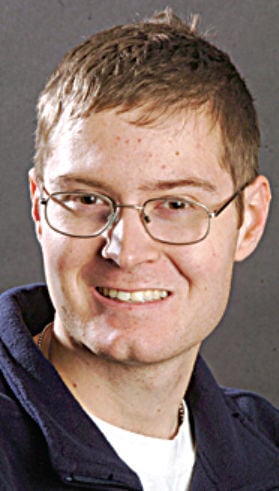
Spencer Case
Case, age 34, had no idea at the time that Wuhan would soon make worldwide headlines for being the place where the deadly coronavirus got its start. As of Saturday the virus had killed over 700 people including one American.
While Chinese authorities first alerted the World Health Organization about the first cases of the virus on Dec. 31, it wasn’t until mid-January that Case began to notice the effects of the outbreak on daily life in Wuhan.
“I don’t even remember when I first heard of (the coronavirus),” Case said. “It was sort of on background.”
Until it got personal.
Case’s Chinese girlfriend fell ill last month. Though she tested negative for the coronavirus, she advised Case to avoid public transportation during the morning and evening rush hours.
Case said that soon after his girlfriend got sick he walked into a Wuhan cafe and the employees there were taking everyone’s temperature as a precaution against the virus.
“That’s not a normal thing,” Case said.
As the number of coronavirus cases grew in Wuhan, so too did the conversation and collective worry there about the outbreak, which had been traced back to a Wuhan seafood market.
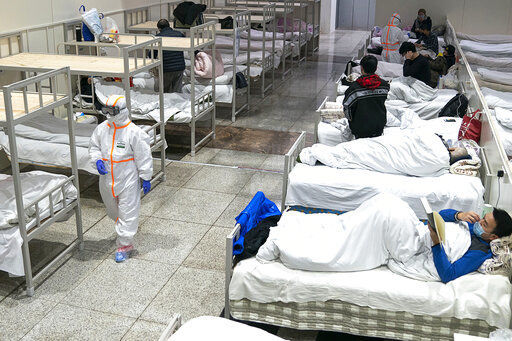
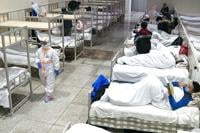
A medical worker in a protective suit walks by patients diagnosed with the coronavirus on Wednesday at a temporary hospital set up inside an exhibition center in Wuhan, China.
Desperate to curtail the out-of-control spread of the virus — which was infecting people in several countries including Japan, Thailand, South Korea and the United States — Chinese authorities implemented a city-wide lockdown of Wuhan on Jan. 23.
Wuhan residents were informed via a 2 a.m. alert from the Chinese government that all public transportation services in the city would be suspended and the Wuhan airport and all of the city’s rail and bus stations would be closed to the public. Anyone wanting to evacuate themselves from Wuhan had eight hours to do so and after that no one would be able to leave the city without Chinese government permission.
Case initially planned on remaining in Wuhan and riding out the coronavirus chaos. After being woken up by the 2 a.m. alert and concluding he didn’t have nearly enough time to arrange a flight back to the United States anyway, he decided to stay the course and remain in Wuhan.
“I haven’t been sick in 10 years,” Case said. “I doubt this thing would have killed me.”
While official evacuation numbers haven’t been released, Case estimates that about 2 million Wuhan residents evacuated themselves from the city in the eight-hour period between the 2 a.m. alert and the start of the city-wide lockdown.
Following the travel restrictions being implemented in Wuhan, many countries were able to work with China’s government to arrange for charter flights to assist their citizens in leaving the city.
Case found out via Chinese social media that there was a potential flight for Americans in Wuhan to get back to the United States. He obtained instructions from the same Chinese social media site on how to contact the American embassy in Beijing to be added to the list of potential evacuees on that flight.
Case reconsidered his decision to remain in Wuhan, ultimately choosing to return to the United States to spare his family in the Pocatello area further worry about his well-being.
He emailed the U.S. embassy in Beijing to request his name be added to the list for the flight back to America and anxiously awaited confirmation.
Case said he only ventured out of his Wuhan University-area apartment once after the lockdown went into effect, accompanying an American colleague to a market to purchase groceries on Jan. 26.
Though residents weren’t forbidden to walk freely around Wuhan, very few chose to do so after the lockdown.
“I think people were all afraid to leave their homes,” Case said. “It was eerily quiet.”
Case finally received word from the U.S. embassy in Beijing on Feb. 3 that he would have a seat on the flight back to the United States.
However, he would have to find one of the few taxi drivers authorized to operate during the lockdown so he could get through the several military roadblocks to get to Wuhan’s airport.
In addition, he would have to provide the Chinese government with the license plate number of the taxi that would be transporting him as well as the name and National ID number of the taxi driver.
Compounding the difficulty of providing this information in advance was the fact that it was unclear what date and time the plane would be arriving to fly him and the other Americans back to the U.S.
Case was worried because even if he got the taxi driver’s information, how could he be certain the driver would be available when the plane arrived.
With the help of his girlfriend, Case found a local driver who was authorized to operate during the lockdown. The driver was also willing to provide his National ID – the Chinese equivalent to a Social Security number – over the phone so Case could pass it along to the U.S. embassy in Beijing.
In the end everything worked out and Case arrived via taxi at the Wuhan airport at 5 p.m. on Feb. 4. He waited at the airport with 138 other anxious Americans for what felt like an eternity before finally taking off in a cargo plane at 5 a.m. on Feb. 5.
Case said he and the other Americans had their temperatures taken multiple times at Wuhan’s airport and twice while the cargo plane was in flight.
The plane touched down at Travis Air Force Base in California about 17 hours later.
Case will remain at Travis Air Force Base under quarantine for a minimum of two weeks, with additional quarantine time possible should he start to display any symptoms of the coronavirus. Case says he doesn’t think he contracted the virus and never felt ill during his entire time in Wuhan.
Despite everything going on right now in Wuhan, Case intends to return to the city once the lockdown is lifted and the coronavirus outbreak is contained.
“I’m hoping to get back in March sometime,” Case said. “I’m hoping they’ll have it all under control by then.”


(0) comments
Welcome to the discussion.
Log In