

Area hospital offers new procedure
BLACKFOOT — Bingham Memorial is the first hospital in the Intermountain West to offer a new service for patients who suffer from gastroesophageal reflux disease, according to a news release.
The new Linx procedure involves a surgery to install a tiny device that was recently approved by those with the U.S. Food and Drug Administration.
“For the first time, patients in the Intermountain West will have access to intense relief from reflux disease through the Linx procedure, a minimally invasive laparoscopic technique,” said Louis Kraml, the chief executive officer of Bingham Memorial Hospital. “Patients suffering from reflux typically use medications that often times don’t fully resolve the problem.”
Gastroesophageal reflux disease, or GERD, is a chronic disease that occurs when the lower esophageal sphincter muscle does not close properly, is weak, or relaxes when it shouldn't and stomach contents back up into the esophagus.
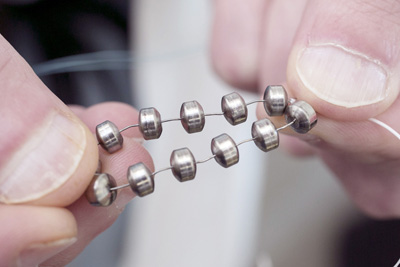
“Symptoms of reflux disease include heartburn, regurgitation and acid reflux, resulting in chronic pain and injury to the esophageal lining, which can later lead to Barrett’s esophagus, a pre-cancerous condition caused by reflux disease,” said Dr. W. Kurt Birkenhagen, who will perform the new procedure at Bingham Memorial Hospital. “The Linx System device is implanted in the lower esophageal sphincter. The titanium beads contain magnetic cores that prevent the opening of the esophageal sphincter by mimicking the body’s normal function.”
A clinical study published in the February edition of the New England Journal of Medicine discusses the procedure, which will be available to Bingham Memorial patients beginning April 24.
On average, seven percent of individuals in the U.S. suffer from reflux disease.
“This new advancement revolutionizes the surgical treatment of reflux disease,” Birkenhagen said. “It provides a less invasive and effective surgical option for patients suffering from this condition.”
He continued: “For nearly 40 percent of reflux disease patients, medications are not a complete solution, resulting in persistent symptoms that diminish the patient’s overall quality of life. It is my opportunity and passion to provide successful treatment options designed to improve the quality of life of my patients.”
The same clinical study reports that 93 percent of patients that underwent the Linx procedure reported a significant decrease in the need for medication with 100 percent reporting the elimination of severe regurgitation.
The Linx device, made by Torax Medical Inc., of St. Paul, Minn., is a ring of titanium beads with magnets inside. Doctors place it around the weak muscle at the base of the esophagus in a half-hour operation using a scope and "keyhole" incisions in the belly. The ring reinforces the weak muscle to keep it closed, yet is flexible and expands to let food pass when someone swallows. The ring comes in multiple sizes; it is about a half-inch in diameter and expands to about 1.5 inches. People don't feel it once it is implanted.
The device costs $5,000; the operation can run $12,000 to $20,000 depending on hospital charges, said Dr. John Lipham, a surgeon who offers it at the University of Southern California and at Hoag Memorial Hospital Presbyterian in Newport Beach. Many insurers cover it for patients who are not helped enough by antacid medicines.
“It is a clever device,” said another doctor who has used it — Dr. Donald Castell, a gastroenterologist at the Medical University of South Carolina in Charleston. “The magnets just bolster a little bit of the pressure that is normally there and help seal off the stomach juices.”
After having the magnetic ring implanted, acid measured in the testers’ throats greatly decreased. Quality of life improved substantially for 92 percent, and within one year, 86 percent no longer needed acid-lowering medicines.
The most frequent side effect was difficulty swallowing, which occurred in 68 percent of patients right after surgery. That dropped to 11 percent after one year and 4 percent after three years.
Six of the 100 had to have the device removed. In three it was because swallowing problems persisted. Other problems prompted removal in the others.
The device is available so far in 24 states.
For more information on the Linx system visit www.binghammemorial.org or dial 208-239-8008.
The Associated Press contributed to this story.

(0) comments
Welcome to the discussion.
Log In