

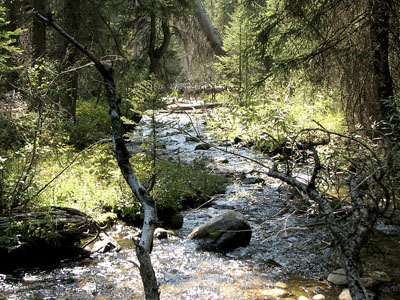
With the establishment of the Little Lost River Bull Trout Recovery Unit in 1999 a plan started to restore many of the bull trout’s lost pathways in and out of, as well as along the Little Lost River with the hopes of giving the endangered species a fighting chance.
The unit was a cooperative effort of advocacy agency Trout Unlimited, the Idaho Department of Fish and Game, the U.S. Department of Fish and Wildlife, the U.S. Bureau of Land Management and the U.S. Forestry Service. Much of the Little Lost River’s nearly 50 miles of waterway rests within the Salmon-Challis National Forest and BLM land.
The project, which took about eight years from inception to completion, was hailed in 2007 as a national model of how to get such results through cooperative efforts.
A little more than five years since the project’s completion, however, Jon Marvel, executive director of the Western Watersheds Project in Idaho, says the biggest obstacle to the bull trout’s long-term viability — animals grazing along the Little Lost River — hasn’t been addressed sufficiently. And he’s suing to get it done.
“The ranchers show no interest in changing their practices,” Marvel said. “It’s very negative for fish habitat.”
In a move it made seeking to protect the bull trout in the Little Lost River and its tributaries, The Western Watersheds Project filed suit this week against the U.S. Fish and Wildlife Service and the U.S. Forest Service, seeking “declaratory and injunctive relief for ongoing violations of the Endangered Species Act relating to livestock grazing in the Little Lost River watershed...”
The suit claims that three livestock grazing allotments within the Salmon-Challis National Forest and the BLM’s Upper Snake Field Office jurisdiction, are violating the Endangered Species Act because of the destruction that livestock, primarily cattle, are doing to the Little Lost River.
“The three grazing allotments at issue in this case comprise the habitat for over 95 percent of the remaining bull trout in the Little Lost River watershed,” the suit says. “Livestock wade within the streambeds of the Little Lost River and its tributaries and graze along streambanks, including during fish spawning and incubation periods. This grazing harms bull trout in many ways, including via direct impacts from trampling fish redds (nests), disturbing or displacing juvenile fish, and harassing adult fish during spawning, as well as habitat degradation from trampling streambanks and removing riparian vegetation.”
From 1999 through 2007, the Bull Trout Recovery Unit worked when needed with ranchers along the Little Lost River to restore a number of the river’s tributaries, including Wet Creek, Camp Creek, Warm Creek and Badger Creek.
The restoration of Badger Creek, which had become little more than an irrigation canal, was hailed by the National Fish Habitat Board in 2007 as one of the “Ten Waters to Watch.”
The restoration of bull trout movement within the Little Lost River included the installation of diversion barriers, to keep the bull trout from going through irrigation diversions while on spawning migrations.
Scott Yates, based in Trout Unlimited’s Bozeman, Mont., office, and director of the TU’s Western Water Project, often confused with Marvel’s operation, said ranchers in the Little Lost River Valley, where the river is located, have been cooperative.
“We wouldn’t have been able to do the fish passage work we did without the land owners working with us,” Yates said. “Riparian health is important, but working with ranchers on creative ways to make that happen is the most important thing.”

(0) comments
Welcome to the discussion.
Log In