

It is truly an understatement to say that the events of 9-11 should and will never be forgotten. Soon after the collapse of the twin towers that were the World Trade Center on September 11, 2001, the Global War on Terrorism began. It continues today.
Many young men and women from Southeast Idaho answered the call to service of our country in the various campaigns in the Middle-East that were initiated to combat terrorism and to do battle with the governments and organizations that support global terrorism. Many have died and many more have returned home forever transformed by the actual and vicarious traumas of war they have experienced. And of those who returned home, many have turned to substance abuse to cope with the physical and emotional injuries they suffered.
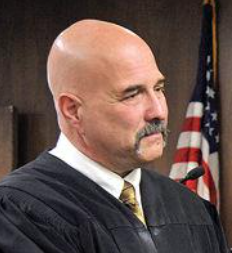
It has been my privilege to preside over the Sixth District Veterans Treatment Court (the VTC) since its inception in April 2012. I was but one of many community members who assembled to create our VTC. The creation of the court was driven in large part by the struggles of our service men and women who returned home after taking part in one or more campaigns in the Global War of Terrorism and had received criminal charges related to substance abuse.
The mission of the VTC is to create and maintain a coordinated community response through collaboration with the veterans’ benefits delivery system and the criminal justice system. The court provides a means to successfully rehabilitate veterans by diverting them from the traditional criminal justice system and providing them with the tools they need to lead productive and law-abiding lives through treatment, rehabilitative programs, positive reinforcement and judicial monitoring. We offer veterans assistance, assess their needs, manage their care and help them solve their problems.
The paragraph set forth above is and has been our mission statement since April 2012 when we began operation with our first two veterans. The VTC is held in Pocatello, Idaho, the largest population center among the six counties in our judicial district: Bannock, Power, Caribou, Franklin, Oneida and Bear Lake counties. We are a multijurisdictional VTC serving these six counties covering 6732 square miles. On occasion we have taken in participants from outside of our judicial district.
We have continuously enjoyed the assistance of outstanding community partners, near and far. The VA has been an important partner to our VTC and participated with us in the formation of our court. We have had a Veterans Justice Outreach worker provided by the VA on our treatment team since we first started. Local services for our veterans include the VA Medical Center in Salt Lake City, Utah and a VA Community Based Outpatient Clinic in Pocatello. At one time, the Veterans Center (which has since relocated to Idaho Falls) was another important partner in Pocatello. We are also served by the Southeast Idaho
Community Action Agency (SEICAA) which provides homeless veterans facilities for temporary transitional housing.
The VTC was created for the identified needs of criminal justice involving veterans in our community. The drug courts we were operating: Felony DUI Court, Felony Drug Court and Mental Health Court were not meeting the needs of our veterans. In the summer of 2011, we began to notice that veterans were failing to complete these programs more often than not and as a result were being unconsciously screened out for participation. Some of our criminal justice involved veterans were homeless and not connected to the VA benefits and services they had earned in service to our country.
We undertook a quick study of the VTC model that had been developing around the country beginning in 2008 and found initial funding in our existing drug courts. The other drug court judges were willing to share some of their treatment dollars. We then leveraged existing statewide and local support. We brought together our prosecuting attorney and public defender’s offices, local veteran service organizations, representatives of the VA, elected officials, law enforcement, the VA, the Bannock County Veterans Services Office, the Idaho Military Family Services Office, state vocational rehabilitation, local private substance abuse treatment providers and citizen volunteers among others.
We ramped up our VTC in a little over six months from the day we first convened our citizens’ interest group. We became the third of the six VTC’s operating in Idaho. We probably started sooner than we were ready to start but took an opportunity to learn from our mistakes while getting started. Our sense of urgency was fueled by the fact that we lost three prospective applicants to overdose, suicide and a DUI accident prior to our first court session.
Veterans are not ordered into the VTC. They must voluntarily sign up. We have a handbook and a participant agreement. Our program is a four phase program: Red, White Blue and Gold with felons completing in about twenty four (24) months and misdemeanor offenders in about eighteen (18) months. In the Red Phase they attend court four times per month; in White and Blue Phases twice per month and in Gold Phase once per month. Veterans move through the phases as they progress through substance abuse, mental health and cognitive behavioral treatment. We utilize truly random drug and alcohol testing throughout all four phases. We have a system of rewards and sanctions to foster active and engaged participation and accountability. The program is far more rigorous than a standard supervised probationary term.
We are committed to fidelity to best practices and are involved in ongoing efforts to continue to educate ourselves and improve the service we provide to our veterans through the VTC. Shortly after we started, we attended a national Operational Training for Veterans Treatment Courts in Orange County, CA. We were met with disbelief when we told others at the conference that we stood up and started our program in just six months.
We have since attended multiple national trainings and we have been among the faculty at two national Vet Court Conferences. At these national meetings we learned that we are among the most inclusive of VTCs. We serve both felony and misdemeanor offenders with co-occurring substance abuse, behavioral and mental health treatment needs. We serve both combat and non-combat veterans. We serve men and women. We serve honorably and less than honorably discharged veterans. We serve veterans who served our country during peacetime and war since the 1960’s.
We have learned by doing and by making some mistakes along the way. We have struggled with some of our participants who did not want to make changes for themselves and that we may be ill-equipped to help some of them. We have lost a veteran to a drug overdose while in the program and we have treated three persons who we discovered had suffered military sexual trauma. Post-traumatic stress disorder (PTSD) is common among our participants and the VA is instrumental in providing the best inpatient and outpatient services we can find. We have seen some of our graduates falter after graduation, though the clear majority have not. Regardless of our mistakes, we boast a near seventy five percent graduation rate and have graduated approximately 50 veterans.
We had a more robust mentor program when we began and had as many as seven mentors. Mentors are community members who care. People our veterans can confide in and from whom they can seek guidance. Mentors come to court, meet and engage with our participants on a personal level and offer assistance to them throughout the week in the community. We had the luxury of having one mentor per participant at one time. Mentoring was difficult during the height of the Covid-19 crisis for the lack of ability to personally meet with and connect with participants, so we tabled our mentor program. We are working on recruiting and training more mentors and we welcome more volunteers!
We have developed many community partnerships and as a result we can holistically approach a veteran and the complex life issues he or she may be facing and provide an opportunity for each to find their way again. With the help of our Bannock County Veterans Services Officer we have helped veterans apply for and obtain their VA benefits for the first time. We have helped them find food, clothing for themselves and their children, and housing. Our community partners have helped them find jobs and legal services. We have encouraged and helped veterans reconnect with their families. We have helped them find necessary medical treatment and dental treatment with the VA and in the community when our participant is not service connected for VA benefits.
Our VTC has become much more than a treatment court. It is better described as a family of veterans, their families, citizens and organizations interested in helping the criminal justice involved veterans who are willing to undertake the challenges of our program and heal themselves. I am proud to be a member of that family and this local response that came about largely in response to the living casualties of our post 9-11 conflicts abroad.
You can observe the VTC in action at noon every Wednesday in Courtroom 301 at the Bannock County Courthouse. VTC court sessions are open to the public. Graduations occur on the first Wednesday of the month when we have a participant ready to graduate. Graduations are celebrations that are frequently attended by our elected officials or their office staff: Mayors and City Council persons, County Commissioners, State Senators and Representatives, and representatives of our U.S. Senators’ and Representatives’ offices. Upon successful completion of our VTC, most participants have had their felony charges dismissed and their civil rights restored and are free to move on in better health and under better circumstances with a foundation of sobriety and freedom from drug addiction.

(4) comments
Is there any topic the resident buffoon will not comment on?
What are you......a democrat? You actually have sympathy for drug abusers? Nobody forces them
To take that cr-ap.....they made their beds let them lie in it. All this money is wasted on drug programs and they rarely work....these people
Have chosen a life of addiction. And let's remember that those hijackers were allowed to
Come to the US and take flying lessons on Clinton's watch. If we were more discerning as
To who we allow in this country, 9-11 would have
Never happened. Anybody from around the world can say they are going Disneyland and
Stay here illegally or commit terrorist acts....
We have lost total control over our borders.
When the government is so complacent....
Americans will never be safe.
sounds like you've had cause to meet Judge Carnaroli professionally (his profession)
Unlike you, I've never met him.
Welcome to the discussion.
Log In