


So echoed the rally cry during our March for Washington Elementary School held one sloppy, bitter morning. At the height of Christmas busy-ness--over 300 folks assembled, warming our hearts, showing and telling us that the commUNITY cares! On behalf of Washington Elementary Advocates (WEA), we thank you and encourage you to continue making your voice heard!
I represent four generations of proud Washington Elementary learners. For the better part of the past 35 years, my children and grandchildren have loved attending this grand school in this grand neighborhood of Pocatello. Its future matters deeply to our family on a sentimental level.
But this school matters far beyond the emotional reasons. As the City’s last historic, public elementary school Washington matters deeply to our entire community. Safely nestled in the heart of our city, it shares many characteristics of Poky High. In the past several decades, the central neighborhoods have lost five elementary schools: Whittier, Emerson/Creact (now an absolute eyesore), Roosevelt, Lincoln, and most recently Bonneville.
Unlike some WEA members, I am a realist who believes the District truly needs to close a school—so for me, it becomes a community question as to which school. In early November, the Elementary Boundary Committee (EBC) determined that choice should be Washington rather than Tendoy Elementary. EBC’s stated goals were: optimize capacity, equitable access, MINIMIZE disruptions, maintain efficiency, and address future needs.
Their November recommendation falls considerably short of these goals. To illustrate EBC’s proposed changes, they produced a map. A rippling, domino effect moving northward can be detected that affects over 25% of our District’s elementary learners (1271) in most elementary schools. In a simplification attempt, the WEA created the inset map to illustrate three key points: 1) the chain reaction, 2) which neighborhoods would be affected, and 3) how Washington’s closure reduces future school capacity in the District’s north end (where higher growth is projected).
Under the EBC’s November proposal, 253 Washington learners would be shifted two directions:
Primarily to Green Acres where learners in Sagewood Hills (north of Center) would be displaced to Tendoy while existing Tendoy learners east of the freeway (Monte Vista Hill) would be moved to Edahow. Additionally Green Acre learners between Jefferson and Franklin would be shifted to Lewis and Clark, while Lewis & Clark learners between Cedar & Jefferson north of Cedar would be shifted to Syringa.
Secondarily, learners west of 5th would shift to Indian Hills where learners living north of the South Valley Connector would then shift into Jefferson which in turn shifts the Riverside/upper Trail Creek neighborhoods to Wilcox. Wilcox then shifts a large area near OK Ward Park into Chubbuck and so the displacement continues….1271 learners (out of 4822 District-wide) according to EBC.
In contrast, if Tendoy closed somewhere between one and two hundred learners would be displaced from a school that is within 1 to 1.2 miles of FOUR other elementary schools and immediately adjacent to one of Pocatello’s most dangerous intersections. Tendoy’s central location and proximity to non-residential land uses would lend itself to many reuses.
In the WEA scenario, former Bonneville learners who currently attend Green Acres would join Washington learners. As proposed by the EBC, learners living above I-15 in Monte Vista would be shifted to Edahow in EITHER closure. The Green Acres space vacated by the Bonneville learners could then accommodate the “lower” Tendoy learners.
Should Washington close, a gaping hole is created on the City’s south side from Green Acres to Indian Hills--over 6 miles away—while four schools within 1 to 1.2 miles of each other would remain in operation! What irony that the very neighborhoods surrounding our community’s great institution of HIGHER learning would be left without a single elementary school. ISU’s incoming faculty/staff prefer a walking environment for their learners, close to their employment.
Having recently attended Washington’s holiday program, I would guesstimate 25% of the learners reflected just such a mix…. making one wonder whether minorities and low-income learners could be disproportionately affected by Washington’s closure? Aid for Friends’ homeless learners also attend Washington Elementary which is a walkable distance for their families--who often lack reliable transportation. So, how can closing Washington: Be “equitable” to such diverse learners? Minimize disruption (1271 district-wide)? Preserve capacity for future growth? And, finally, how does closing a larger school optimize capacity?
WHY SAVE WASHINGTON? A COMMUNITY PERSPECTIVE
I am also a retiree from the City of Pocatello’s Planning Department with 25 years of service. As the Division Manager for Neighborhood & Community Services, I had a front row seat for the massive effort and groundwork that has gone into the renaissance and comeback of our City’s central core over the past several decades. Our community now reaps the benefits of valuable partnerships--like NeighborWorks Pocatello, Historic Downtown Pocatello, and others. Conscientious and purposeful, public and private reinvestment is occurring in the heart of our city. THIS decision--on which elementary school to close--should also be conscientious and purposeful.
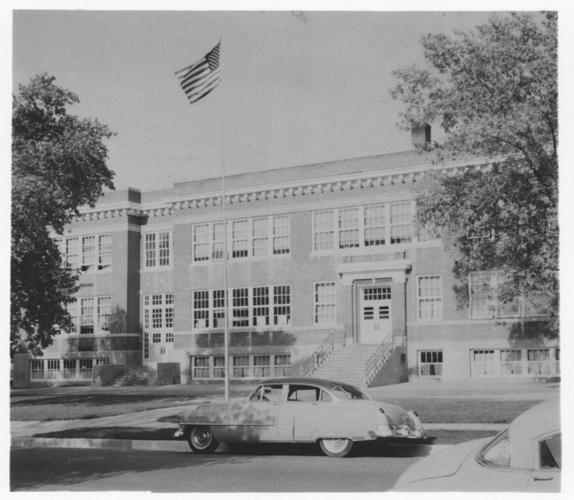
ACROSS THIS NATION, historic schools continue to serve learners. Poky High is one shining example, Washington can be another. Our learners are in Idaho’s top 10 percentiles in math and the top 20 percentile in English. Our reading proficiency is the best in the District, and our teacher longevity outshines all district schools, with nearly 90% having over 6 years of tenure. In a time when the district has lost nearly 1000 elementary learners, Washington is the only school whose enrollment increased (by 25% in 7 years). We also have fewer transportation needs since many learners walk. Reinvestment and planning efforts are paying off, families are staying in (and returning to) our neighborhoods.
THE CASE AGAINST WASHINGTON
Like Poky High was in its forlorn years, Washington (which was constructed in 1921) has not undergone significant capital improvements for many decades.
In 2001 a comprehensive facility report (that notably involved a broad cross section of evaluators including national experts from DeJong & Associates and the School Management Study Group) once favored Washington over Tendoy based on six criteria: Site (60/45), Structural/Mechanical (63/69), Maintainability (72/72), Safety (74/68), Educational Adequacy (49/44), and Educational Environment (64/59) with respective averages being: Washington 63, Tendoy 59. Notably, even with lighter traffic patterns in 2001, Tendoy’s location ranked poorly.
A scaled-down 2023 facility report by Design West paints a much more dire picture. The District’s current Cost Analysis shows three “red zones” for Washington—HVAC, Roof, and structural. Cost estimates for the next 20+ years show Washington needs upgrades of $13,421,680 (including an elevator) while Tendoy needs $10,701,120 (a 25% differential). What was NOT factored in (besides Washington’s superior location & heritage) is its size. We have 30% MORE square footage than Tendoy and have a somewhat smaller outdoor space to maintain. Washington also houses two GATE classrooms, a Title 1 classroom, and a Resource Room.
Consider this thoughtful observation from the 2023 facility report: “The decision to renovate…is a complex one. There are many ways to analyze the topic based on budgets, finances, student needs and even the EMOTIONAL connection between the COMMUNITY and the building--ALL can be equally important.” (emphasis added). A Stanford professor of education (Thomas Dee) has been collecting data on declining enrollment nationwide. He laments: “School closures are difficult events that rend the community, the fabric of the community…The concern I have is that it’s going to be yet another layer of educational harm from the pandemic.”
The EBC discussed how Washington is land-locked and lacks parking. Well, so does Downtown, the lower campus of ISU, the County’s courthouse, and the vast majority of the central city, but those areas are being revitalized, not abandoned. The creative use of diagonal parking and well-designed drop-off zones can be part of Washington’s solution.
A CALL FOR RE-INVESTMENT
In the College Neighborhood, most of us view owning homes as a stewardship—that benefits both the home’s future and our community. The community’s appreciation is reflected each time the Historic Home tour is offered...hundreds and hundreds of heritage-loving citizens flock to our lovely neighborhood. For decades, whether by administrative design or unintentional neglect, reinvestment has not happened with Washington. Isn’t it time for School District 25 to renew its commitment to and stewardship for Washington? By re-committing and investing in Washington, we can benefit not only learners, but the entire community. No one would neglect their private real estate holdings in the way past District choices have affected Washington.
For a century, Washington has stood as a stalwart, neighborhood beacon of safety and learning. It is a far better choice for preservation than Tendoy’s non-descript architecture and highly dangerous location. Keeping Washington open preserves elementary capacity for the north end. Sure, Washington needs significant reinvestment—so did Poky. We respectfully ask the District’s current leadership to make yet another brave and farsighted decision to benefit the heart of our community. Let this be another example of the District’s commitment to our overall community vision. Please be a good neighbor and invest in Washington. After all, old friends are worth keeping!


(0) comments
Welcome to the discussion.
Log In