

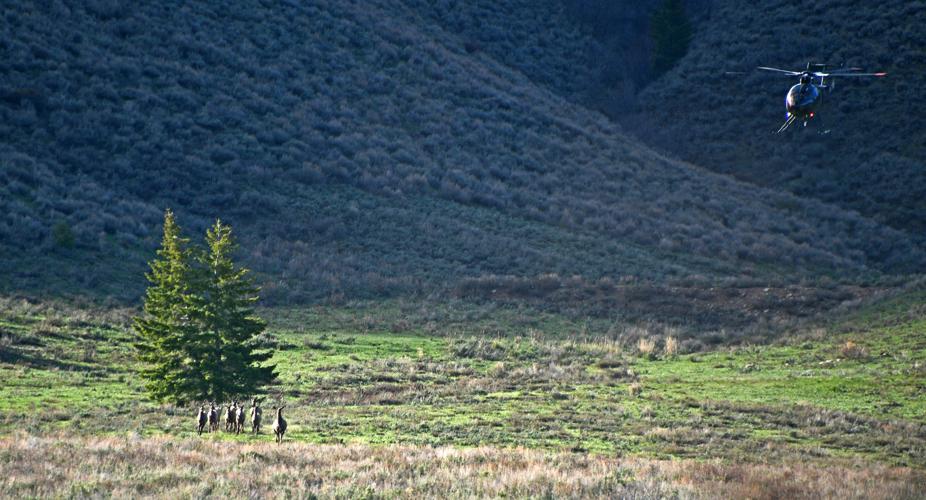
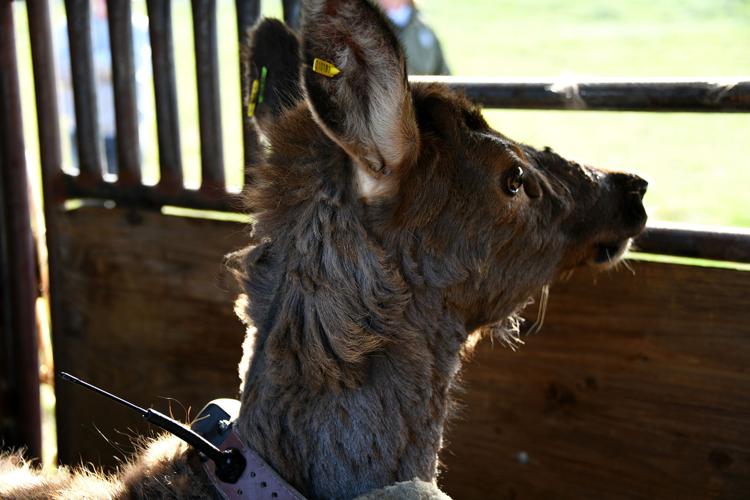
In an unusual operation, Idaho Fish and Game rounded up 14 elk in the Magic Valley area with the help of a herding helicopter and an elk trailer borrowed from an eastern Idaho operation and turned them loose west of Stanley.
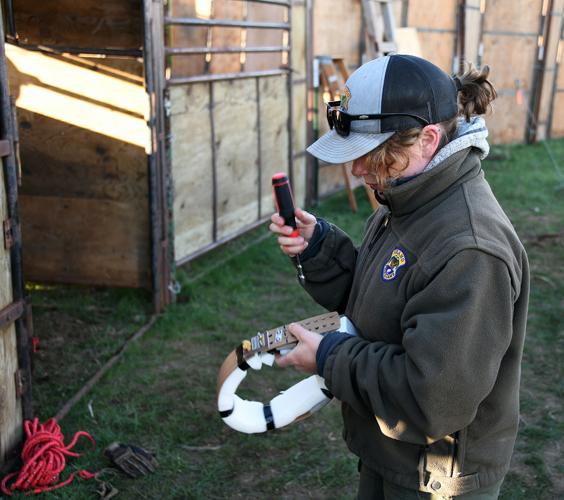
Fish and Game wrapped up the operation last week after trapping the elk using a more than half-mile-long fence line to funnel the animals into corrals. The cow elk were radio-collared to track their movements and survival. The trapping operation was also conducted last fall where 16 elk were captured and relocated to the Stanley area.
The project was to reduce the size of a local herd living almost exclusively on private property and causing huge depredation claims during the past three years. Fish and Game has used several methods to manage the pesky elk, including issuing more hunting tags, hazing the elk and using sharpshooters to reduce their numbers. Last fall and this spring, Fish and Game tried trapping and relocating the elk.
“A few years ago we had a claim of over $1 million dollars and each of the years since it’s decreased,” said Craig White, Idaho Fish and Game supervisor at the Magic Valley office. “Each year we’ve seen it decrease in the amount of damage and subsequently the amount of claim that needed to be paid out.”
Terry Thompson, regional communications manager said the $1 million dollar claim was paid out in 2018, but after intense efforts to manage the elk, depredation claims dropped each year since to $64,000 in 2020.
Thompson said despite experience from last fall and a more efficient operation, biologists were up against elk who had other things in mind.
“The problem we had this spring was the elk had dispersed,” Thompson said. “They were coming off winter range, and we could monitor their locations by radio collars that were on a few animals. We knew they were starting to come back on to summer range, but in the last two weeks they went from herded up to very dispersed. It was hard for the helicopter to find a group of elk that they could bring toward the trap.”
Thompson said biologists are pleased with the translocation of 30 elk between the fall and spring operations and with an added 60 other elk removed from the population with sharpshooters last summer, “we feel that the herd is much more manageable in terms of reducing depredation on the crops out there.”
“The trap has been taken down now. We’re done with elk trapping,” Thompson said.
White said the spring operation learned from last fall’s mistakes.
“We talked with (Jeff) Siddoway (of eastern Idaho) who helped us last year,” White said. “We picked his brain and learned from our own experience on what went well and what didn’t. We’ve extended the wings on our traps up the hillside a bit. We’ve gotten better with herding them with the ATVs and motorcycles. Our experience has gotten better.”
The elk captured this spring were moved to hunting units 35 and 36 west of Stanley in the Grandjean area. The animals will be monitored via radio collar to see how they get along.
“That’s in our Sawtooth elk zone,” Thompson said. “Our numbers in that zone are below objectives, so a little push of new elk into that area should be fine.”

(0) comments
Welcome to the discussion.
Log In