

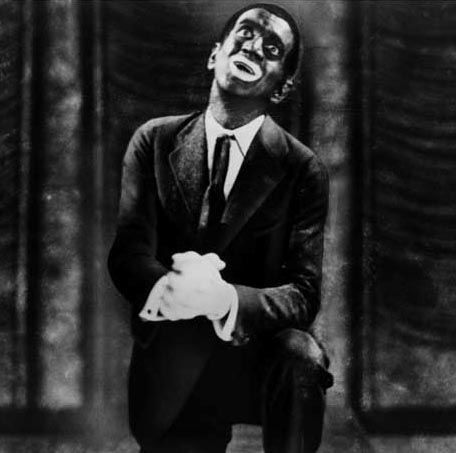


The current controversy surrounding Virginia Gov. Ralph Northam and his alleged appearance in blackface during his college years has prompted conversations about the use of blackface and its history in America.
“It’s always been objectionable,” said Dr. Wornie Reed, director of Virginia Tech’s Race and Social Policy Center and a professor of sociology and Africana studies. “It’s never been OK. Never.”
It is a painful history, but comic actors in blackface were a staple of American entertainment starting in the early 19th century. The term, “Jim Crow,” now used to label racist laws, comes from a theatre character created by Thomas D. “Daddy” Rice (1808-1860). Dressed in rags and a battered hat, Rice blackened his face and hands with burnt cork and impersonated a witty African American trickster. Rice’s routine included a traditional song, “Jump Jim Crow,” sung in a comic black accent. Thomas D. Rice became one of the most popular vaudeville actors of his day and died on the eve of the Civil War.
In the late 19th century, two Irish brothers, Jim and John Russell, made a reputation performing in blackface but found a new target. After the Irish famine drove millions of Irish to America, the Russell brothers performed a sketch depicting Irish washer women speaking in exaggerated Irish accents and hitting each other with booms. The Russell brothers were successful until 1907 when Irish immigrants, now respectable and accepted in New York and Boston, literally stopped their show with threats of violence. The Russell brothers soon quit show business.
Unfortunately, blackface routines continued into the 20th century with one of America’s most famous stage and screen stars, Al Jolson. Ironically, Jolson thought he was doing something noble by representing black people on a stage they couldn’t share. Al Jolson appeared in the first “talking picture,” a sensational hit in its time called “The Jazz Singer” (1927). It ended the silent film era. For anyone who watches Al Jolson singing “Mammy” in blackface, it may seem dated and disturbing, but it’s an example of what another era found entertaining — even moving. Al Jolson died in 1950.
Now we have the current Virginia governor in a photo from his medical school yearbook page showing a man in blackface next to a person in Ku Klux Klan robes. Gov. Northam denies he is in the photo, though admitted to darkening his skin once, years ago, in order to mimic Michael Jackson.
Is Gov. Ralph Northam a racist, and should he resign? For those who argue the Virginia governor was just having fun, and perhaps people are being too “politically correct,” Mr. Reed has an answer: “Blackface always has been, and still is, an expression of white supremacy.”
Some years ago when I was gathering material for a hybrid memoir, I looked through my father’s high school yearbook from 1934. It has photos of him on a basketball team called the 110s and includes photos from school plays, that year. One shows a group of boys in blackface performing in a minstrel show. My father wasn’t listed in the cast, but I was startled to see what that long gone Catholic school considered legitimate entertainment. I love plays that use satire effectively, but maligning a race or ethnic group onstage to diminish them as people is a cruel misuse of theatre arts.
Michael Corrigan of Pocatello is a San Francisco native and a retired Idaho State University English and speech communication instructor. He studied screenwriting at the American Film Institute and has authored seven books, many about the Irish American experience.

(0) comments
Welcome to the discussion.
Log In