



“Don’t comprise yourself, it’s all you got.”
— Janis Joplin
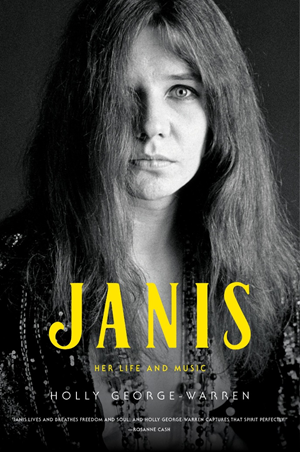
Holly George-Warren’s new biography, “Janis, Her life and Music,” is the first detailed biography of Joplin’s short life.
Born in Port Arthur, Texas, Janis Joplin discovered Jack Kerouac’s “On the Road” and became a rebellious “Beatnik” in high school. She also discovered alcohol, if not sex, though her reputation as a wild woman isolated her. Joplin’s lonely early years during which she faced constant criticism for being an outsider is revealed through George-Warren’s scholarly research and numerous interviews.
George-Warren began the biography after hearing recordings of Joplin working in the studio and revealing herself to be perfectionist. The biographer notes how hard Joplin worked recording take after take, doing the kind of research one expects from a musicologist rather than a Southern Comfort drinking blues singer. One story is significant.
Joplin knew Elvis Presley’s version of “Hound Dog” and found Big Mama Thornton’s 1953 original. “How a 13-year-old white girl in segregated Port Arthur found the R&B single remains a mystery,” writes George-Warren, “but she did.” Joplin heard Thornton sing “Ball and Chain” at a San Francisco club and asked her if she could cover it. Thornton gave her the OK but warned, “Don’t (mess) it up.”
At the Monterey Festival in 1967, Joplin sang “Ball and Chain” with such authentic power that she became an instant rock-blues icon and influenced future female singers. Holly George-Warren did an NPR interview on Oct. 21. Here is a highlight:
“What made Janis really different as a live performer is that she connected with her audiences by tapping into her deepest feelings. And there was this authenticity that came across. She wasn’t just standing up there singing — she was basically emptying out her guts through that amazing voice of hers, and touching her audience members like they had never been touched before. I’ve talked to people who saw her back in 1966, ‘67 and they talk about it as if it was yesterday — especially women, I think, because she was able to express deep-down emotions, shame, disappointments, hurts that I think a lot of women in her audience couldn’t express themselves. And Janis was not only just singing to them; she was singing for them. And I think that kind of deep connection was very, very unique at that time.”
Anyone who saw Janis Joplin live on stage will agree with George-Warren’s assessment. Janis Joplin was a blues diva with feather boas in her hair and a voice that could shift from a clear soprano to a wailing blues sound in an instant. It’s hard to describe Janis Joplin in concert, but the overused word “electric” works. The first female rock star in a male-dominated culture, Janis Joplin had a raw sexual appeal on stage despite criticism over her looks.
One gem played during the NPR interview is a recording Joplin did with her Texas folk band before she hitchhiked to California. One hears a young Joplin singing in a soaring voice that sounds more like a Broadway star, but a blues edge from her idols — Bessie Smith, Otis Redding and Lead Belly — resonates, as well.
NPR critic Jason Heller notes the precision of George-Warren’s work: “George-Warren delivers the definitive portrait of one of pop culture’s most misunderstood martyrs. Joplin was both a product and an architect of her times; in dwelling so sympathetically on her tangle of talents, contradictions, and mythology, Janis brings one of rock’s most enduring legends down to earth while holding her justly up to the light.”
On Oct. 4, 1970, Janis Joplin died of a heroin overdose shortly after the death of guitarist, Jimi Hendrix, and it is all the more heart-breaking since Janis Joplin had been clean for five months and was recording a new album, “Pearl.” She was 27. The album became a posthumous hit and demonstrated Joplin’s new direction, including “Me and Bobby McGee” by a then unknown singer-songwriter, Kris Kristofferson.
Holly George-Warren’s biography of Janis Joplin will rank with the comprehensive two-volume biography, “Last Train to Memphis: The Rise of Elvis Presley and Careless Love” by Peter Guralnick. For all her personal tragedy, Janis Joplin was not just a great singer-performer but a pioneer in gender equality. Almost 50 years after her death from an accidental drug overdose, the memory of this incandescent singer from Port Arthur, Texas, is well served.

(0) comments
Welcome to the discussion.
Log In