



BOISE — A new bill targeting what flags can be flown by local governments passed out of the House State Affairs Committee on Monday, sending to the House floor a bill prohibiting what can be flown on publicly owned property. If passed into law, cities and counties would be unable to fly a wide range of flags, including the rainbow Pride flag and banners recognizing high school graduates.
Rep. Ted Hill, R-Eagle, who presented the legislation, described it as a response to “the local mayor who refused to follow the law” through “reckless and insubordinate” action. Hill’s pointed characterization of the bill arrived after a protracted disagreement between Boise Mayor Lauren McLean, legislative leadership and Attorney General Raúl Labrador over the summer after the legislature clamped down on flag-flying last session.
“The whole idea of a government sphere, and what we represent is it embraces everybody,” Hill said. “We can’t pick one group or another group or another, and that’s not what we want to do as a government.”
House Bill 561 represents a revised a version of House Bill 96, which passed during the previous session and significantly limited the flags that could be flown by state and local governments. A notable exception for “official” city and county flags prompted the city of Boise to take action in the spring of last year to be in compliance with the bill.
A proclamation from McLean, which was supported by Boise City Council in May, denoted the rainbow Pride flag and a flag honoring National Donate Life Month — in recognition of organ and tissue donors in April — as official flags of the city. This change allowed the city’s flying of these flags to legally comply with the law that specified “official” flags of local governments may be flown.
A carve-out in the new bill states official city and county flags can only be flown so long as they were made official before Jan. 1, 2023, a provision that, in addition to invalidating Boise’s official flag proclamation last year, would mean no city or county in Idaho would be able to update their respective flags as a result of the bill. The bill also includes a $2,000-per-day fine for noncompliance, adding an enforcement mechanism that is lacking under current law.
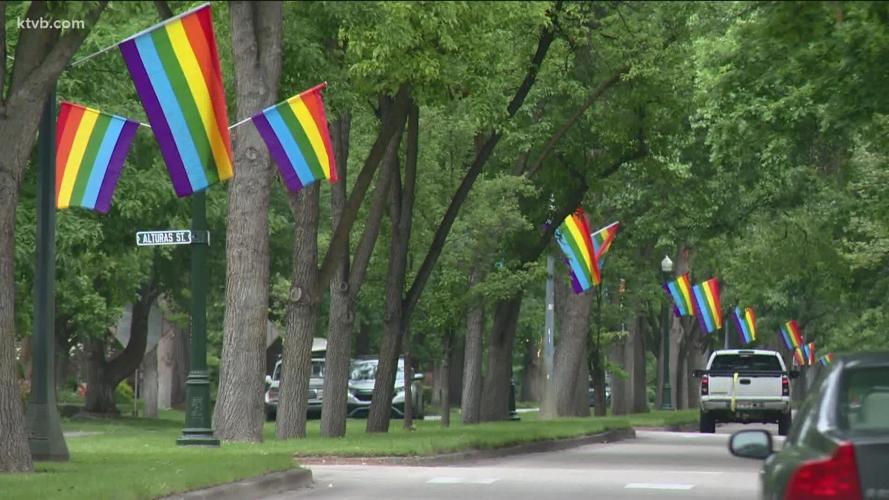
Additional language in the bill specifies these restrictions apply to government-owned land and land maintained by a government entity including “buildings, adjoining land, parks, roads and boulevards.” In a prior meeting on the bill, Hill acknowledged this language blocks Harrison Boulevard’s annual flying of Pride flags during Pride month as they are flown on city-owned light poles, as was previously reported by Boise Dev.
During a public testimony period on the bill, McLean went before members of the legislature for the first time in her capacity as mayor.
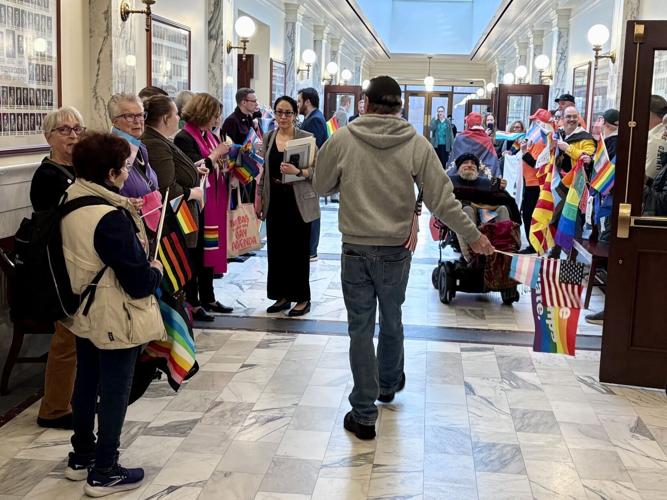
In her remarks, she defended the flying of the Pride flag as representative of the city’s inclusive character and emblematic of the broader desires of Boiseans. The city of Boise has been flying the Pride flag for over a decade, she said, and this new bill now punishes the city for doing so at the cost of the rights of all other cities and counties in the state.
“My opposition to this bill is my elected duty,” McLean said. “… I’ll continue to do what I’ve always done, what I’ve been elected to do — stand up for all Boiseans, proudly proclaiming and celebrating our values.”
McLean was repeatedly asked why the city was “singling out” one group over another in flying the Pride flag, with committee members asking why the Vatican flag or a flag for heterosexual individuals wasn’t also being flown if all groups are intended to be represented.
“In flying this flag we’re sending a message that Boise is a safe and welcoming city for everyone,” McLean said, “and I don’t believe that recognition is a zero-sum game.”
Lynn Bradescu, who ran for Boise City Council’s District 6 seat in November, testified in favor of the bill Monday. Bradescu said her position was a matter of avoiding First Amendment concerns around viewpoint discrimination.
“Public spaces should remain places that bring people together, not platforms for political or ideological messaging,” Bradescu said. “While private individuals and businesses remain free to display any flag on their own property, public spaces must remain neutral and avoid becoming battlegrounds for competing viewpoints.”
Due to the broad nature of the bill, however, Hill acknowledged there would be “collateral damage” from the bill’s passage that went beyond the city of Boise and the debate on its flying of the Pride flag.
Additional testimony made clear the scope of the bill impacts a range of local government action from Boise’s ability to fly the Basque flag to small Idaho towns being able to recognize community events.
Addressing the former, Gloria Totoricagüena spoke to her own Basque heritage as the daughter of parents who immigrated to Idaho after surviving the Spanish Civil War and the bombing of Guernica. At the time her family fled Spain, the Basque flag was outlawed from being flown.
This was not in the case in Idaho, however, where it has flown for 100 years at city halls, parks and historical buildings in the state — before the same could be done in Basque Country, she said.
“It’s a symbol of community, the same way that a peace sign might be,” Totoricagüena said, “the same way that our American flag is.”
Though Hill’s bill allows for the flying of other nations’ flags on special occasions, the Basque Country, as noted by Totoricagüena, is an autonomous community and official political division of Spain.
After receiving feedback from the Spanish Embassy, Hill told the Idaho Press on Tuesday the Basque flag would still be able to fly under the bill’s definition for “country.”
Rep. Stephanie Mickelsen, R-Idaho Falls, voiced concern the bill would have additional impacts for towns looking to promote rodeos or recognizing their graduating high school seniors, as such banners are often displayed on city-owned lampposts. Mickelsen said taking these opportunities for public display away can “damage” Idaho communities and restrict them from setting a “vision for themselves.”
Hill responded the changes to the statute were the result of the city of Boise’s action and any resulting collateral damage “is what it is.” Under the bill’s current language, Hill said communities will still be able to put up flags or banners for community events, so long as they weren’t on government-owned or managed property.
Rep. Erin Bingham, R-Idaho Falls, said she agreed with the bill’s intention to place limitations on political flags being flown. What gave her pause was the impact the bill would have on local communities from announcing local events to recognizing graduating seniors of the local high school, both of which would be “lost with this legislation,” Bingham said.
There is a carve-out in the bill for “any temporary parade or assembly on the property of a governmental entity,” but Hill characterized the intent of this language as applying to private individuals or groups demonstrating on publicly owned properties so as not to suppress free demonstration.
Hill said Tuesday he would be open to an amendment process to be undertaken once the bill reaches the Senate to allow for high school graduates or local events to be recognized on city property.
Despite reservations from several committee members, the bill passed handily in a 12-2 vote, sending the bill for debate on the house floor. Boise’s representatives on the committee — Democrats Monica Church and Anne Henderson Haws — both voted against.


(1) comment
So much for local control. The Idaho legislature knows best, Rep. Hill proclaims, so shut up and comply, you inferior cities and towns.
Welcome to the discussion.
Log In