

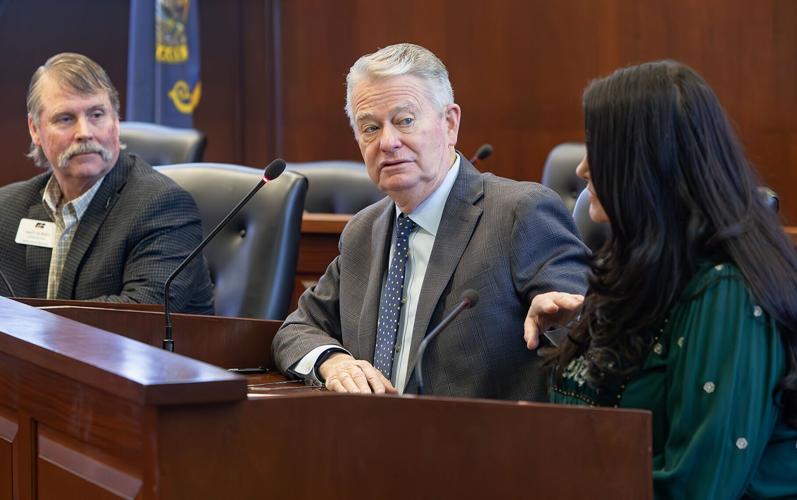

Though the Idaho State Legislature is approaching its opening day of Jan. 12, legislators across several committees have been working consistently throughout the session’s off-season to provide recommendations and draft legislation that is expected to color the laws coming out of this year’s session.
For Idaho-specific matters, legislators have brought forward recommendations on a myriad of issues including Medicaid expansion, reforms to the child custody system, and executive agency elimination and consolidations.
The legislature will also be tasked with incorporating the Working Families Tax Cut Act, also known as the Big Beautiful Bill, into Idaho’s tax code and the state could see executive leadership changes depending on the outcomes of this year’s midterm elections.
With these potential changes and external pressures in mind, this is what to know about the potential changes for the state in 2026.
DOGE TASK FORCE
This December marked the conclusion of the first year of Idaho’s Department of Government Efficiency (DOGE), the state’s cost-cutting department modeled after the federal department of the same name that was initiated under the leadership of billionaire Elon Musk early in the second Trump administration.
In their final December meeting before the legislative session, the task force made several concluding recommendations in addition to their varying agency consolidation and cost-cutting recommendations from prior months, including a recommendation to initiate a multi-year transition that would take state funding away from the Idaho Commission on Hispanic Affairs and a recommendation to repeal Medicaid expansion.
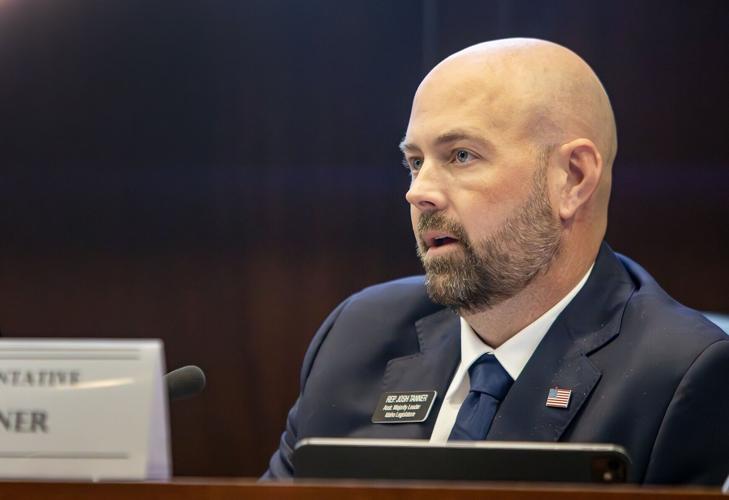
Medicaid expansion was initially passed in Idaho through voter initiative in 2018 to expand Medicaid to individuals with incomes below 133% of the federal poverty level ($1,800 per month for a single person or $3,698 for a family of four in 2025). In the committee’s December meeting, Rep. Josh Tanner, R-Eagle, characterized this change as having resulted in Idaho “losing focus” of the program’s intention of serving the state’s most vulnerable populations.
The committee’s recommendation came as the cost of expansion has increased significantly since it was implemented in 2020. In fiscal year 2021, the funds expended for Medicaid expansion totaled $669.7 million compared to $1.16 billion in fiscal year 2025, Jared Tatro, a member of the impact review team of the Legislative Services Office, said in the December meeting.
If full repeal were pursued by the legislature, Sasha O’Connell, deputy director of the Idaho Department of Health and Welfare, cautioned that there would still be downstream impacts associated with removing the $25.5 million cost associated with the Medicaid expansion population due to Magellan Healthcare, a Medicaid Managed Care Organization, paying for some of the services provided by these hospitals.
Idaho’s State Hospital North and State Hospital South would both need about $27.9 million in general funds if medicaid expansion were eliminated. The impact would similarly be felt by home- and community-based services for individuals with disabilities as they are funded with a hospital tax incurred based upon the number of Medicaid expansion enrollees a hospital serves, an amount totaling $38.3 million, O’Connell said.
Indicative of the divide on this issue, committee members Rep. Dustin Manwaring, R-Pocatello and Sen. Carrie Semmelroth, D-Boise, voted no on the motion to repeal expansion, with Manwaring specifically favoring language recommending the legislature “contain costs within Medicaid expansion” as opposed to taking an “all-or-nothing” approach.
MANAGED CARE MEDICAID
Beyond examining potential changes to Medicaid expansion in the state, the Idaho Legislature will also be focused on the future of Medicaid’s broader administration as it works through a multi-year transition to third-party managed care organizations (MCOs) for its Medicaid coverage.
Gov. Brad Little signed into law House Bill 345 in the previous legislative session, directing the Idaho Department of Health and Welfare to initiate requests to the federal government for several changes to Medicaid, including implementing work requirements and shifting to MCOs to administer Medicaid. The former was enshrined at the federal level with the passage of the Working Families Tax Cut Act over the summer. The legislation implemented new federal requirements that states verify whether Medicaid expansion recipients are meeting 80 hours of work requirements each month, a change that is due to kick in on Jan. 1, 2027.
More specific to the state of Idaho will be the transition to managed care organizations for Medicaid. The Idaho Legislature’s Medicaid Review Panel has been meeting in recent months to outline the logistics of this transition and their December meeting allowed the public to provide feedback on their questions or concerns for this change.
The move will be significant for the state after previously administering Medicaid through the traditional fee-for-service system where the state directly contacts with and pays healthcare providers a fee for each service.
Under the new managed care framework, the state will use third-party contractors, known as managed care organizations, to administer all Medicaid benefits and provide oversight for the system. According to HB 345, the goal of this change is to emphasize preventative care to avoid more costly medical interventions that burden Idaho’s rural hospitals and community clinics
O’Connell said in December this transition will arrive through phased approach that will see most Medicaid programs operating under managed care by Jan 1, 2029, with developmental disability services arriving two years later in January 2031. Before these deadlines, the Idaho Department of Health and Welfare will be organizing competitive bidding with third party contracts, which will be awarded in May 2027.
Among the chief concerns raised in the panel’s December hearing was whether a managed care system would lower the payment rates healthcare providers receive when serving individuals on Medicaid and several public input opportunities will arrive through to May for constituent input on this transition.
CHILD CUSTODY REFORMS
The Child Custody and Domestic Relations Task Force also met repeatedly during the fall and summer months to outline how “systemic” issues within Idaho child custody system could be reformed through updated legislation.
The interim task force’s final meeting addressed issues ranging from retooling the criminal charges in this area to implementing reforms to how child custody cases are handled in Idaho’s courts.
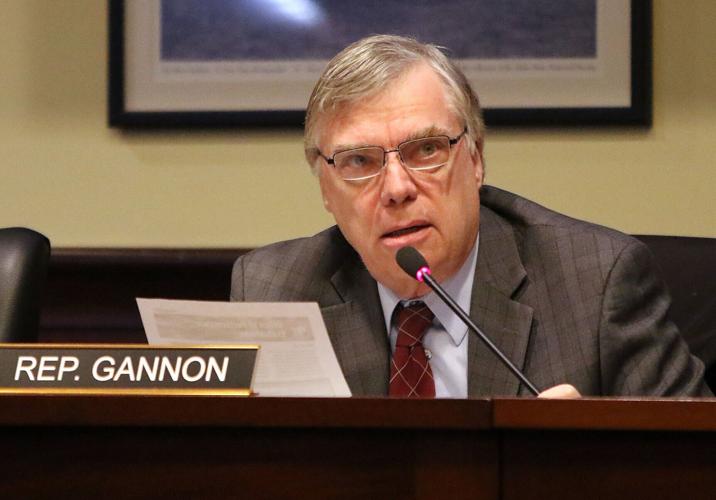
Rep. John Gannon, D-Boise, expressed a desire to introduce legislation that would address the financial disparity among parents in the family court process. Gannon previously said he would look to advise both parties at the start of custody or divorce litigation that the one with better financial resources will need to pay a “reasonable amount” of attorney fees for the other in order to establish equal representation.
Gannon has said in past committee meetings this measure would both foster fairness in the family court system and encourage more timely resolutions as parents with more resources would face greater incentive to minimize their litigation costs.
Other changes have been recommended for the state’s child custody interference statute including recommendations that law enforcement officers shall complete an offense report and file reports as criminal complaints when pertaining to custody interference and conduct immediate welfare checks to verify a child’s safety and provide an offense report number to the reporting party.
Addressing criminal charges in this area, a draft bill is looking to make changes to the custody interference statue to align Idaho’s existing language around criminal trespass. Under a proposed penalty structure, first offense would start at a $50 fine and escalate to a fine of $2,000 dollars and several weekends in jail.
BUDGET OUTLOOK
An overarching issue for the state legislature will be the standing of the state’s budget after more than $400 million in tax cuts were passed during the previous session.
A December budget outlook from the Legislative Services Office forecast the state’s budget deficit at $40.3 million for fiscal year 2026, which concludes on June 30. Looking ahead to fiscal year 2027, members of the Joint Finance-Appropriations Committee put the deficit around $550 million during a December preview event.
This is separate from the cost of conforming to the Working Families Tax Cut Act. Depending on the measures that Idaho chooses to incorporate — which notably include income tax changes for tips, overtime, automobile interest and a new senior tax deduction — the cost of conformity could be “at least $435.4 million,” according to a report from the Idaho Center for Fiscal Policy.
With Idaho being constitutionally precluded from running a deficit, the legislature will be tasked with implementing measures to right its bottom line. Before departing for a position with U.S. Department of Health and Human Services, Idaho Falls legislator Wendy Horman, who co-chaired JFAC, said in December state agencies should “expect” budget reductions to come.
During a kick-off event for the Idaho Legislature last month, Gov. Brad Little similarly said Idaho would be tasked with doing “more with less,” particularly in fiscal year 2027.
ELECTION SEASON
This year will bring midterm to the state of Idaho and the nation at large. Idaho will have several state-wide elected offices up for vote including Idaho Governor and Lieutenant Governor, Idaho Secretary of State and Idaho Attorney General. Though being endorsed by President Donald Trump in June, Gov. Little has yet to announce his candidacy for the 2026 election.
At the federal level, both Idaho Congressional District 1 and Congressional District 2 are up for election, with the former currently held by Rep. Russ Fulcher and the latter held by Rep. Mike Simpson. While activity for both races has been muted to this point, Kaylee Peterson is a Democratic candidate for District 1 and has hosted her own events in advance of the election.
The seat of Sen. Jim Risch, who first took office in 2009, is also up for election this year. Democratic candidate David Roth, and independent candidate Todd Achilles are among those that have announced a bid for the senate race.
A full-view of the federal and statewide office candidates is expected to arrive in the coming months, with the primary election filing period for federal and statewide offices set to conclude Feb. 27.

(1) comment
Just wondering if the Idaho legislators whining about the cost of Obamacare, Medicaid and health insurance in general remember they are the ones who passed the tax cuts for the rich and school vouchers bills that have the state going from a billion-dollar budget surplus to poverty and pinching pennies. Also to remember: Wendy Horman, one of the architects of Idaho's disastrous financial situation, found another job and is bailing out-of-state as fast as she can. I hope Idaho's voters' memories stay sharp as we approach the next election.
Welcome to the discussion.
Log In