

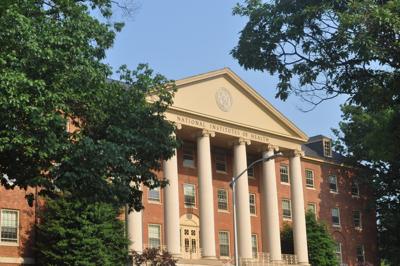
The Trump administration will review frozen grants to universities without using its controversial standards that discouraged gender, race and sexual orientation initiatives and vaccine research.
In a settlement agreement filed in Massachusetts federal court Monday, the National Institutes of Health and a group of Democratic attorneys general who’d challenged the new criteria for grant funding said the NIH would consider grant applications made up to Sept. 29, 2025, without judging the efforts related to diversity, equity and inclusion, or DEI, or vaccines.
The settlement provides an uncontested path for the agency while courts decide whether the administration can use its controversial analysis. The administration did not agree to permanently ditch its campaign to evaluate health research funding decisions based on schools’ DEI programs.
NIH officials “will complete their consideration of the Applications in the ordinary course of NIH’s scientific review process, without applying the Challenged Directives,” the settlement said, adding that the agency would “evaluate each application individually and in good faith.”
The settlement was signed by U.S. Department of Justice lawyers and the attorneys general of Massachusetts, California, Maryland, Washington, Arizona, Colorado, Delaware, Hawaii, Minnesota, Nevada, New Jersey, New Mexico, New York, Oregon, Rhode Island and Wisconsin.

(0) comments
Welcome to the discussion.
Log In