

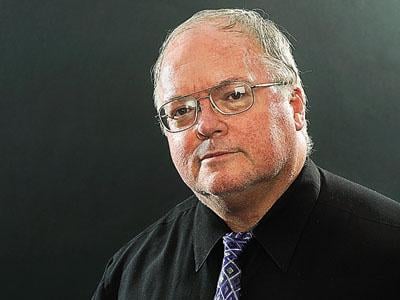
POCATELLO - Sean Anderson says the actions of nonstate terrorists inflict just as much psychological damage as they do physical.
Anderson, a professor of political science at Idaho State University, has spent more than two decades compiling information on a multitude of worldwide terrorist groups.
He added his latest findings and updates in the third edition of the "Historical Dictionary of Terrorism," a publication that he began co-authoring in 1995. The third edition was published in August.
Anderson has often been a local source of expertise on international politics. With the passing of the Sept. 11 anniversary Friday, he acknowledges the continuous threat of nonstate groups such as al-Qaida, but says the chances of seeing those terrorists commit lethal actions against residents of developed nations are much lower than most people think.
"Terrorism by nonstate actors is the least lethal as measured by absolute number of victims…" he says. "Unfortunately, such terrorism continues to have a psychological impact on the publics of the United States and other democracies completely out of proportion to its probability, and this continues to make terrorism politically effective and often profitable (for) non-state terrorist groups and their sponsors."
In the dictionary, Anderson chronicles the history of terrorism in the world, going back several centuries. He says he has taken an unbiased approach with the publication, choosing to not focus solely on terrorism in the Middle East.
He says groups such as the Irish Republican Army and the various rebels in South America and Africa have caused just as much impact as al-Qaida.
ISJ: What is your favorite food?
Anderson: Beef.
ISJ: Who's your ideal next-door neighbor?
Anderson: None.
ISJ: If you could return to any age in history, which age would it be?
Anderson: World War II. America was united, dynamic and strong. We were in the right. We knew it, and we didn't apologize or grovel before anyone.
ISJ: If you could choose a new career, what would it be?
Anderson: Counter-terrorism professional rather than scholar.
ISJ: What's your favorite appliance?
Anderson: Personal computer.
ISJ: If you won the lottery, how would you spend the money?
Anderson: Secretly.
ISJ: What was the last good book you read?
Anderson: "Economics" by Thomas Sowell.
ISJ: What is your favorite sport?
Anderson: Powerlifting.
ISJ: What was your favorite vacation?
Anderson: Israel from June 1-10, 2009.
ISJ: What was the best day of your life?
Anderson: June 6, 2009. I visited the Western Wall in Jerusalem.
ISJ: What's the best piece of advice you ever received?
Anderson: Forget about dwelling on what is past and your regret, and get on with life and the task at hand.
ISJ: Who is (was) your mentor?
Anderson: Dr. Stephen Sloan.
ISJ: What's your idea of the perfect vacation?
Anderson: A working vacation.
ISJ: What's your biggest pet peeve?
Anderson: The current penchant of Americans to value emotionalism and self-righteous political partisanship over rationality, decency and fairness.

(0) comments
Welcome to the discussion.
Log In