







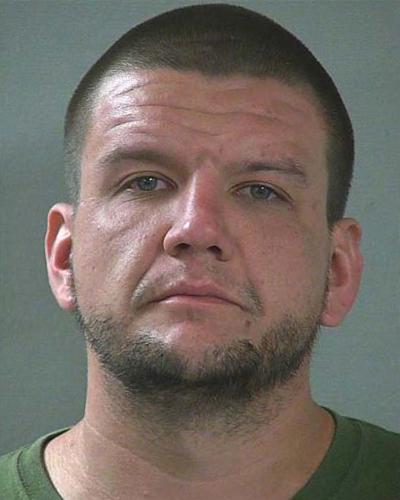


Pavel Florea was supposed to report to Canyon County’s Pre-Trial Release Program within a day of bonding out of jail last month.
He never did, according to officials. That was one of his many probation violations.
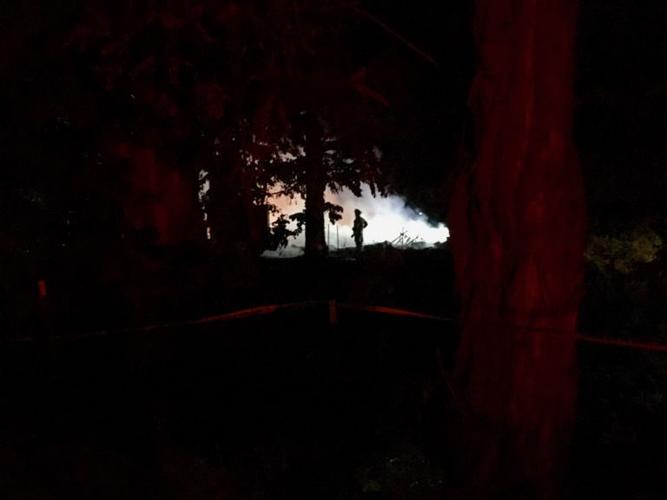
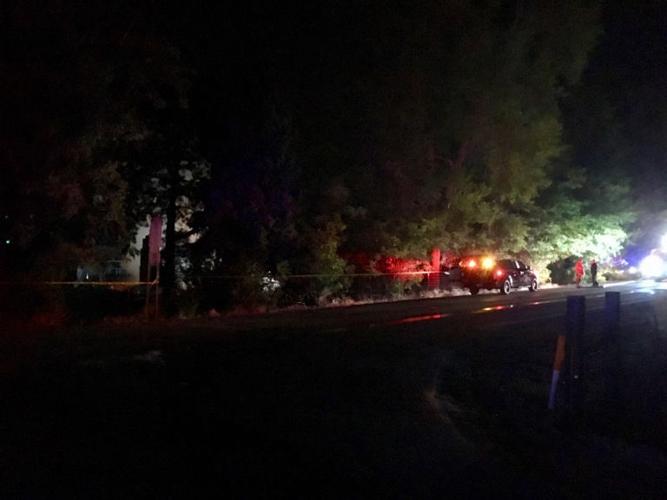
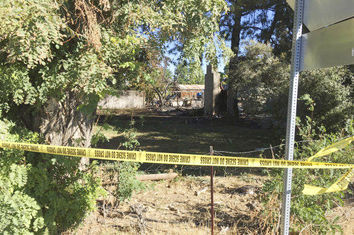
On Sept. 27, fives days after getting out of jail, Florea broke into a rural house near Meridian. The bewildered residents locked themselves in a bedroom as Florea barricaded himself in the house during an armed standoff with police. Fifteen minutes in, the house caught fire, according to the Ada County Sheriff’s Office. Florea and two of the family members died. The survivor, Lily McAlister, said the family didn’t know Florea.
“There’s three people dead, and that could have been prevented,” said a local pastor who had previously tried to help Florea get into rehab for drug addiction.
The pastor called Nampa Police two days before the fire with concerns that Florea, a 35-year-old Nampa man, would hurt someone.
The pastor’s name is redacted from the police report, and he spoke to the Meridian Press on condition of anonymity out of concern that anyone associated with Florea would target his family.
The pastor said he’s not trying to put blame on police, but he sees cracks in the criminal justice system that allowed Florea to be out of jail, even after being found guilty of felony domestic battery and testing positive for meth use while on probation.
“He should have been locked up in prison for a very long time,” the pastor said.
The pastor called police about Florea on Sept. 25 after seeing Florea’s Facebook post offering money to anyone who brought him his ex-girlfriend, with a bonus for killing the man she was with. The pastor told a Nampa Police officer that Florea was “extremely erratic and very violent” when high on meth, according to the police report.
Someone with a violent record like Florea’s, the pastor said, should not have had the privilege to be out in public.
PROBATION VIOLATIONS
Florea was placed on five years supervised probation after being convicted in 2014 of felony domestic battery with traumatic injury in the presence of a child. According to court records, Florea pushed and threw things at his then-wife and tried to strangle her in May 2014, while their 4-year-old daughter was home. A Nampa Police report from October 2013 also documents the wife’s account of Florea on a separate occasion elbowing her in the ribs and saying he wanted to kill her.
Florea’s sentence for the domestic battery conviction also included 180 days of discretionary jail time. The pastor said he wonders why that wasn’t used after Florea tested positive for meth in March 2016.
Instead of going to jail, Florea was referred to a substance abuse recovery program run by the Idaho Department of Correction, said Probation and Parole Division Chief David Birch. It’s not unusual, he said, for a probationer to not be placed in jail after a positive drug test.
Florea, however, failed to participate in the program on a regular basis, Birch said.
For most of this year, Florea’s probation officers had been unable to reach him. According to a June 8 probation violation report, Florea didn’t respond to officers’ texts, emails and phone calls starting March 7. On May 31, a senior probation officer went to Florea’s listed residence and learned from a neighbor that he had been evicted four weeks earlier.
Florea also violated his probation by not completing a batterer’s treatment program.
In the violation report, he’s described as a potential danger to public safety.
A warrant was issued for Florea’s arrest in June, but he wasn’t located until Sept. 6, when someone called police to report a disturbance involving Florea and a woman, Nampa Police Sgt. Tim Riha said. Police arrested Florea on the warrant that day, and he bonded out of jail about two weeks later.
BAIL BOND
Florea’s bail in his probation violation case was set at $20,000. After his arrest in September, he used a surety bond from a bail bond company to get out of jail before trial. Bail bond companies typically charge their clients 10 percent of the bail amount, plus fees.
The right to post bail is in the Eighth Amendment of the U.S. Constitution and in Article I, Section 6 of the Idaho Constitution.
The bail is not meant to punish an accused offender but to ensure the defendant will show up at trial. The bail is like a deposit — if the defendant comes to trial, he or she will get the money back, even with a guilty conviction. The percentage charged by bail bond companies is generally not refundable.
The state of Idaho has guidelines for setting bail, and judges use discretion when determining the amount. According to Idaho Criminal Rule 46, judges should consider factors such as the nature of the charge and the defendant’s criminal record, employment status, financial condition, character and reputation, family relationships, and any factors that would indicate the defendant’s likelihood to flee.
In September, the judge kept Florea’s bail at $20,000, though his public defender requested it be lowered, said Doug Tyler, 3rd Judicial District trial court administrator.
Tyler said he considers $20,000 to be a significant bail amount for a probation violation.
After Florea bonded out of jail on Sept. 22, he was required to report to Canyon County’s Pre-trial Release Program within a day. He failed to do so, and five days later, he invaded the McAlisters’ house, an apparently random target.
“The sad thing is, he may be a dangerous individual that was out there, but how many are out there?” Riha with Nampa Police said. “Unfortunately there are probably several ... Some people slip through the cracks in the system and get out, and they shouldn’t.”
Statewide, more than a fifth of the Idaho Department of Correction’s probation population is supervised for what are considered violent offenses, Birch with the Probation and Parole Division said.
“It isn’t uncommon for violent offenders to be put on probation,” he said.
PRE-TRIAL RELEASE
Florea was out of jail because he posted bond — a constitutional right — not because of Canyon County’s Pre-Trial Release Program, which aims to reduce overcrowding in the jail, county spokesman Joe Decker said. Tyler, the trial court administrator, agreed.
“I don’t know if there’s anything we could have done. The guy posted bond and got out of jail,” Decker said. “No matter if we had bed space, if somebody can post a bond, they’re allowed to post a bond and leave jail.”
The Pre-Trial Release Program was established years ago and monitors accused offenders who are released from jail as they await trial.
About 600 accused offenders in Canyon County are out on pre-trial release, including some who posted bond. Sheriff Kieran Donahue said that of those 600, he believes roughly 250 should be in jail.
Canyon County commissioned a study this year to address jail overcrowding. The study recommends the county build a new jail with twice the number of beds, which would cost an estimated $200 million. Past bond elections to fund jail construction have failed.
FACEBOOK POST
When Nampa Police responded to the pastor’s call about Florea’s Facebook post and potential danger to others, Florea’s history of violence and breaking the law was evident in court records and police reports.
His Facebook post, however, was not grounds for an arrest or investigation, Riha said.
“We get stuff reported about Facebook all the time, you know, veiled threats, even direct threats,” he said. “When people make those kind of posts, do we go kicking down their door and arresting them?”
To do so would be “seriously impeding on freedom of speech,” he said, unless the person shows a plan or intent to carry out the threat. State code defines assault as an unlawful attempt or threat to harm someone, “coupled with an apparent ability” to carry it out.
“There’s a lot of people posting online, ‘I’d love to see him dead’ kind of thing,” Riha said. “Until we have some sort of specific plan ... that’s more of a rant than a specific threat.”
In Riha’s 24 years of policing, he said he can’t remember ever arresting someone because of an online post.
In some cases, online threats can lead to an investigation or charge. That includes threats against schools, which are considered disturbing the education process under state code, and bomb threats, Riha said. Police might also conduct a welfare check if they get a report about a suicidal post, he said.
There is a law against using a telephone to “annoy, terrify, threaten, intimidate (or) harass” someone, but Riha said he doesn’t believe this applies to the internet. Idaho Attorney General’s Office spokeswoman Kriss Bivens Cloyd confirmed that there isn’t a specific law about online harassment.
“We’re having to figure this out as we go, and the laws have to catch up, too,” Riha said.
Idaho Press-Tribune reporters Emily Lowe and Torrie Cope contributed to this report.

(0) comments
Welcome to the discussion.
Log In