

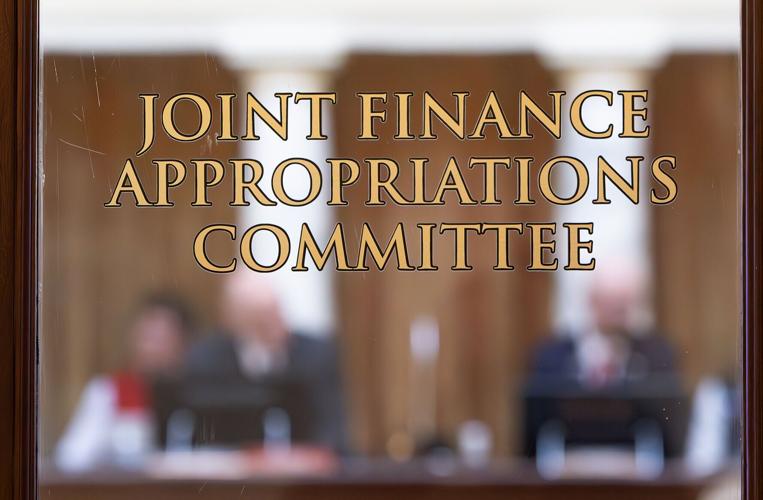

BOISE — The Secretary of State’s Office is due to face added cuts and several behavioral health programs could be restored in Idaho following a series of votes from the Joint Finance-Appropriations Committee on Monday.
After JFAC’s budget recommendation for the Secretary of State’s Office failed on the House floor last week, the committee brought forward a revised proposal to instead reduce the office’s funding for fiscal year 2027.
The key budget addition — unchanged from JFAC’s previous recommendation — adds $350,000 in general funds for a voter pamphlet. This pamphlet, which includes ballot measure information and voting deadlines, is required by law to be mailed to each Idaho household in even-numbered years when a constitutional amendment, initiative or government referendum is on the election ballot.
The Idaho House last week rejected a proposed budget increase to pay for the production of an informational voters’ pamphlet, the Idaho Capital Sun reported.
Secretary of State Phil McGrane has said he anticipated 850,000 pamphlets being sent in advance of the November election with constitutional amendments already set to be considered by voters, as was previously reported by the Idaho Press.
JFAC co-chair Josh Tanner argued on the House floor last week the office should be subject to additional cuts to align with added 1% or 2% reductions faced by other state agencies. A few days removed from these comments, the committee voted to reduce the office’s base budget by $114,200, or 2%, on an ongoing basis. The reduction comes after the Secretary of State’s Office made an $850,000 reversion for the current fiscal year, a reduction McGrane had said was equivalent to a 15% cut for his office.
Though unable to speak to this reduction in front of the committee Monday, McGrane has previously said the office was facing a backlog of filings from businesses looking to be approved for operation in the state of Idaho. Though the office aims to process business filings within three days, current processing times stand at around 30 days.
Sen. Jim Woodward, R-Sagle, made a request to have McGrane speak to the impact of this reduction before the committee, but was denied by Tanner, who said added testimony could not be provided during a budget-setting meeting.
Without hearing from McGrane on the impact of these cuts, the committee voted 15-3 to fund voter pamphlets and implement an ongoing 2% reduction.
Following the vote, McGrane provided comment on what this reduction would mean for his office and the core election and business divisions. McGrane said this cut wouldn’t prevent the office’s voter pamphlet from coming together for the coming election, but would be felt by businesses submitting filings to are seeking to register a new business venture.

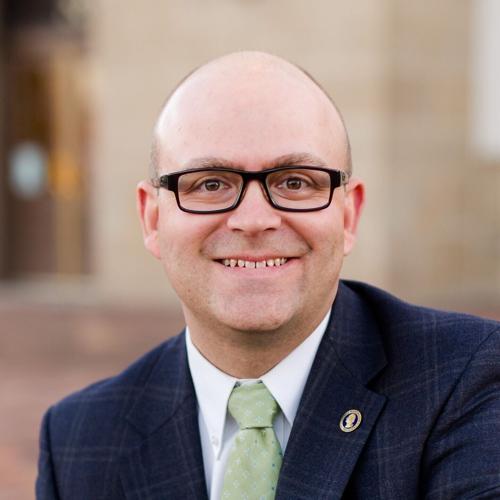
Idaho Secretary of State Phil McGrane
McGrane said the office processed 650,000 of these filings in the 2025 calendar year, a 50% increase from five years ago that arrived without similar growth among the business services staff.
Unlike other state agencies and constitutional officers, the Secretary of State’s Office is funded through the fees it assesses to businesses rather than taxpayer dollars. This resulted in the office having a $2.1 million surplus that was returned to the state in fiscal year 2025, a return McGrane said in a written statement was “on track” to be improved upon this year with record business filings in the state.
While revenue from these filings are part of the equation, McGrane said the central concern is whether the fee businesses are asked to pay corresponds with the service being provided. With longer waits for approval, McGrane said the result is businesses needing to wait to open bank accounts, pay for business expenses and other initial steps needed to get a new business off the ground.
McGrane said it has historically been the case that registering a business is not a “big step in the process,” but it is a necessary step that can lead to frustration when it is not being addressed in a timely manner.
“The economy is doing well (and) the economy has a big impact on business registrations and filings,” McGrane said. “We need to be able to keep up, and, really, the filing fees that our office generates are for that purpose.”
Limited behavioral health restorations
The committee voted to restore the assertive community treatment (ACT) and peer support services programs, bringing back a limited number of behavioral health programs cut by the Idaho Department of Health and Welfare (IDHW) last year.
ACT has provided treatment for individuals with severe and persistent mental illnesses, allowing for 24/7 treatment outside of a hospital setting while peer support services utilize specialists who have recovered from their own mental health condition to share their past experience and support individuals facing ongoing mental health difficulties.
The committee voted 16-2 to support a motion from Rep. Brandon Mitchell, R-Moscow, to restore these two services through a combined $10.1 million in funding from the state’s opioid settlement fund and Millennium Fund and another $20.5 million in federal matching funds.
Mitchell’s motion excluded restorations for several other behavioral health programs eliminated by IDHW, including an early serious mental illness (ESMI) program, the 1/2 Day Partial Hospital Program (PHP), the skills training and development (STAD) program and provider mileage reimbursement for transportation.
Rep. Rod Furniss, R-Rigby, noted the Idaho Sheriffs’ Association has voiced support in these additional behavioral health programs being restored as their respective departments lack the resources necessary to address individuals facing mental health challenges. The result of these cuts, Furniss said, will be law enforcement putting more people in jail, increasing operating costs for jails and prisons and necessitating increases in property taxes.
Separate from this restoration, JFAC voted 16-2 to allocate $250,000 in funding from the state’s opioid settlement to fund peer support services specifically for Idaho’s mental health courts in fiscal year 2027. Rather than sending offenders with serious mental health issues to local jails or prisons, these courts instead require individuals to attend treatment, take prescription medication, participate in drug tests and regularly attend court.
To address the funding of these programs for the current fiscal year, JFAC approved IDHW using available money within the department to fund ACT and peer support services, but it remains to be seen if such funds are available and, if they are, how quickly they could be utilized to bring these services back online.
Chief Justice G. Richard Bevan told the legislature in January the state’s judicial branch had allocated funding for peer support services through the end of the fiscal year, which concludes June 30.
Alex Williamson, a senior analyst with the Legislative Services Office, said both the courts and the Idaho Department of Health and Welfare were prepared to bring the peer support services and ACT programs back this fiscal year as soon as JFAC’s recommendations are approved by the Idaho Legislature and signed into law by Gov. Brad Little.

(0) comments
Welcome to the discussion.
Log In