



POCATELLO — Superintendent of Public Instruction Debbie Critchfield reaffirmed her support for dismantling the U.S. Department of Education and discussed her efforts to reform how Idaho approaches school funding during a recent visit to the Gate City.
Critchfield met with area media, city staff, Pocatello-Chubbuck School District 25 representatives and business leaders at a formal meet-and-greet in Historic Downtown Pocatello Wednesday afternoon.
Critchfield’s path to the office was shaped by years of hands-on experience. She taught as a substitute teacher for six years, served a decade as an elected school board member in Cassia County and spent seven years on the Idaho State Board of Education before running for superintendent.
Now nearly four years into the role, she said those experiences gave her a clear-eyed view of where state and federal oversight helps — and where it gets in the way.
The push to dismantle the U.S. Department of Education has been among the concerns most frequently raised by parents and teachers. While many Idaho residents have expressed alarm, Critchfield said her experience has left her less concerned than many of her constituents and peers.
She described the department as primarily a compliance and oversight agency.
“They don’t determine the budget,” Critchfield said. “They don’t determine when it goes out — they serve to make sure states are doing the things that they’re supposed to do. There’s no local school district that ever calls the federal government to troubleshoot on a problem. They call our office.”
Critchfield continued, “Idaho is already fulfilling the requirements of congressional acts and federal law and making sure that our schools are adhering to that so that we do not have to go through layers upon layers of bureaucracy in order for somebody to check a box on the job we’re doing. I think that’s something that we should all support and get behind. There were instances where some of the federal reports or audits that were taking place, that they would finish their work and it would be three years after from when they started, that’s not helpful to me.”
On the question of funding — a chief concern among critics of dissolving the department — Critchfield said little has changed in practice.
“Nothing about the funding has changed,” she said. “We’re getting the same funding. We’re getting it on the same timelines, and so to have the same money without the bureaucracy, I think, is a win for us.”
Critchfield noted that funding decisions rest with Congress and the president, not the Department of Education, and that restructuring the agency’s administrative functions does not affect whether grants are approved.

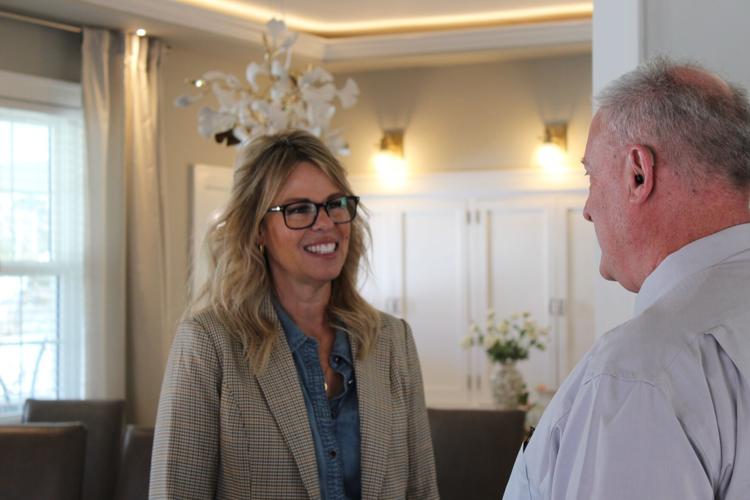
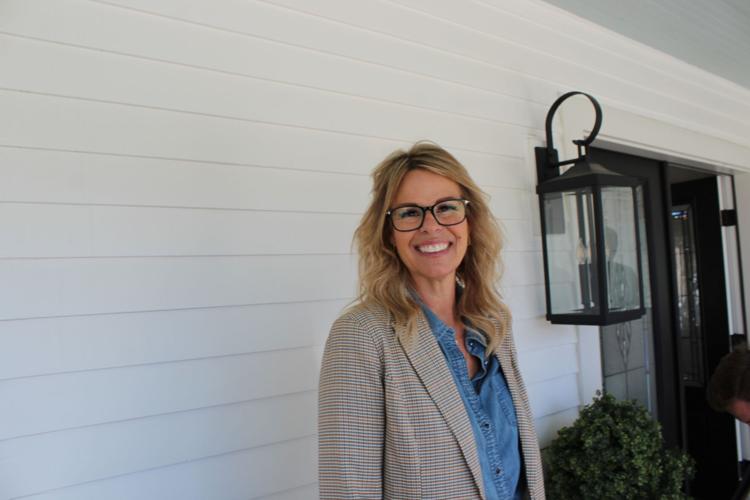
Superintendent of Public Instruction Debbie Critchfield pictured during a visit to the Gate City Wednesday where she reaffirmed support for dismantling the U.S. Education Department.
She pointed to an example from last November in which Idaho’s Community Schools grant was initially flagged for closure. After personally calling federal contacts and making the case for reconsideration, Idaho became the only state among 19 where the decision was reversed.
“I called our federal partners that were over that and made a case for their reconsideration,” Critchfield said. “They came back and said, ‘You have made a good case as to why we’re going to continue funding that money.’ I think some of that illustrates what they’re trying to get away from — the lowering or reducing the bureaucracy of it.”
Critchfield acknowledged uncertainty remains around rural school grants as federal programs undergo review, but expressed confidence in Idaho’s congressional delegation, citing U.S. Sen. Jim Risch as a key advocate.
“He told me, ‘Debbie, we’re going to get this done,’” Critchfield said. “They did get it reauthorized last year. I expect that these are normal cycles of things where everything is up in the air until it’s reauthorized. They’re going to go through a discussion and a scrutinizing and then we advocate for those things that are important for us, and then ask the people we’ve sent to represent us to help get it done.”
Critchfield said her most pressing priority is overhauling Idaho’s school funding formula, last meaningfully updated in 1994, which she argues no longer reflects the realities of modern education.
“I want to tackle the funding formula and how money is distributed to all of our public schools, which includes brick and mortar, online schools and charter schools,” Critchfield said. “We’re not funding on students — we’re funding on a bunch of components of what it takes to educate a child, and we hear more and more from our schools that the funding coming to them doesn’t match the needs of the students, the expectations of parents, and really what we want our kids to be exposed to.”
Critchfield said special education has exposed the deepest flaws in the current system, pointing to a $100 million statewide gap between what schools spend on special education services and what federal and state governments provide. She said a cycle of finger-pointing between the two levels of government leaves local schools absorbing the difference through levies and program cuts.
“In the meantime, our local schools are paying those bills and that means levies,” Critchfield said. “That means going without other programs. It means different parts of their budgets aren’t going to be able to take care of some of their other priorities.”
This is not Critchfield’s first attempt at reform. During her first two years in office, she pushed changes to the school funding formula but did not secure full backing from the Idaho Legislature.
This year, with state revenues tight and budgets being cut across the board, she said a comprehensive fix remains out of reach — but that attitudes among legislators are shifting.
Critchfield pushed back against the notion that more spending alone is the answer.
“The answer to public education does not lie in simply saying, more money, more money,” Critchfield said. “Better doesn’t just mean more. It truly means updating how the money goes out.”
On school choice, Critchfield drew a distinction between the principle and the policy.
“The principle of parents choosing everyone supports, the policy is what can create tension and controversy,” Critchfield said. “The opponents, and frankly, some of my own raised eyebrows on the current policy. I don’t see a lot of accountability for the money. In government, we espouse and tout transparency and accountability for taxpayer dollars with the tax credit. I don’t think it’s to the level that we would expect the government to have, or that we have in other aspects of government.”
Critchfield noted that no funds have been disbursed under the parental school choice tax credit and that families are still applying to determine eligibility, making outcomes difficult to predict.
With budget discussions ongoing in the Legislature, Critchfield said her immediate goal is to protect existing funding levels.
“With all of the shortfalls that we have, we’re seeing budgets cut all over and we’re monitoring that,” Critchfield said. “My goal right now is that we maintain the current budget level, the current funding level, that we don’t have to go backwards — that will take our schools back years.”
She added, “We finally got to this fantastic place where we’re out of that recessionary time and we’ve been able to move forward. Clearly, you can only budget and spend the money that you have. I’m all in for a balanced budget, don’t get me wrong, but I don’t want to go into debt for anything. That’s why we’re hoping that we can maintain current funding levels.”

(0) comments
Welcome to the discussion.
Log In