

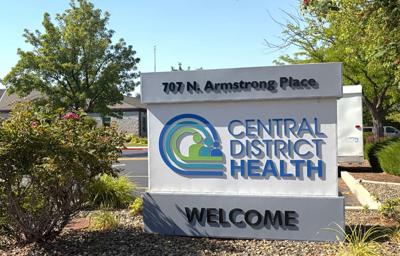

BOISE — c
CDH is one of the state’s seven health districts and encompasses Ada, Boise, Elmore and Valley counties. Within the first quarter of 2026, from January to April 20, CDH recorded four cases of HIV. Statewide, there were 15 total cases in that quarter.
This compares with the first quarter of previous years like 2025, when the state saw 16 cases, seven in 2024 and 12 in 2023.
The case numbers don’t lend to a strong trend, but the rising rates have been enough to cause concern. Nowadays, HIV rates aren’t skyrocketing — but they aren’t going down.
Jaime Butler-Dawson, epidemiology program manager at CHD, described the rise in cases as an occurrence throughout Idaho.
As for the demographics affected, Butler-Dawson noted that while HIV is prevalent in gay males, it affects all communities.
According to HIV.gov, 22% of HIV cases in 2022 were acquired through heterosexual activity. That same year, 18% of cases were female patients.
“It is not like what we thought about in the ‘80s or ‘90s, and a different demographic at risk,” she said. “Everyone’s at risk here if you’re doing high-risk behavior, so we need to be testing and knowing our status or using protective interventions.”
Butler-Dawson said HIV patients have been skewing younger as well. There isn’t a definitive answer as to why, but Butler-Dawson theorized that poor sexual education could play a part.
“I was reading about Gen Z and Gen Alpha and that people don’t really know a lot of facts about HIV,” she said. “There’s a lot of myths out there, and so I think that maybe education in schools hasn’t been focused on sexual health as much.”
While Idaho education may lean toward abstinence over thorough sexual health education, Butler-Dawson said educated teens are not more likely to have sex.
“Research has shown time and time again that knowledge of sexual health and STIs does not promote being promiscuous and having more sex in adolescence,” she said.
Another issue is the stigma surrounding HIV, stifling an open dialogue.
“Because we’ve been under the radar ... (and) it’s not like out in the open, this is happening,” Butler-Dawson said. “I think people are a little more hush hush about it.”
Idaho has one of the lowest rates of HIV nationwide, and CDH hopes to keep it that way.
In 2026, HIV is not a death sentence, but it is a chronic illness that can be deadly if left untreated. The infection still has plenty of misinformation surrounding it.
For example, Butler-Dawson said that people with HIV can feel perfectly healthy and don’t necessarily have symptoms. Depending on an individual’s risk factors, some are recommended to get HIV testing at least once a year.
A recent misconception Butler-Dawson heard was that HIV can be transmitted by mosquitoes. Instead, HIV is mainly transmitted through unprotected sex and shared needles. While HIV is more easily transmitted through anal sex, it is also transferable through vaginal sex.
Modern medication means that a person with HIV can manage symptoms and reduce their viral load, lowering the risk for sexual partners.
According to CDH, pre-exposure prophylaxis, or PrEP, can be taken as a preventative measure that lowers the risk of contracting HIV. If an individual partakes in risky behavior, post-exposure prophylaxis can be taken within 72 hours to prevent possible exposure as well.
Butler-Dawson said medication for an infected person isn’t particularly burdensome and is generally covered by insurance.
HIV testing has also been simplified. The CDH offers free at-home testing kits that can be ordered online or at a CDH clinic.
Ultimately, Butler-Dawson believes knowledge is power and that the best way to curb HIV rates is to talk about it.
“As you’re teaching them, you can harp on saying, ‘OK, let’s wait for sex ...’ but you know kids are going to have sex if the opportunity presents,” she said. “So it’s best to know, ‘These are ways to prevent getting an STI,’ or ‘What even is an STI? What does it look like?’”
More information on CDH sexual health services can be found at cdh.idaho.gov/healthcare-appointments/sexual-health-services

(0) comments
Welcome to the discussion.
Log In