

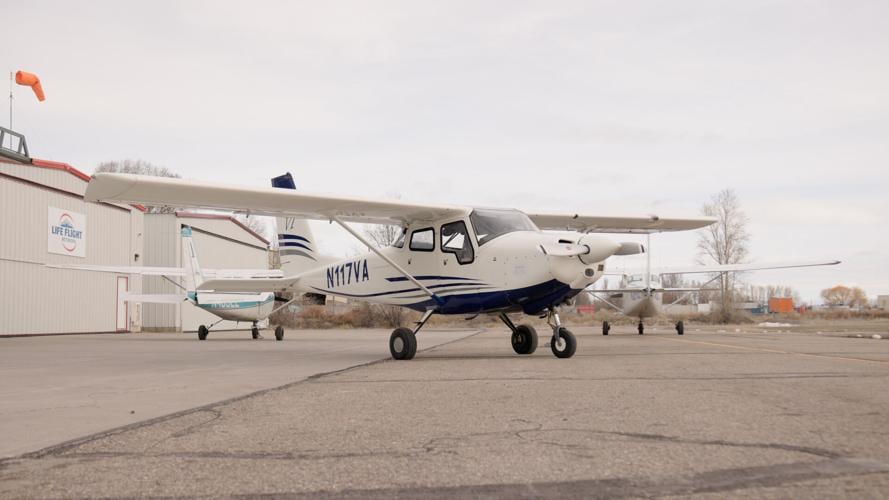
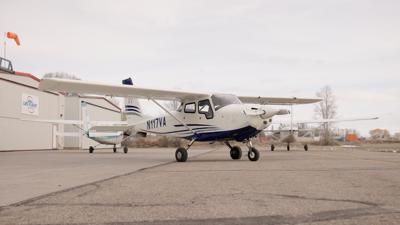
POCATELLO — A flight school that is aiming to give Eastern Idaho residents a direct path to a career in aviation is taking off at the Pocatello Regional Airport, offering both rudimentary novice instruction and the full slate of licenses needed to fly for a major airline.
The Rexburg-based Bravo 6 Flight Academy opened after founder and owner John Seal saw an increase in demand for pilots following the COVID-19 pandemic. While flying clubs and independent flight instructors existed in the area, Seal wanted to bring a dedicated flight school to Eastern Idaho.
The academy serves a wide range of clients, from those pursuing aviation as a lifelong dream to people in the midst of a career change and retirees picking it up as a hobby. Chris Nestman, the academy's director of operations and dispatcher, said most students enroll with the goal of eventually flying for airlines, cargo carriers or as bush pilots.

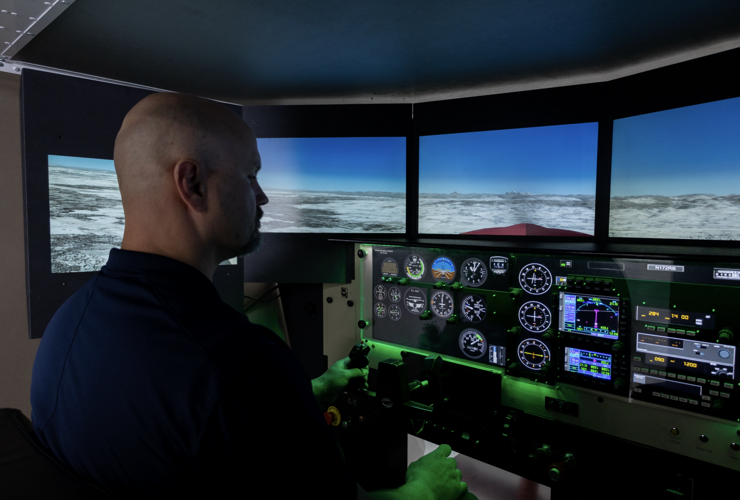
A flight simulator utilized by Bravo 6 Flight Academy.
Every student begins with a private pilot license, the entry-level certification required to legally fly and carry passengers in the United States.
The Federal Aviation Administration requires a minimum of 40 hours of flight instruction before a student can attempt the certifying "check ride," though Nestman said the national average is closer to 70 hours, since fewer than 1 percent of students are ready at the 40-hour mark. That translates to a cost of roughly $10,000, with most students paying between $12,000 and $17,000 depending on how quickly they progress.
A flight simulator utilized by Bravo 6 Flight Academy.
Students typically train two to three times a week in sessions of approximately two-and-a-half hours, with most completing their private license in three to six months. Before flying, all applicants must also pass a medical exam administered by an FAA-approved physician.
Heart conditions and blood pressure issues can disqualify candidates. Mental health diagnoses such as depression and anxiety can also factor into the qualification process, but they do not always automatically prevent someone from becoming a pilot.
From there, students pursuing a career path can add an instrument rating, which allows pilots to fly in low-visibility conditions using cockpit instruments rather than relying on sight. That certification is what commercial airline pilots use to navigate and land during snowstorms and other inclement weather.
Students will then work toward a commercial license, which legally permits a pilot to earn money flying. The FAA requires a minimum of 250 flight hours for a commercial license, but Nestman said most airlines won't hire a pilot until they reach 1,500 hours.
To help new pilots build flight hours and earn a more consistent wage, Bravo 6 includes flight instructor certification as part of its program.
While the academy does not currently offer agricultural pilot certification or multi-engine training in-house, Nestman said the academy hopes to add multi-engine training by 2027.
Training blends flight time with ground instruction, with a significant amount of time dedicated to ensuring aspiring pilots have a full understanding of aviation principles before they take to the skies. Students learn aircraft systems, airspace regulations, weather patterns and safety procedures, including weight-and-balance calculations and pre-flight inspections performed before every flight.
While southeastern Idaho's gusty winds create a steeper learning curve, Nestman said those hurdles produce stronger, more adaptable pilots in the long run. Thermal updrafts generated by the region's lava fields add another layer of difficulty.
Despite those challenges, Nestman said the academy has maintained a clean safety record with no significant incidents, crediting the school's rigorous checklists and safety protocols.
The full cost of training, including a commercial license, flight instructor certification and eventual multi-engine rating, runs between $80,000 and $90,000. Those costs are driven largely by the FAA's 250-flight-hour minimum, along with significant fuel costs, aircraft maintenance and instructor pay.
As the academy looks to the horizon, Nestman said the academy is pursuing a partnership with Idaho State University with the goal of establishing a university-based aviation degree program in Pocatello.
Beyond the ISU partnership, the academy's future plans include bringing multi-engine training in-house within the next couple of years, adding another pilot certification that would be available locally.
For now, Bravo 6 continues to elevate its students to new heights, teaching them to navigate the skies and providing a pathway to professional aviation in Pocatello.


(0) comments
Welcome to the discussion.
Log In