

WASHINGTON — The Capitol is quiet this week, with Congress out of town for its end-of-year recess, but lawmakers are gearing up for what promises to be a hectic few weeks of work when the Senate returns on Monday and the House a day later.
Federal legislators had a relatively quiet first half of December, but that’s only because they had already punted key items on their to-do list into 2026. At the halfway point, the 119th Congress has already distinguished itself as the least productive in modern history by several measures, including the number of bills signed into law, and the 43-day government shutdown that began in October and was the longest in history.
Here are five questions lawmakers will have to answer when they return to the Capitol next week.
Will the government shut down again at the end of January?
Federal funding lapsed for over six weeks in October and November, disrupting travel, forcing some federal employees to work without pay and costing the U.S. economy an estimated $90 billion, according to Kevin Hassett, director of the White House’s National Economic Council. Congress eventually passed a short-term spending bill, but that measure only funds part of the government through September, when the fiscal year ends. That means a partial government shutdown will begin Feb. 1 unless lawmakers pass another funding bill before then.
On the surface, the 2025 shutdown was about health care costs, with most Democrats refusing to vote for a funding bill unless Republicans agreed to extend subsidies for insurance plans bought through HealthCare.gov or state-run marketplaces like the Washington Health Benefit Exchange. The deal that ended the shutdown only gave the Democratic minority a chance to vote on a proposal to preserve those important but costly subsidies, which predictably failed in the Senate.
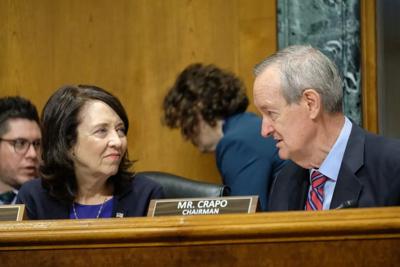
But another, lower-profile conflict hasn’t been solved either: Under current Senate rules, appropriating money for federal programs requires a bipartisan, 60-vote supermajority, but Republicans can rescind that spending with just a simple majority of 51 votes. Democratic members of the House and Senate Appropriations Committee, including Sen. Patty Murray of Washington, the top Democrat on the Senate panel, want assurances that if they participate in the traditionally bipartisan process of funding the government through 12 separate appropriations bills, President Donald Trump and his GOP allies in Congress won’t just be able to undo that work.
Congress left for its holiday break without finalizing the nine remaining appropriations bills. While the House and Senate each have about three weeks of work scheduled in January, there are just eight days when both chambers are in session at the same time, leaving little time to hash out differences and finalize the funding package by Jan. 30.
What will Congress do about health care costs?
Republicans and Democrats agree the U.S. health care system is broken. They just don’t agree on what fixing it should mean.
On average, Americans spend twice as much on health care as people in the rest of the world’s wealthy countries, yet health care outcomes in the United States are worse than in all of those countries, by metrics including life expectancy, infant mortality and unmanaged diabetes.
The debate at the center of the 2025 government shutdown focused on a relatively small part of the nation’s patchwork health care system: the roughly 24 million Americans who rely on private health insurance purchased through marketplaces established by the Affordable Care Act of 2010, often called Obamacare.
Monthly premiums, the fees to maintain coverage, have become so costly than many Americans are expected to go without insurance in 2026, when the expiration of the enhanced subsidies Democrats created in 2021 will cause premiums to more than double on average, the nonpartisan health research organization KFF estimates.
Extending those subsidies, which come in the form of tax credits, would cost taxpayers about $30 billion in 2026 and roughly $350 billion over a decade, the nonpartisan Congressional Budget Office estimates. Moderate members of both parties have put forward bipartisan proposals that would extend the subsidies for most people while cracking down on fraud and imposing income limits — under the program Democrats created in 2021, even high-income Americans were guaranteed to spend no more than 8.5 percent of their income on premiums.
So far, leaders of both parties have shown little interest in a bipartisan solution. Democratic leaders have backed a discharge petition that gained enough Republican support to force a vote in January on the same three-year extension of the existing subsidies that already failed in the Senate and would be sure to meet the same fate again even if it passes in the House.
Will there be bipartisan problem solving in an election year?
The high cost of health care isn’t the only issue facing Congress this year. Regulating artificial intelligence, updating immigration laws that haven’t been overhauled since 1986, protecting kids’ safety online and restricting how companies can collect and use Americans’ personal data are exactly the kind of challenge that demands action by federal lawmakers, not just state legislatures.
But Congress has failed to act on those issues and many more for years, and that doesn’t appear likely to change in 2026. One reason is that both parties already have an eye on November’s midterm elections, when control of the House — and maybe even the Senate — could change hands.
Polling and historical precedent suggest Democrats have a good chance to win the House majority, so they’re less likely to compromise with Republicans on major legislative issues when they have a potentially stronger negotiating position in sight. Republicans, meanwhile, see this year as potentially their last chance for the foreseeable future to pass partisan legislation while they control the House, Senate and White House.
How will Republicans use their chance to pass another partisan ‘reconciliation’ bill?
What’s left of the Senate filibuster rule, which requires 60 votes to pass most legislation, means that even with a 53-seat majority in the Senate, Republicans have limited opportunities to enact major changes in law even when they control every branch of the federal government. The big exception to that rule is a process called budget reconciliation, which the majority party can use once per fiscal year to enact legislation that has an impact on the federal budget.
What exactly that means is up to the Senate parliamentarian, a little-known official who has the power to strike provisions from a reconciliation bill, but the process can generally be used to change taxes and spending. That’s what Republicans did with the law they first dubbed the One Big Beautiful Bill Act — later rebranded as the Working Families Tax Cut Act — which extended existing tax cuts and increased spending on the military and immigration enforcement while cutting funds for health care, food aid and other programs.

(0) comments
Welcome to the discussion.
Log In