








BOISE — Bruce Reichert’s face was so swollen he was unrecognizable. He had a “vicious case” of poison ivy, picked up at Jump Creek during his first video shoot as host of a television program focusing on the outdoors. More than three decades later, Reichert is recognizable across Idaho as the face of the popular public television show “Outdoor Idaho.”
“There’s a passion with this show that hopefully shines through everything we do,” Reichert said. “If you’re not passionate about these topics, these shows, you might as well give it up.”
“Outdoor Idaho” is one of many programs on Idaho Public Television, a member station of the Public Broadcasting Service, which this year is celebrating its 50th anniversary.
For 50 years, the PBS has sought to educate, inform, inspire and entertain. That mission gave the American public iconic educational programs like “Sesame Street” and “Mister Rogers’ Neighborhood,” inspirational ones like “Nova” and “Masterpiece Theater,” and entertainment like “This Old House” and “The Great British Baking Show.” PBS aired acclaimed dramas and documentaries, such as British ITV’s “Downton Abbey” and Ken Burns’ “Civil War.” Along the way, it earned a reputation as the most trustworthy institution and news provider in the United States.
PBS isn’t beloved by all; throughout its history public broadcasting in the U.S. has faced criticism for its financial support from states and the federal government.
Member stations are the heart of PBS. Local stations, like Idaho Public Television, produce the vast majority of PBS content, which is distributed throughout the country. Public television in Idaho existed before PBS, but the local station shares the PBS mothership’s legacy and mission.
Today, Idaho Public Television’s five channels reach nearly 100% of Idaho television households. Its local programs attempt to connect our culturally and geographically disparate state, while broader PBS content provides Idahoans a “window to the world,” according to Ron Pisaneschi, Idaho Public Television’s general manager.
“We help people understand their fellow Idahoans,” Pisaneschi said. “There’s a lot of places in Idaho where they’re never going to see a great opera, they’re never going to make it to France. We can bring the world to them in a way that they might not otherwise be able to experience.”

{span}Ron Pisaneschi{/span}
HISTORY OF PBS
It may come as a surprise to learn characters like Clifford the Big Red Dog and Barney have always been a bit controversial. From its inception, American public broadcasting carried with it a divisive question: Should taxpayers fund educational television the way they fund schools and libraries?
On May 1, 1969, Fred Rogers, host of “Mister Rogers’ Neighborhood,” appeared before the U.S. Senate Subcommittee on Communications. Trading his cardigan and sneakers for formal attire, Rogers came to Capitol Hill to oppose a proposal by President Richard Nixon’s administration to slice in half federal funding for public broadcasting.
Rogers, openly disdainful of violent television and mindless cartoons, pleaded the case for educational programming, like his. Rogers argued, in essence, these programs could not survive as commercial enterprises.
“We deal with such things as the inner drama of childhood,” Rogers said. “We don’t have to bop somebody over the head to make drama on the screen. We deal with such things as getting a haircut or the feelings about brothers and sisters and the kind of anger that arises in simple family situations. And we speak to it constructively.”

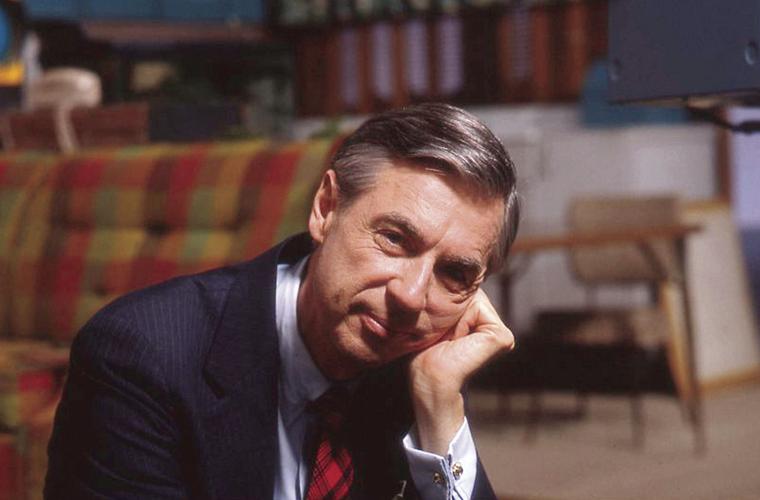
This image shows Fred Rogers on the set of his show “Mr. Rogers Neighborhood” from the film, “Won’t You Be My Neighbor.”
Two years prior, Congress passed the Public Broadcasting Act of 1967, which established federal funding each year for public broadcasting. It also established the Corporation for Public Broadcasting, a private nonprofit that distributes federal funding to public broadcasters. When he signed the bill into law President Lyndon B. Johnson said the Public Broadcasting Act would “enrich man’s spirit” by giving a “wider” and “stronger voice to educational radio and television.”
By 1969, the Nixon administration sought to claw back that funding. It was the first in a series of battles over whether to fund public broadcasting with taxpayer money, which continues today. Rogers’ Senate speech helped to secure the full funding for public broadcasting: $20 million that year. Today, it’s nearly $500 million.
The money helped pave the way for PBS, which became a successor to National Educational Television, a network that distributed educational shows like “Mister Rogers’ Neighborhood.”
PBS officially launched in 1970 and began distributing existing shows like “Sesame Street” and Julia Child’s “The French Chef” — among the first reality television programs. The network also fostered an explosion of new — now classic — programs from its local stations: “Masterpiece Theater” (1971), “Nova” (1974), “PBS NewsHour” (1975), “Austin City Limits” (1976), “This Old House” (1979) and “Frontline” (1983). Rogers would host 28 seasons and more than 800 episodes of his show on PBS.
When PBS began operating, there were just three television networks, each of them private, commercial businesses: ABC, NBC and CBS. PBS gained notoriety among a national audience with its gavel-to-gavel coverage of the 1973 Watergate hearings. Anchored by Jim Lehrer and Robert MacNeil, PBS broadcast all 250 hours of the hearings.
Over the years, PBS has “pushed the envelope” in creating content and adapting to technology, Pisaneschi said. PBS was the first television network to use closed captioning and one of the first to transition from analog to digital signaling.
But the strength of PBS is its content, Pisaneschi said. “That’s what people look to us for.” Education, in particular, has always been central to its mission. Educational programs are centered on academic information and learning, Pisaneschi said.
“It’s fun, it’s engaging, it’s sticky, it’s really easy to watch, but there are particular educational outcomes that are baked into every show,” he said.

Sesame Street at 50
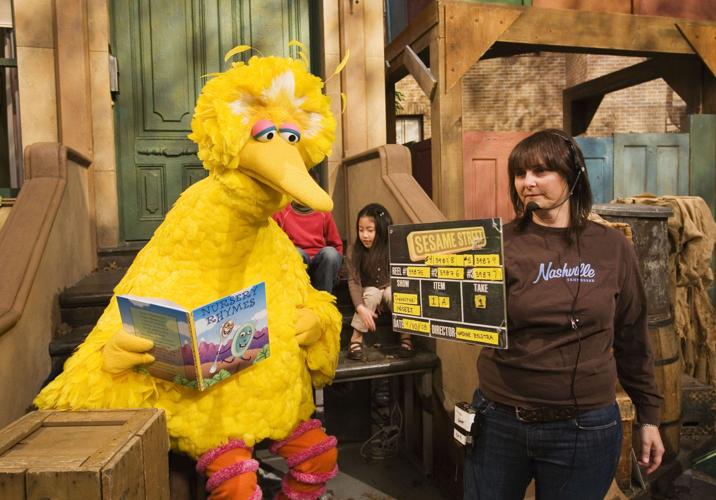
This April 10, 2008 file photo shows Lynn Finkel, stage manager for “Sesame Street,” slates a taping with Big Bird, performed by Caroll Spinney, in New York. The popular children’s TV show is celebrating its 50th year.
‘THE LONG STORIES’
Among PBS’ member stations is Idaho Public Television, which has been operating in Moscow since 1965. Stations in Boise and Pocatello opened in 1971, and until the early 80s universities in each city operated the three independent stations. The three were consolidated under one umbrella, licensed and funded by the Idaho State Board of Education, with Boise (KAID) being the flagship and Moscow (KUID-TV) and Pocatello (KISU-TV) operating as satellites.
At the time, PBS programs were popular among Idahoans. In 1992, Rogers visited Boise and was honored with a peace quilt. In 1984, Big Bird, a character on “Sesame Street,” performed with the Boise Philharmonic.
More recently, Idaho drew other national PBS figures, such as in 2001, when Luciano Pavarotti, whose PBS concert specials won multiple Emmy awards, performed at Boise State University. In 2013, “Antiques Roadshow” came to Idaho to shoot three episodes.
But Idaho Public Television is really about local programs, according to its current and past employees.
“No matter who you talk to, local productions have a good name,” said Jeff Tucker, director of content for Idaho Public Television. “We tell the long stories, not just the minute-and-a-half-long stories. I think that’s how we stick out and can continue filling that niche for people.”

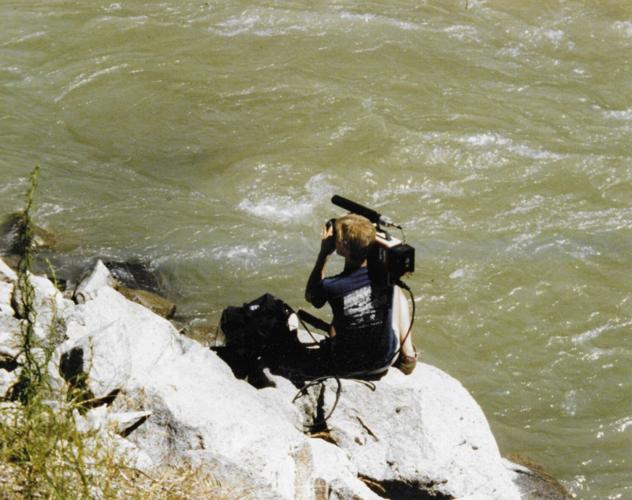
In this 1987 photo, Jeff Tucker shoots video along the Payette River for Idaho Public Television. Tucker is now the content manager for the station.
Launched in 1972, “Idaho Reports” was the first program devoted solely to coverage of the Idaho Legislature and has since become the longest-running legislative show in the western U.S. “Nobody was really doing that kind of programming back then,” said Peter Morrill, former general manager of Idaho Public Television and the director of “Idaho Reports” in the late ‘70s and ‘80s.
In its early days “Idaho Reports,” then called “The Reporters,” was a live studio show in which hosts reported legislative happenings and interviewed lawmakers. In subsequent years, the station developed broadcasting capabilities within the Statehouse. Idaho Public Television claimed a space on the fourth floor and ran cables to the chambers below — sometimes creating trip hazards.
“Idaho Reports” initially aired daily during the legislative session, then it expanded to a daily show, year-around. Eventually, due to budget cuts, Idaho Reports became a weekly show, airing on Fridays, which remains the case today. Hosted by Melissa Davlin, “Idaho Reports” today covers not only the Idaho Legislature but all facets of state government.

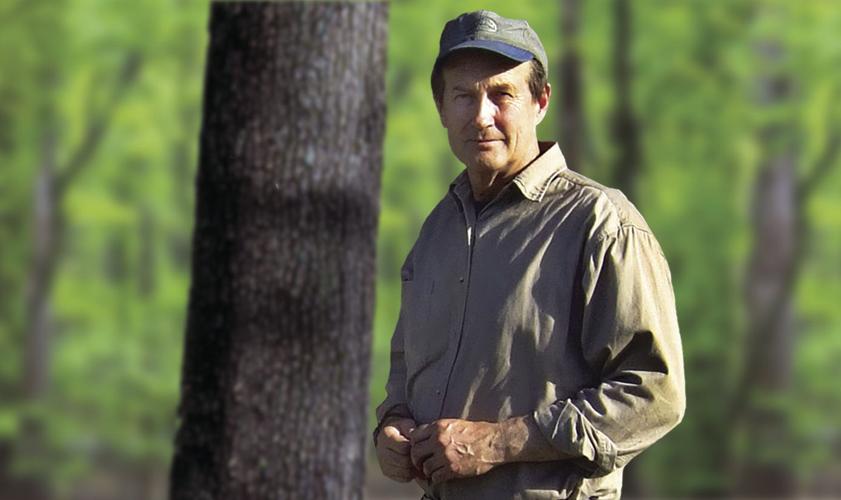
Bruce Reichert
In the early ’80s, “Idaho Reports” caught the attention of Bruce Reichert, who was a school teacher and bartender in Idaho City at the time. Despite having no television experience, Reichert decided he wanted to work for Idaho Public Television after seeing an episode of the show.
“It wasn’t very elegant, and I thought, ‘Wow, maybe I can do that,’” Reichert said.
After several letters requesting a job went unanswered, Reichert offered to work in a volunteer capacity, to which then operations manager Bob Pyle agreed. Around the same time, Morrill, then a producer, was working with Royce Williams of Idaho Fish and Game to develop a new program to cover Idaho’s outdoors.
Launched in 1983, “Outdoor Idaho” was a fairly quick success and remains one of Idaho Public Television’s most beloved programs. Around 1988, Reichert, who was working full-time for “Idaho Reports,” was asked to host an episode of “Outdoor Idaho”; it was the request that led to a face-full of poison ivy.
Reichert wasn’t deterred. He has since been the host of “Outdoor Idaho” for 32 years.
The show takes viewers to hard-to-reach locations and educates them on little-known, or under-appreciated outdoor issues throughout the gem state. This month’s programming included a show on Idaho’s “12ers,” featuring Idaho’s nine mountain peaks that extend 12,000 feet or more and the people who climb them. A show from October featured Idahoans who choose to live “off the grid.” There is some “serendipity” involved in producing the 26-minute weekly show, Reichert said.
“That’s the thing about Idaho: You can go anywhere … and there are fascinating people to talk to,” he said. “They have so many cool stories.”
Other local programs include “Idaho Experience,” a historical documentary series launched in 2018; “Idaho Debates,” broadcast during election season; and various documentary specials. This year, Idaho Public Television partnered with local teachers to broadcast lessons to students who are learning remotely due to the pandemic.
Tucker said one of the strengths of PBS is its variety.
“You tune into the History Channel you get history, you tune into Animal Planet you get animals,” he said. “Public television gives you a little bit of everything. You get drama, nature, science, outdoors, news, public affairs.”
FUNDING CHALLENGES
One of the key events in Idaho Public Television’s history came in the 21st century, when it began web-streaming live legislative proceedings.
“To me, that really goes to the mission of Idaho Public Television in the best sense,” Morrill said. “I’ve (heard from) so many people from around the state … who really rely on that service to stay engaged and informed on what’s happening at the legislature.”
The streaming set-up required cooperation between public television folks and lawmakers, which has often been necessary for the station to adequately cover the Legislature. But government officials, both at the state and federal levels, haven’t always been so hospitable toward public broadcasters.
Idaho Public Television is funded and operated by the Idaho State Board of Education, which means the Idaho Legislature pulls its funding lever each year. About a quarter of the station’s $8.8 million annual budget comes from the state, and that money is used for infrastructure and operational costs. The remaining budget, used for programming, is funded by private donors and grants.
In the 1980s, animus from legislators toward Idaho Public Television first reared its head, resulting in reduced state funding and cut-backs at the television station. At the federal level, Newt Gingrich, Republican House speaker in the mid- to late-90s, led a campaign to defund the Corporation for Public Broadcasting; funding was reduced, the effects of which trickled down to PBS member stations.
Often, threats of defunding public broadcasting follow the airing of controversial content. Such was the case in the ’80s when KUID-TV in Moscow aired a documentary critical of a large North Idaho lumber mill, Royce Williams, co-creator of “Outdoor Idaho,” recalled in a 2016 article.
“Local legislators came to Boise, pounded on their desks and said that IdahoPTV was using taxpayers’ money to malign a major North Idaho employer,” Williams wrote.
During this year’s legislative session, Republican lawmakers bemoaned Idaho Public Television‘s news coverage and the content of its programming, specifically the portrayal of a lesbian couple in “Clifford the Big Red Dog.” Rep. Dorothy Moon, R-Stanley, suggested Idaho Public Television should not be funded by the state, after criticizing its coverage of the Legislature.
Rep. Tammy Nichols, R-Middleton, said taxpayers should not be responsible for funding programs that portray homosexuality. “If people want to give their own money, that’s one thing, but I don’t believe that as a whole that we should be promoting these agendas.”
In February, President Donald Trump proposed within the next four years completely eliminating federal funding for the Corporation for Public Broadcasting — which distributes funds to not only PBS but also to National Public Radio (NPR), American Public Media and other organizations.

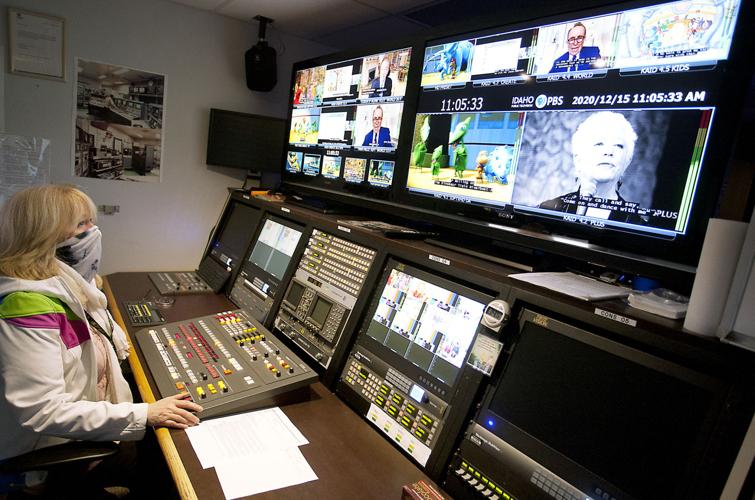
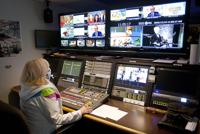
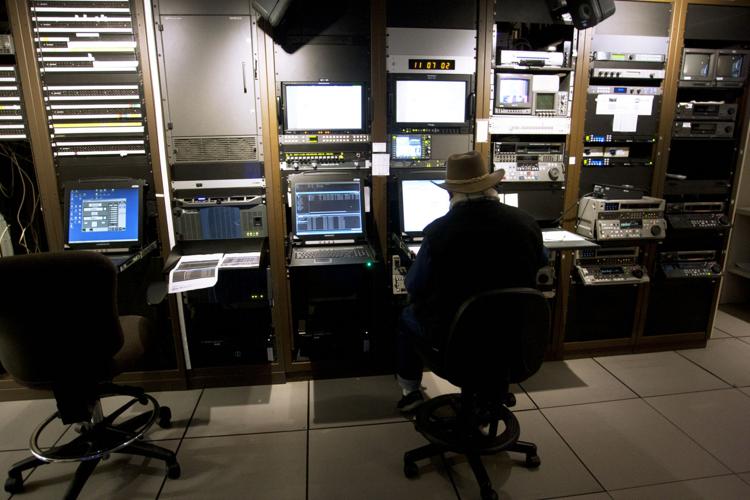
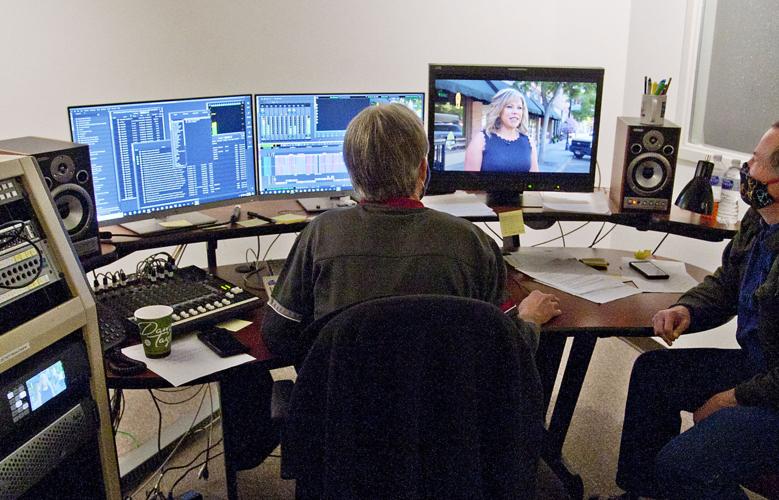
A staff member at work in the master control room at Idaho Public Television, Tuesday, Dec. 15, 2020.
Both Pisaneschi and Morrill said funding has always been a challenge for Idaho Public Television. Morrill recalled one year having to lay off 16 people from the station’s 60-person staff due to budget cuts.
Pisaneschi defends taxpayer funding for public television by pointing to its educational value. He said: “There are lots of things that could be done privately that are funded by the state. There’s private schools, but we still pay for public schools. There are private bookstores, and we pay for libraries. There’s private museums, but we have a state historical society. I view us as America’s and Idaho’s largest classroom.”
“Yes, we are a part of media, but we’re really part of the education system of Idaho, as well,” Pisaneschi added.
100 YEARS?
Half a million people watched Idaho Public Television broadcasts each week during 2019, according to the station’s annual report, and regularly it’s among the most-watched PBS member stations in the U.S., per capita.
Bev Harad is a board member emeritus of the Friends of Idaho Public Television, the nonprofit responsible for facilitating about $6 million each year in private donations to the station. As part of her role, Harad said she talks to donors about why they support Idaho Public Television.
“You begin to realize how many people only watch public television; they don’t watch anything else,” Harad said. “No. 2, they trust it. They trust it because they can see that there is a quality of programming and expertise in what is being done, so they get a really wonderful product.”
A poll by the Roper Center for Public Opinion Research found that for 17 years in a row PBS is Americans’ most trusted institution and source of news.

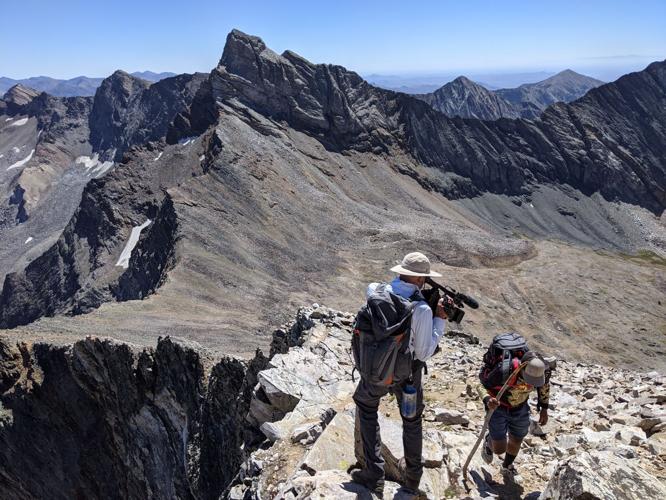
Videographer Jay Krajic films climbers near Hyndman Peak for “Idaho’s 12ers,” a recent episode of “Outdoor Idaho,” for Idaho Public Television.
Roy Schiele, another Friends of Idaho Public Television board member, said he appreciates the station’s dedication to reaching all parts of the state. Raised in a family that hails from eastern Idaho, the station’s rural outreach was one reason he became a donor — the other was PBS’ educational content his children watched.
“Knowing the isolation that occurs in a lot of the smaller towns, I just felt having a broadcast station that provided the kind of programming that Idaho Public Television does and PBS does really helped level the playing field for people in Idaho,” Schiele said.
Reichert said he hopes the next 50 years of Idaho Public Television and PBS maintain that diverse programming.
“It’s really easy for an entity like public television to cater to urban areas because that’s where the eyeballs are, that’s where the money is for donations,” he said. “I just hope they don’t give up on rural America, rural Idaho. That’s where the need is for education, that, to me, is where the cool stories are.”
Pisaneschi is confident there will be a 100th anniversary of PBS. While the diversifying media landscape provides more options to consumers, it also increases the appetite for trustworthy institutions. PBS viewers trust that “we’re here for them” and “we’re not here to make money,” he said.
“We really are in the public service business, and it’s more of a calling than it is even a business,” Pisaneschi said. “Because of that, we will always be here. People are increasingly looking for organizations that they value, that they trust. People don’t have to give us money. … But they do it because they believe in what we’re doing, and it’s something that’s increasingly important in their lives.”
Editor’s Note: This story has been updated to correct the year Fred Rogers visited Boise. It was 1992.


(0) comments
Welcome to the discussion.
Log In