



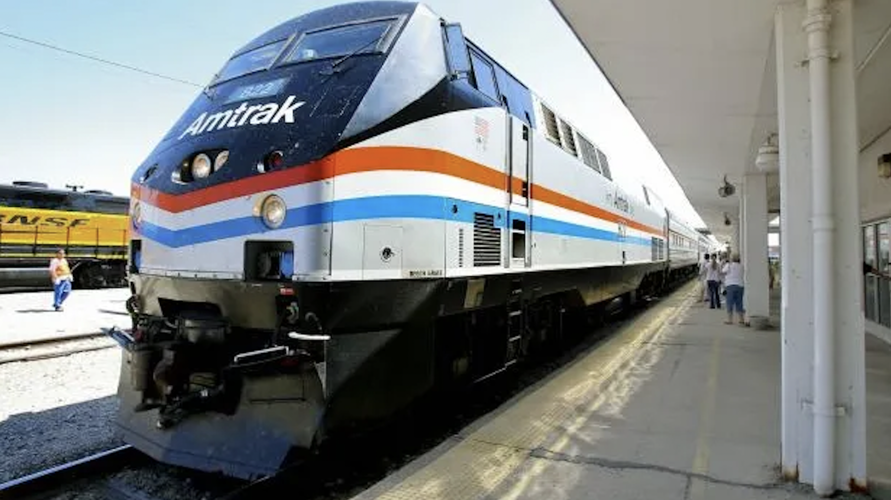

Despite a full court press by government leaders in Idaho and Utah, the Federal Government denied an application to study Amtrak service along the old Pioneer Line. That route would connect Boise with Twin Falls, Pocatello and, ultimately, Salt Lake City. While I’m a little surprised Idaho and Utah got boxed out at such an early stage of the process, I expressed my skepticism about Boise-to-Salt Lake City train service several months ago. Having travelled around the world by plane, train, bus, vehicle, and foot, I humbly believe the Feds made the right decision.
The stakes for this initial process were low. Cities and states applied for $500,000 grants to merely study the feasibility of different routes. Around 76-percent of all applications were approved, but Idaho/Utah didn’t make the cut. A recent article in the Idaho Statesman suggests a reason why: Neither Idaho nor Utah wanted to put their money where their mouths were. While political leaders expressed bipartisan support for Boise-to-Salt Lake City Amtrak service, none of them had a plan to actually pay for the route.
Officially, that shouldn’t have mattered. Grant applications did not require local funding sources to move forward. However, U.S. Transportation Secretary Pete Buttigieg said, “The successful applications were for the corridors that [the Federal Railroad Administration] viewed as most prepared for advancement in their planning work[.]” The Statesman went on to profile several routes where state and/or local funding were already in place. “Unofficially,” it probably didn’t help that Idaho’s federal delegation was split on approving President Biden’s Infrastructure Bill (Reps. Simpson and Fulcher voted against it, while Sens. Crapo and Risch voted in favor. Utah Sen. Mike Lee, a consistent thorn in Biden’s side, also voted against it). That legislation, after all, is the source of the $500,00 grant money.
However, here’s the thing. While the initial grant doesn’t cost us anything (aside from the pennies of our individual tax dollars it takes to make a $500,000 federal grant), the financial commitment becomes very real the further down the tracks we go. Once we get past the study phase, the Feds pick up 90-percent of the planning costs and then 80-percent of the implementation costs. Eventually, we’re going to have to pay for keeping the trains running on time. That means millions of local and/or state taxpayer dollars.
On the state and local level, I pay my fair share of taxes for everything from public schools, parks, and sewers. And, I’m glad to do so. However, if you’re asking me to pay for train service, I’m out.
Let’s run the numbers.
Assuming I’m planning ahead, a round-trip airplane ticket from Boise-to- Salt Lake City on Delta between February 16-18 (Friday-Sunday) will cost me $317.80 with non-stop flights both ways. Each flight will take a little over an hour. I can take the Metro Friday from the Salt Lake Airport to Downtown for a couple of bucks, conduct my business, take the Metro back to the airport Sunday and get into Boise at a reasonable hour.
In the alternative, I can gas up my car Friday for $45.00 in Boise, drive to Salt Lake City with minimal traffic in four-and-a-half hours, conduct my business, fill my tank again, and drive back to Boise Sunday for another $45.00.
Having travelled all of the routes outlined above, I’ll bet you dollars to donuts that taking the train from Boise to Salt Lake City will cost more and/or take longer than the scenarios outlined above. Furthermore,
I guarantee you the people advocating for Boise-to-Salt Lake City train service are the same people who would take the alternative methods of travel I just described. It’s easy for them to promote train travel when they don’t have to pay for it.
I would love a world in which all of us Westerners travelled the country by rail — just like we used to. However, the economics and reality of passenger rail in the West doesn’t add up. I may be a Democrat who voted for President Biden, but I’m not onboard for Amtrak service from Boise to Salt Lake City.
Apparently, the Feds agree.

(0) comments
Welcome to the discussion.
Log In