

When I was graduating from eighth grade, I received a note from one of my teachers, whom everyone feared. The fact that she handed me a note, and the content of that note, really meant a lot to me. In fact, what she said has become an ongoing theme in my life, even today, many decades later. In her note, she quoted the poet Tennyson from his poem “Ulysses.” Her note read something to the effect: “Dear Ed, the poet, Tennyson, once said, ‘I am a part of all that I have met.’ I have found this statement to be helpful in my life. I am glad to have met you as one of my students. Remember that you are enriched by the people and events you encounter, and you will enrich the lives of those whom encounter you.”
The point Tennyson was making was that each of our lives is the sum total of what we experience: the events we live, our history, our culture and all the people we meet. Some events we deem wonderful, while some events we declare to be terrible. Some build us up, while others knock us down. Life is composed of good and bad things; they can’t always be pleasant and we need the harder experiences too. Greenhouses protect the seedlings, but if they never encounter the uncontrolled environment, they have no resilience to survive outside.
We do not live in a world where humans are perfect and flawless. The Bible teaches, and life experience affirms, that: “All have sinned and fallen short of the glory of God.” There was only one perfect person who ever lived, and that was Jesus. And He was beaten, whipped, rejected and brutally executed by people who felt threatened by Him.
Expecting that our own life could be perfect or idyllic is delusional. We are not “God become flesh,” only Jesus was the perfect, sinless Son of God. All of the rest of us have at some point done some stupid things, or been impacted by the stupid or mean things that other people have done. We have all encountered betrayal, bullying, or some form of hurtful behavior from others.
We must understand that other people are also the sum total of all they have experienced, and are (or were) influenced by the culture they grew up in. Each one of our teachers, mentors, parents, coaches, ministers, political figures, heroes and neighbors were flawed individuals who may have accomplished great things, but are still not perfect, nor ever could be. To expect perfection in others is also delusional.
The point? Life is composed of good events and bad events, good deeds and bad deeds, good memories and bad memories, and good examples and bad examples. We can learn something from every person that is good and to be emulated, and some things from that same person which were bad mistakes that should be avoided.
Abraham, who was blessed by God, showed us both good examples to follow and bad ones to avoid. God knew both the goodness of Abraham — and his selfishness. Joseph, in the book of Genesis, saved countless lives from famine, but also played a few dirty tricks on his brothers who had sold him into slavery. Each of us have done exemplary things, and also done some hurtful things. Welcome to humanity. We all have people who love us and people who resent us, at least if we have had to make some tough, unpopular decisions.
God says that we are to learn from the examples of the past, both good and bad. (1 Corinthians 10:1-13). In 1 Corinthians 10:6 (NASB) we read: “Now these things happened as examples for us, so that we would not crave evil things as they also craved.”
Each of us are dealt different cards in life. Your life has been built by people and things that were pleasant, and some that were unpleasant; some encounters were good, and some were hurtful. Some people are a joy, but then they break your heart. Some people break your heart, but then surprise you by asking for forgiveness. Sometimes what seems bad now, turns out to be a good thing in the long run. We are the sum total of everything and everyone we have encountered, and we must accept ourselves as such.
But so it is with everyone else we meet; they are also the sum total of everything and everyone they have encountered. So accept one another, and love one another. Learn from the good experiences and the bad experiences, for there are good lessons in both.
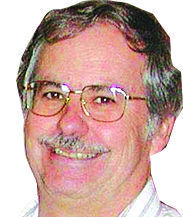
Award-winning columnist Dr. Ed Jordan is pastor of Gwynn’s Island Baptist Church in Gwynn, Virginia. He can be reached at szent.edward@gmail.com.


(0) comments
Welcome to the discussion.
Log In