




The demand for greener energy use and a safer future is percolating throughout the Northern Rockies — and the source for it all is the Idaho National Laboratory.
“The lab is achieving breakthroughs that will make the world safer, cleaner and more secure for future generations,” INL Director John Wagner said in a recent statement. “With increased support for our clean energy and national security missions, it is critically important that we have the workforce needed to deliver for the nation.”
According to Hope Morrow, INL’s current employment total is hovering around the 5,600 mark. Morrow is INL's resident labor economist and is tasked with development strategy for the lab.
But her recently completed in-house projection studies call for an additional 2,800 employees to join the lab. INL said it will see an increased demand for engineers, technicians and skilled trades positions. The five-year forecast shows this will include more than 600 openings for engineering positions and around 750 openings for technicians and trades.
“We do updated projections every year where we can look up every single occupation on an annual basis and try to understand what our needs or estimates of our needs will be,” Morrow said.
Morrow said it creates a clear picture of where the INL has been recruiting and placing its efforts.
“We’ve had a very tight labor market for more years than we're used to,” she said. “And so, the usual regional labor pool we pull from is getting smaller and our industry partners are getting bigger. We're competing at a higher level for positions that used to be easier to fill."
To meet that demand, INL has been utilizing the interest that’s in its "own backyard” — by bringing its experts to neighboring classrooms at the College of Eastern Idaho in Idaho Falls.
INL’s first practicum with CEI students launched in 2021 with six students. The second year, this past semester, saw 12. Interest, and enthusiasm, is so far shared equally between students and INL employees.
“For the three employees that are currently leading the practicum, this is something that they very much love and they're very busy professionals,” Morrow said. “I am constantly trying to stay on top of them to show their workload — and they're like, ‘The one thing that I would never want to give up is being able to mentor the practicum.’”
This rubber-meets-the-road approach to cultivating a new workforce for cybersecurity and the nuclear energy sector is part of the new perspective at Idaho National Laboratory — to look at the greater region where the workforce comes from and where there is interest.
Recently, the INL has had a Wyoming-focused run on nuclear energy outreach programming due to the announcement in 2021 from state leaders that Kemmerer in southwest Wyoming will serve as the location for the state’s first Natrium nuclear reactor.
The nuclear power plant, which is expected to be completed by 2028, will replace a retiring coal plant and eventually will be operated by PacifiCorp, which owns Rocky Mountain Power, according to a Wyoming Public Media article.
With that transition from coal to nuclear power underway in Wyoming, INL has launched programming and guest lectures at the recent Wyoming Global Technology Summit in Jackson and two days of free green energy programming at the Teton County Library in Jackson.
Morrow said that INL is actively working with communities and community colleges in Washington, Montana and Wyoming as well as throughout Idaho while also engaging in discussions with colleges in Utah.
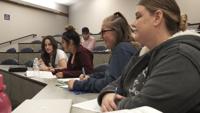
The online practicum is geared toward students in the third or fourth semester of their associate degree. The program is handled remotely. Students gather in the CEI computer lab while they work out the cybersecurity challenges that participating INL members throw at them from the lab over the course of 10 weeks.
“They experience the process from start to finish, creating content for a website, then having that website invaded, and then managing that cybersecurity breach,” Morrow said. “Each person in the practicum has to be the front-end developer. They have to be the cybersecurity expert. They have to be the engineer. They have to be the customer interface. They all rotate through the positions like it is in a real life cycle.”
That life cycle plays out in the lab as the students receive content from the experts and enjoy weekly mentoring with one-on-one sessions.
Morrow said that most of the students from that first class stayed on for internships and have stayed the course as they work toward a Bachelor of Science degree in cybersecurity — the degree meets the minimum requirement for most available positions at INL.
INL and Morrow will soon take the educational outreach program to the College of Southern Idaho and College of Western Idaho starting with the upcoming academic year.
The collaboration between CEI and INL allowseach sponsoring party to do what it does best as they break ground on new education opportunities. The community college manages registrations and the computer lab space and INL manages the professional know-how. At this point INL is absorbing the mentor costs.
Aside from being a novel opportunity to train Idaho professionals to pursue their careers in Idaho, it’s a boon for INL employees as well, Morrow said.
“We want a future workforce, and we want our regional folks to know about these opportunities,” she said. “But we also want to keep our staff. We want our staff to feel like they have opportunities outside of INL for their specialized skill sets. And the feedback so far from the program has been positive, especially from our younger employees.”
Morrow described the interest as “resounding.” From conducting an internal survey, Morrow learned that INL employees’ interests in the new program range from the staff working in the classroom at community colleges to building the curriculum to participating in guest speaking opportunities.

(0) comments
Welcome to the discussion.
Log In