


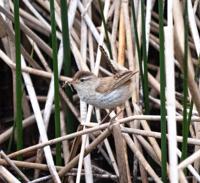
This is actually the third column on changes at Kathryn Albertson Park, but the second on expected/possible changes in bird occurrence over future decades. Last week I dealt with species where change seems reasonably predictable. We’re now getting into species where I’m going to do more fact-based reasoning and extrapolation, aka guessing. Data are from eBird, and I define winter as December, January, February. The other three seasons follow.

One of the many great tools developed by the Cornell Lab of Ornithology and its partners is BirdCast (birdcast.info/). BirdCast provides real-time predictions of bird migrations: when they migrate, where they migrate and how far they will be flying. Now is the perfect time of year to check out this amazing set of tools.


The app eBird (ebird.org/home) is the best innovation in birding since binoculars.
