

The International Cricket Council has banned Asif Khan of United Arab Emirates for 15 months after the batter tested positive for a banned substance. The ICC said in a statement on Thursday that Khan admitted the violation of its anti-doping code and accepted the ban for using a banned substance in an out-of-competition test conducted in September 2025. The ban was backdated from Sept. 8, 2025 and runs to Dec. 7, 2026. The ICC said he can return to training with a team on Oct. 8.
The International Testing Agency says South African cyclist S’annara Grove has been provisionally suspended because of a failed doping test. It says Grove’s sample collected on July 28 at the Commonwealth Games in Glasgow returned an “adverse analytical finding” for ipamorelin which it says is “a synthetic peptide used to stimulate the body’s natural production of growth hormone.” The ITA says Grove has been informed of the case and has the right to challenge the provisional suspension. The 32-year-old Grove rides professionally for the Smurfit Westrock team and is listed as a competitor in the current Tour of Britain. The third stage of the race was Friday.
Free agent minor league pitchers Luis Gomez and Julio Dilone have been suspended following positive tests for the performance-enhancing substance Stanozolol under the minor league drug program. Gomez was suspended for 80 games and Dilone for 60, the commissioner’s office announced. The suspensions will start when they sign with a major league organization. Dilone signed a minor league deal with San Diego in spring training after pitching last year in the independent Atlantic League and was released on Aug. 6. Gomez, a 21-year-old right-hander was released by Miami July 23. Eleven players have been disciplined this year for a drug violation.

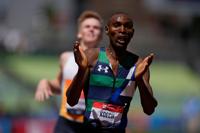
Last year’s U.S. 1,500-meter champion Jonah Koech had his title stripped and received a three-year ban for blood doping. The U.S. Anti-Doping Agency says the Kenyan-born 29-year-old’s ban came after abnormal results in what’s known as his athlete biological passport. The ABP is a baseline test performed on athletes when they enter the drug-testing pool against which later results are compared. USADA says passport tests are effective in detecting blood-doping methods such as the use of transfusions and the use of blood-boosting drugs like erythropoietin.


Former world heavyweight champion Joseph Parker says his nutritionist’s cocaine use caused a positive drug test after his bout with Fabio Wardley last October. Parker lost the Oct. 25 fight at O2 Arena in London. He had been provisionally suspended after urine tests overseen by UK Anti-Doping showed traces of cocaine in his system. UKAD says it imposed a three-month ban which was deemed served because the 34-year-old New Zealander had been suspended since late November. Parker told investigators the positive test “was the result of his exposure to cocaine from use by a nutritionist he employed." His claim included a written statement from the nutritionist “who admitted to being a regular user of cocaine.”

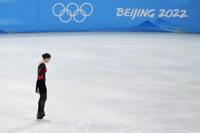
Kamila Valieva of the Russian Olympic Committee reacts after the women's free skate program during the figure skating competition at the 2022 …


Kamila Valieva of the Russian Olympic Committee reacts after competing in the women’s free skate program during the figure skating competition…
