

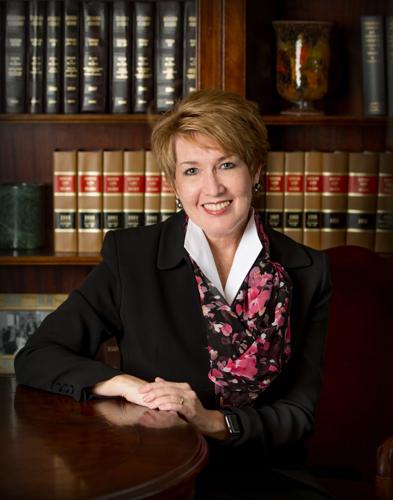
BOISE — A 4th District Court judge will likely decide later this month whether to endorse a request from the Idaho state treasurer for the state’s highest court to weigh in on her dispute with lawmakers over office space in the Statehouse.
At a hearing before District Court Judge Nancy Baskin on Tuesday, attorneys argued whether the Idaho Supreme Court should hear a part of lawsuit filed against Idaho Treasurer Julie Ellsworth by House Speaker Scott Bedke and Senate Pro Tem Brent Hill in June.
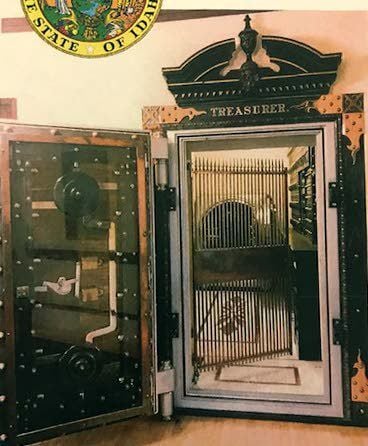
Bedke and Hill, in their official capacity as lawmakers, sued Ellsworth to require the Treasurer’s Office to move from the first floor of the Statehouse, where it has been for more than a century. The lawmakers pointed to a state law giving the Legislature control of the Capitol’s first floor. The suit has its origins in an effort by the Idaho Legislature in 2019 to appropriate money to build more offices for lawmakers and staff.
Since the case was filed last summer, attorneys haven’t even argued the constitutionality of the law itself, which gives the Legislature control over the Capitol’s first floor. They’ve only debated whether the case belongs in court at all — which is what the Idaho Supreme Court would be asked to consider.
Baskin will not make the decision about whether the attorneys should argue certain aspects of the case before the Idaho Supreme Court — the Supreme Court itself will decide that question. But Ellsworth’s attorneys in December filed a motion requesting Baskin’s permission to file an interlocutory appeal, which is a request for a higher court to hear certain aspects of a case before it has gone to trial.
Such motions are rare, said David Leroy, one of Ellsworth’s attorneys, and they are rarely granted. But if Baskin does decide to grant the motion, it will be an endorsement of the appeal to the higher court. If she declines to make that endorsement, Leroy said, Ellsworth could still file the appeal — in general, though, chances of the Supreme Court granting an appeal without the approval of a lower court are even slimmer.
If the Idaho Supreme Court grants the motion, justices there will be considering Ellsworth’s attorneys’ motion to dismiss the case, in which they argued Bedke and Hill individually didn’t have legal standing to file the lawsuit without the backing of the Idaho Legislature as a whole.
Baskin, however, denied that motion to dismiss and found the lawmakers did have standing to file the lawsuit. Chief among the questions the Idaho Supreme Court would likely consider would be whether Bedke and Hill did have standing.
“If we try this case all the way through, and then appeal, and the (Idaho Supreme Court rules) that there was no standing to bring the case, then it’s going to go all the way back to start,” Leroy told the Idaho Press. “So our argument is, I think, stronger than theirs on that point.”
In court Tuesday, John Runft, one of Ellsworth’s attorneys, argued that, if the Idaho Supreme Court decided the lawmakers did not have standing, it could decide all the other issues in the case.
“It has … a cascading effect on all the other issues,” Runft said in court.
Plus, Runft argued, even if the whole case does play out in district court, it’s likely one or both of the parties will ask the Idaho Supreme Court to hear it anyway.
“We will have an appeal if we proceed forward without the interlocutory appeal regardless,” Runft said.
Christopher McCurdy, one of the attorneys for Bedke and Hill, argued the case didn’t meet the criteria for an interlocutory appeal.
“It’s for that exceptional case that has all those boxes checked, and that’s not what we have here,” McCurdy said in court.
He reminded Baskin she had already decided Bedke and Hill had standing to file the lawsuit.
McCurdy encouraged Baskin to let the case “get to the merits of the matter, the heart of the matter, the full matter — get that in writing, in decisions,” and then appeal that to the Idaho Supreme Court, if necessary.
If the case went to the Idaho Supreme Court now, McCurdy said, it would simply delay adjudication on the actual issues in question.
“The Speaker and the President Pro Tem oppose the motion for a permissive or interlocutory appeal to Idaho Supreme Court,” Bedke and Hill’s attorneys wrote in a statement. “They believe the district court correctly decided the threshold jurisdictional issues regarding the authority of these legislative officers to bring the case. Rather than an appeal of only a part of the case as the Treasurer seeks, the most efficient and economical approach is for the district court to resolve all of the issues, including the constitutionality of the statute, before an appeal.”
According to a schedule laid out in a previous court document, Baskin is scheduled to issue a written ruling on the motion for an interlocutory appeal by Jan. 21.


(0) comments
Welcome to the discussion.
Log In