



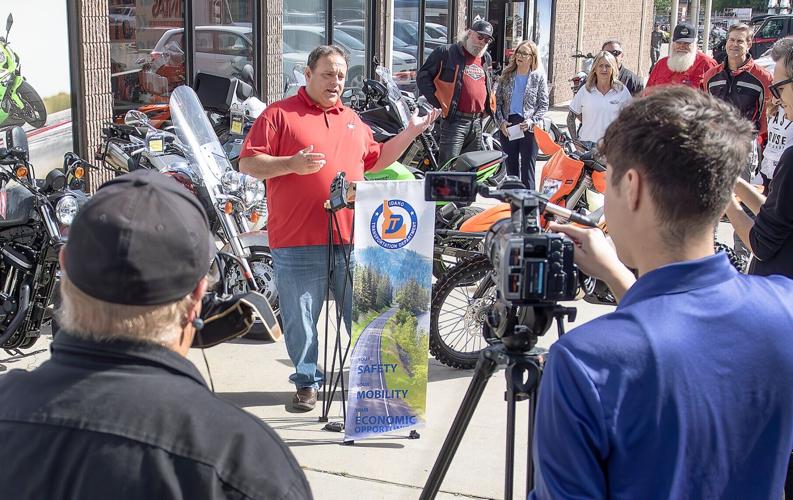



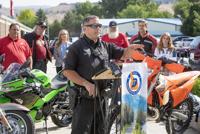





Motorcycles gleam in the sunshine during a Motorcycle Safety awareness event at Carl’s Cycle Sales in Boise, Wednesday, May 27, 2026.
BOISE — Law enforcement, transportation authorities and motorcycle training experts gathered at Carl’s Cycle Sales in Boise on Wednesday to mark the close of Motorcycle Safety Awareness Month and the start of Idaho’s 100 Deadliest Days.
Memorial Day marked the start of Idaho’s 100 Deadliest Days, the period extending to Labor Day when traffic volume and traffic fatalities are at their highest for the year as Idahoans hit the road for summer travel.

AAA Idaho public affairs director Matthew Conde speaks with members of the media during a Motorcycle Safety awareness event at Carl’s Cycle Sales in Boise, Wednesday, May 27, 2026.
“When we all want to hurry up and have a good time, safety can sort of be forgotten about,” Matthew Conde, AAA Idaho’s public affairs director, said, “and so our purpose today is to make sure that safety stays top of mind.”
The core of the safety message delivered Wednesday was that motorcycle and vehicle users each had a responsibility to protect one another’s safety.
The Idaho Transportation Department’s Office of Highway Safety emphasizes its “Look Twice” campaign during the month of May to remind road users to look twice when changing lanes and intersections and maintain sufficient following distance. Riders are encouraged to wear high-visibility gear, avoid riding in blind spots and follow all traffic laws, including bans on lane splitting and filtering.
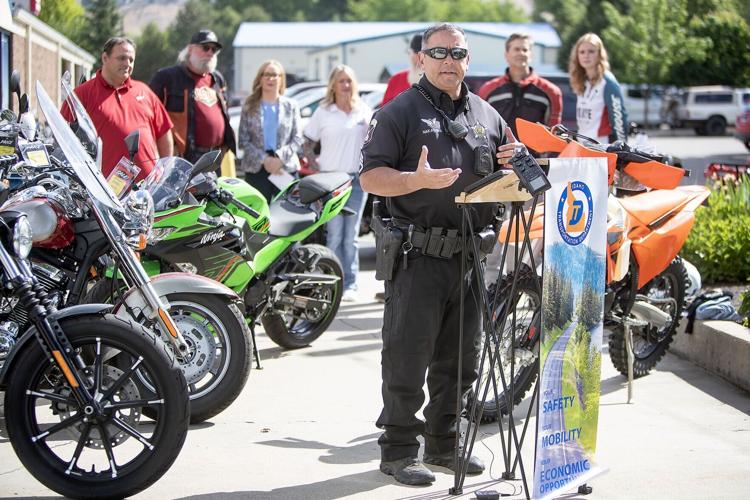
Andrew Nakashima, sergeant of the Idaho State Police motorcycle unit for the the Treasure Valley, noted that the uptick in population and, in turn, traffic in the Treasure Valley has brought more traffic hazards and traffic crashes in recent years. He offered support for ITD’s campaign and underscored responsibility for rider safety went both ways.

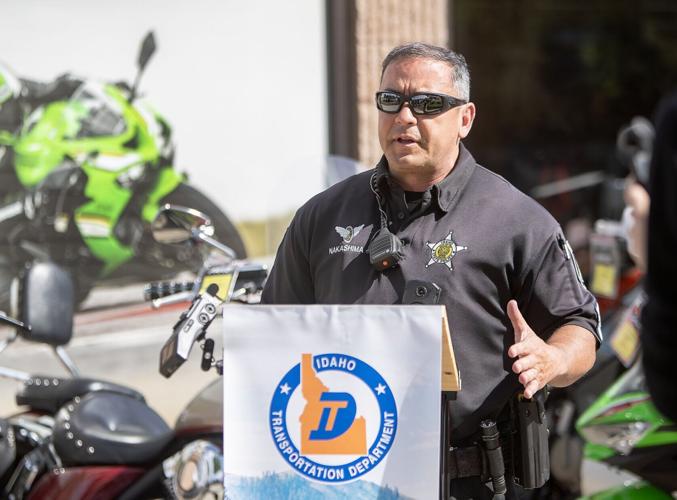
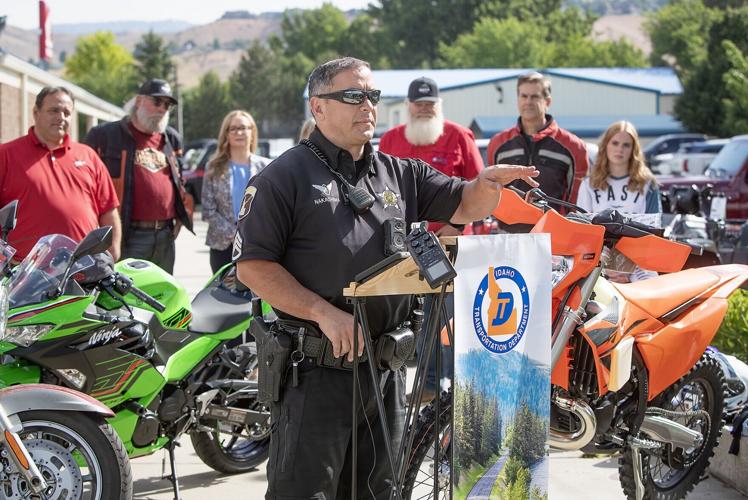
Andrew Nakashima, sergeant of the Idaho State Police motorcycle unit for the the Treasure Valley, speaks with members of the media as law enforcement, transportation authorities and motorcycle training experts gather at a Motorcycle Safety awareness event at Carl’s Cycle Sales in Boise, Wednesday, May 27, 2026.
“Mostly what we’re seeing is riders riding above their skill level, also complacency,” Nakashima said. “When you’re riding a motorcycle, it’s probably just a good idea to ride as if you’re invisible — assume that cars can’t see you.”
According to 2024 ITD data, there were 629 motorcycle-related crashes and deaths on Idaho roads. This includes 47 fatalities that represent a 17.5% increase from 2023. Of these crashes, 86% of motorcyclists were injured and 35% of fatal motorcycle crashes involved an impaired rider.

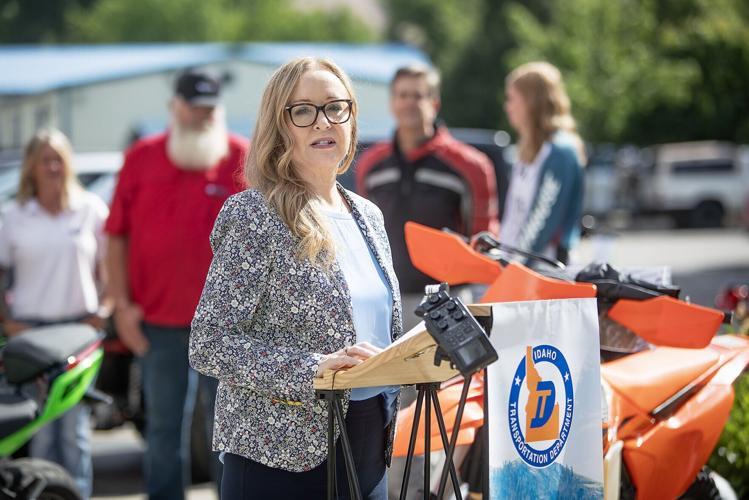
Idaho Transportation Department highway safety manager Josephine Middleton addresses members of the media as law enforcement, transportation authorities and motorcycle training experts gather at a Motorcycle Safety awareness event at Carl’s Cycle Sales in Boise, Wednesday, May 27, 2026.
Josephine Middleton, the Idaho Transportation Department’s highway safety manager, said as of Monday there have been 66 lives lost on Idaho roads this year, a value significantly lower compared to this time last year that Middleton noted may be influenced by high gas prices directly impacting the number of trips taken.
Though gas prices are discouraging trips for some, Sunshine Beer, director of the Idaho Skills Training Advantage for Riders (STAR) Motorcycle Safety Program, said motorcyclists are hitting the road earlier with the sparse winter observed in the first quarter of the year.

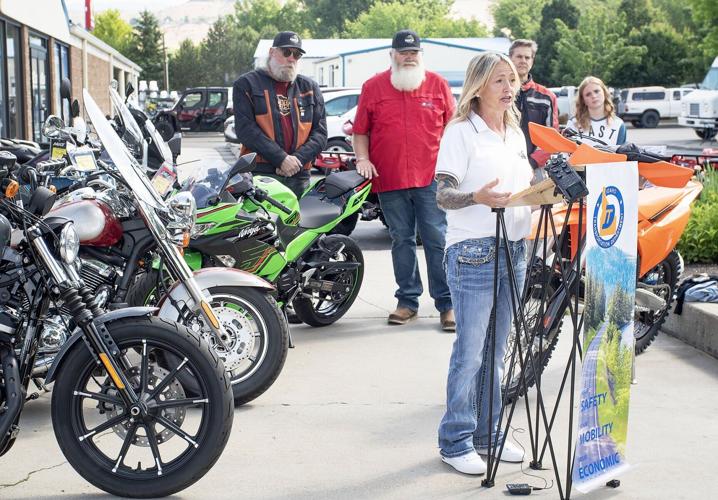
Sunshine Beer, director of the Idaho STAR Motorcycle Safety Program, speaks with members of the media during a Motorcycle Safety awareness event at Carl’s Cycle Sales in Boise, Wednesday, May 27, 2026.
Lane Triplett, a member of the Motorcycle Safety Task Force of Idaho (MSTF), said he has used his role to review each motorcycle fatality in the state since 2009 and the myriad ways motorcyclists have lost their lives on Idaho’s roads and highways.
“Animal, road hazards, mechanical issues — all those really pale to rider error itself,” Triplett said. Triplett said his review of fatal crashes has consistently shown about 70% of fatal motorcycle crashes in Idaho have been the fault of motorcyclists while 20% of crashes were the fault of other vehicles. The remaining 10% is spread across various other environmental and vehicular variables.

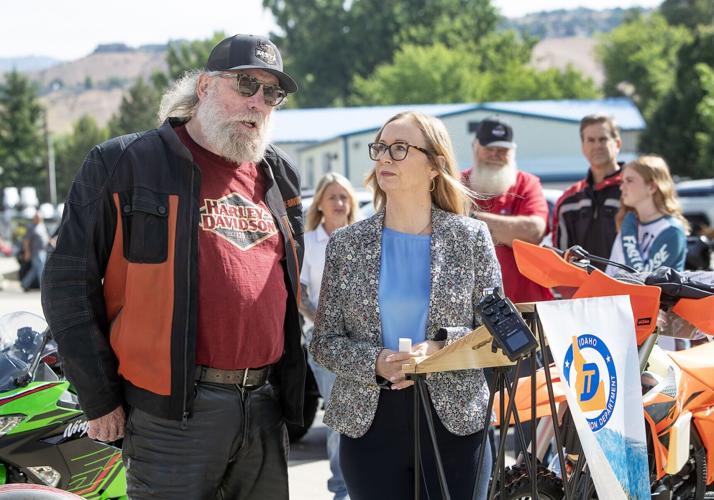
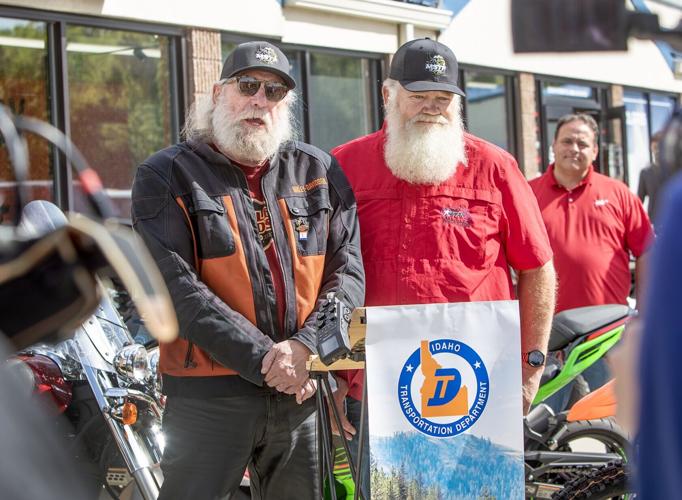
Lane Triplett, a member of the Motorcycle Safety Task Force of Idaho (MSTF), and Idaho Transportation Department highway safety manager Josephine Middleton speak with members of the media during a Motorcycle Safety awareness event at Carl’s Cycle Sales in Boise, Wednesday, May 27, 2026.
Of the fatal crashes resulting from rider error, Triplett said about 30% stem from failing to navigate a corner. He said alcohol impairment, an issue observed nationwide, is also a major factor. The National Highway Traffic Safety Administration found that 40% of riders who died in single-vehicle crashes across the country in 2024 were impaired by alcohol.
While the leading causes of fatal motorcycle crashes have a degree of consistency, Brian Eichler, the chairman of MSTF, said a growing concern for the group is the demographic shift in motorcyclist death rates.
Eichler said it used to be the case that older riders, who may have had prior experience on a dirt bike or similar vehicle when they were young, overestimated their abilities and got in a fatal crash without receiving adequate training. Eichler said MSTF is now reviewing reports indicating an increasing number of young riders are dying in motorcycle crashes.

Brian Eichler, chairman of the Motorcycle Safety Task Force of Idaho (MSTF), speaks with the media during a Motorcycle Safety awareness event at Carl’s Cycle Sales in Boise, Wednesday, May 27, 2026.
According to 2025 ITD crash data, motorcyclist fatalities were highest among riders aged 20 and under (13 deaths) and aged 21-24 (nine deaths). Tied for the third-highest age range in 2025, there were eight deaths reported for riders aged 25-30 and 65-69.
Throughout the remarks provided Wednesday, transportation safety partners repeatedly emphasized that formal motorcycle training was a crucial factor in reducing deaths across age groups.
Triplett noted, over the last five years, only about 18% of riders had received training in Idaho and only about 50% had received a motorcycle endorsement from ITD, which is required in order to legally operate a motorcycle on public roads.
Tom Berry, a 30-year STAR instructor, emphasized this training was necessary even for those who bring extensive experience biking off-road.
“What we really don’t want you to do is underestimate the risks that the street involves, the unpredictability of other drivers, other road users,” Berry said, “just the unpredictability of things you’ve never had to deal with in the dirt.”
Though much of the physical skills can transfer over to on-road riding, STAR courses can help develop the mental skills and awareness that is required when introducing roadway variables that never had to be dealt with off-road, Berry said.

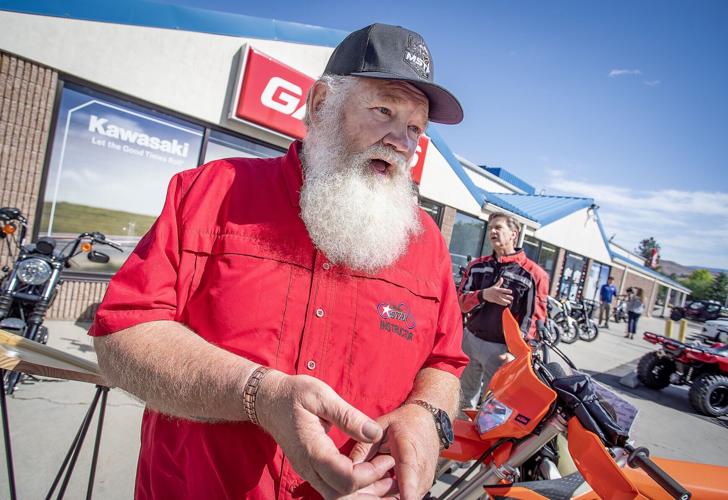
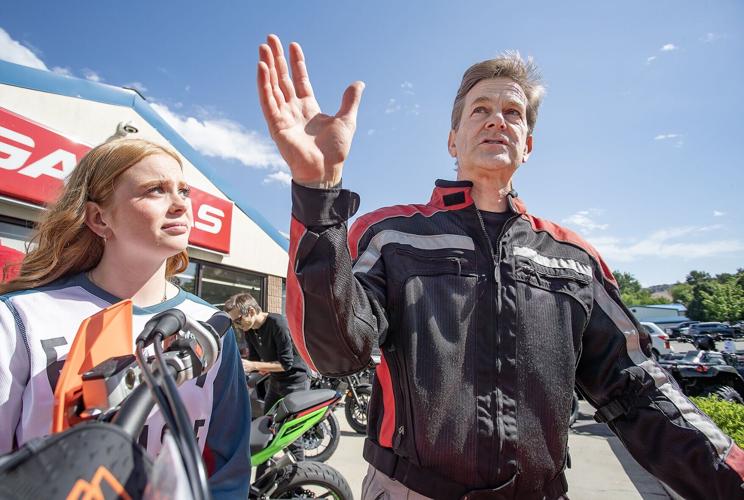
Tom Berry, a 30-year STAR instructor alongside his daughter Caitlin, speaks with the media during a Motorcycle Safety awareness event at Carl’s Cycle Sales in Boise, Wednesday, May 27, 2026.
One of the biggest mistakes Berry said he has observed amongst riders transitioning to the road is underestimating the severity of road crashes and, by extension, the necessary safety gear. Unlike dirt-bike riders who use more breathable apparel, road motorcyclists are encouraged to wear leather or nylon clothing.

(0) comments
Welcome to the discussion.
Log In