

POCATELLO — Officials with Pocatello-Chubbuck School District 25 have asked Bannock County to explore alternatives to using public schools as election polling places, citing safety concerns.
During the most recent election in November, the county operated 17 of its polling locations, serving 14,000 voters, within 11 District 25 schools, according to elections officials.
Proponents of the change suggested polling places could be moved to local churches or businesses.
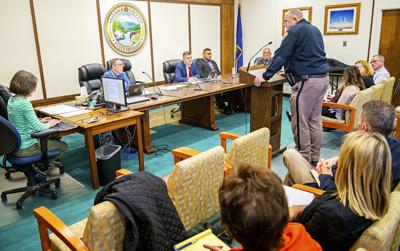
School Board Member Janie Gebhardt, Pocatello Police Chief Scott Marchand, Pocatello Mayor Brian Blad, Chubbuck Mayor Kevin England and School District 25 Superintendent Doug Howell argued during a Thursday afternoon meeting at the Bannock County Courthouse that continuing the status quo could put children at risk.
They reasoned the district has invested considerable time and money in security upgrades at local schools, and it’s counterintuitive to allow unfettered public access to school halls on election days.
“It’s taken about five years to get controlled access in Pocatello schools, and your polling places hold the most vulnerable children,” Marchand said.
The county, school district and cities all contributed funds to hire armed security for the November election. Marchand questioned the effectiveness of the guards, however.
“They were watching people walk in and out of the door. To me that’s not security,” Marchand said.
Marchand said Boise, Twin Falls and Meridian don’t use schools as polling places. Blackfoot is investigating alternative locations for its two polling places that are currently located in schools. He said Idaho Falls is an exception, still basing most of its polling places in schools.
Commissioner Terrel “Ned” Tovey has suggested that the district consider canceling school or hosting teacher in-service days during elections. Howell insisted canceling school would be too disruptive to students.
“Election dates do not really coincide with any school holidays, our trimester, our professional development opportunities or those timelines,” Howell said.
School district leaders had previously approached the county with the request in July, in advance of the November election. The change was prohibited at the time by a state law restricting changes in polling places for the remainder of the year after an election is held.
Tovey and Commissioner Steve Brown worry pulling voting precincts out of schools could potentially suppress voting. They emphasized many residents have no cars and walk to the polls, and packing too many precincts into one big location could lead to parking problems, long lines and people giving up without voting.
“We want to make sure we do not disenfranchise the voters or make it harder for people to vote. That’s voter suppression,” Tovey said.
Tovey said schools have filled an important niche in county elections because they’re accessible by voters with disabilities, they’ve been consistently available and they’re located in most precincts. Tovey said some precincts don’t have other public buildings that could be used, and “all options will now be on the table” for the county to find alternatives.
There’s precedent in Bannock County for voting in businesses and churches. A church serves as Swanlake’s polling place and the local Kiwi Loco store is also a polling place.
Tovey worries voting in businesses could be problematic because ownership changes, closures and changes in circumstances could force frequent moves, which would confuse voters and add to county expenses of mailing notifications of changes. He also notes some voters might not feel comfortable in certain businesses.
Brown worries about the potential psychological affects on voters of having elections in churches. He said studies have shown voters tend to vote more conservatively in places of worship, and there could be a “real feeling of separation of church and state.”
County leaders also noted that Marsh Valley School District 21 has embraced Election Day and has created a special “civics day” curriculum around voting in their schools.
The county must designate its polling places by Feb. 11. Ironically, the next opportunity for an election would be in March, when School District 25 is mulling a possible vote on a supplemental levy.
Bannock County Clerk Robert Poleki acknowledged the school district, city and police officials make good points about the need for protecting children. Poleki suggested a middle-ground approach of gradually shifting voting away from schools in “two or three phases.”
Howell agreed a gradual approach is worth consideration. Mayors Blad and England, however, argued the community shouldn’t “kick the can down the road.”
“If we had something happen this year, we’d all say, ‘Why didn’t we act?’” England said.
The parties have agreed to continue talking, understanding time is limited.

(0) comments
Welcome to the discussion.
Log In