




POCATELLO — Substantial costs, particularly high property taxes in Bannock County, are likely impeding economic development in the Gate City, according to the CEO of a regional economic development organization.
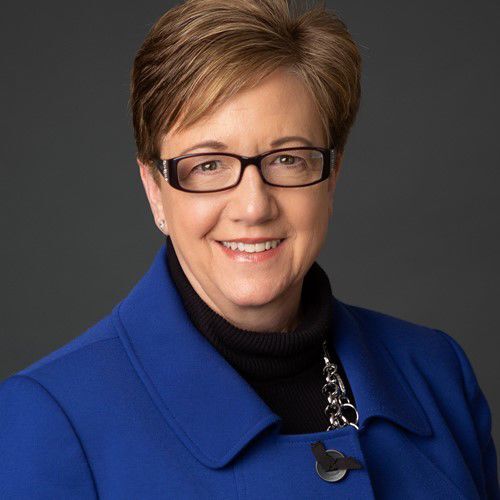
Teresa McKnight, the CEO of Regional Economic Development for Eastern Idaho, or REDI, told the Pocatello City Council during a quarterly update earlier this month that data obtained via REDI’s site selection process with various businesses interested in setting up shop in East Idaho suggests high property taxes in Bannock County are a major detriment.
“One thing that has come up consistently has been costs,” McKnight told the City Council during a work session at Pocatello City Hall on Nov. 12. “The second thing that’s been a factor, especially with the one company we are talking to right now who is looking to move their entire operation here … is they just don’t know what is happening with your property taxes. We have people that are looking at homes right now and when they look at the cost comparison of what they are paying in California … and what their property taxes are, it’s a concern for their employees.”
REDI is a 501©(6) nonprofit corporation supported by private and public East Idaho investors across 14 counties. Created in 2015, REDI serves as a partner to its investors, working with stakeholders to expand regional assets and connect public and private partners together to facilitate research and collaboration efforts, strengthen the workforce pipeline through industry needs assessment, education and training, and to enhance research and entrepreneurial activities in Eastern Idaho, according to its website.
Pocatello has been a partner with REDI since fiscal year 2018, contributing $30,000 annually for fiscal years 2018-20, and $35,000 for fiscal year 2021, Pocatello spokesperson Logan McDougall told the Idaho State Journal on Tuesday.
“REDI has a strong collaborative partnership with the city of Pocatello, as we do with all of our business, industry, civic, higher education and community leaders or partners in our region,” McKnight told the Journal during a Tuesday interview. “This is what builds a strong and competitive region.”
While McKnight did not identify which company in California was considering a move to Pocatello, she did say it was property taxes, as opposed to commercial tax rates, that served as the largest disincentive to settle in the Gate City.
Pocatello Mayor Brian Blad says he is unsure how to interpret McKnight’s comments. Blad said he found McKnight’s statements about Bannock County property taxes interesting, considering that in his 11 years leading the city he says potential businesses looking at Pocatello have never inquired about the city’s tax rates, neither commercial or residential.
“I have never one time, not once, been asked about taxes,” Blad said. “Companies typically know what taxes look like when they are coming. Yes, taxes have gone up here, but unfortunately for more than a decade we had county assessors who did not increase the values of the homes here. But throughout the state we have had problems where homes have been undervalued and the state has been cracking down on that. It’s not exactly the same problems that we have here, and it’s not fun or comfortable, but it is what it is.”
Blad continued, “I always hear that taxes are an impediment to economic development in our area but have never been asked about them. Taxes were never a question when Allstate, ATCO Structures, Western States Cat, Great Western Malting or Frigitek Industrial Parks came in. Maybe it’s a question businesses are asking someone else, but it is definitely something that we are concerned with and pay attention to and is something that we just can’t ignore.”
Additionally, McKnight said another company, which she did not identify, was considering doing business in Pocatello or Idaho Falls and chose the latter because Idaho Falls owns and operates its own power and fiber optics utilities.
“The business called it more self-sufficient,” McKnight said when describing the business’ rationale for choosing Idaho Falls. “The fiber optics and utilities are owned and run by the city so it provides them more of a control in costs, or a reduction, especially when it comes to utilities.”
Blad said that while Pocatello does not own any fiber optics infrastructure, the main internet retailers in the Gate City are always competitive with the internet costs in Idaho Falls. Moreover, Blad said he is sure the costs of electricity at Idaho Power, Pocatello’s sole power provider, are much more affordable than the costs of Idaho Falls Power, a city owned utility provider.
“Idaho Falls happens to be a power-generating city, but it’s extremely expensive power,” Blad said. “You can’t go get power from anyone else. There are some definite differences there, but I’m not so sure their structure is any more cost beneficial than ours.”
Outside of high property taxes and utility costs, McKnight said the data REDI receives from businesses during or after the site selection process does not specifically indicate if other costs associated with fees or permitting are also contributing factors.
McKnight said one action the city can take to reel back costs would involve getting all city department heads and economic development leaders together to identify opportunities to streamline processes or eliminate roadblocks.
“As we all know in business it’s all about the bottom line,” McKnight said. “And at the end of the day, if that bottom line puts them in more position strength wise or financially to be in Idaho Falls, Blackfoot or Rexburg that is where they are going to go.”
McKnight continued, “But if every city could just sit down with all of their department heads and make sure to identify areas where we can streamline and cut the red tape, then let’s do it. If we can put an efficient system together, sustain our costs and make it so that we are competitive and we’re attractive that’s what’s going to happen.”
Blad says there has never been a time in the past decade in which economic development leaders in Pocatello weren’t meeting regularly. And while he is grateful for the collaborative relationship with REDI, he believes the organization hasn’t lived up to expectations.
”This has nothing to do with Teresa (McKnight), as she inherited an organization that had struggled, and she’s done a great job,” Blad said. “But five years ago REDI came into the picture and were going to make a huge splash. To date, I cannot think of one organization that REDI has brought in. They have conducted great studies and other work, but other than that I can’t think of any big wins.”
And although Blad did not outright disagree with McKnight’s comments on taxes and utilities adversely affecting the city’s growth, he believes there are other growth impediments that the Gate City is experiencing, and it’s not alone.
“One impediment the entire state is feeling is a lacking workforce,” Blad said. “Our unemployment rate in Pocatello right now is 3.6 percent. At that level, corporations consider that to be fully employed. Their biggest concern is that we don’t have a pool of people for them to hire from.”
Blad continued, “Another impediment is we have an incredible population that does great things, but if companies are looking for an educated workforce, particularly in cyber security, we don’t have a large base for that. Those are the impediments that companies are talking to me about.”

(0) comments
Welcome to the discussion.
Log In