






Teri Ehresman loves her cabin in Island Park, a popular area for outdoor recreation in Eastern Idaho and the primary route for travelers headed to Yellowstone National Park from the Interstate 15 corridor.
For Ehresman it’s the perfect getaway, at least it was.
But that has started to change as more people visit Island Park each year and more homeowners are turning their properties into short-term rentals. (Island Park’s year-round population was 262 in the 2020 Census.)
Tourism in the Greater Yellowstone Region has skyrocketed in recent years and Island Park, a key gateway to Yellowstone National Park, has not been spared from that trend.
This year Yellowstone National Park saw more visitors than ever before — about 4.5 million — and many of them traveled through Island Park, which is a short drive from the west entrance of the park. Twenty years ago, Yellowstone saw about 40 percent fewer visitors than it did in 2021.
Through November more than 833,000 people had traveled through the park’s west entrance.
1,000 short-term rentals?
Not surprisingly some of those visitors have wanted to do more than just drive through Island Park, which boasts a 37-mile Main Street, aka U.S. Highway 20. The area offers world-class fly-fishing and is a mecca for snowmobilers and ATVers.
With high demand for short-term accommodations, many of the area’s part-time residents have turned their homes and cabins into income properties. It’s estimated there may be as many as 1,000 short-term rentals in Island Park, but only 60 percent are said to be properly permitted.

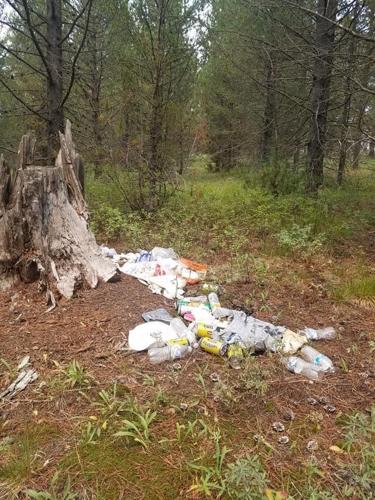
Visitors at a short-term rental in Island Park left behind a large pile of trash at one cabin. This is not an uncommon site at the area’s many…
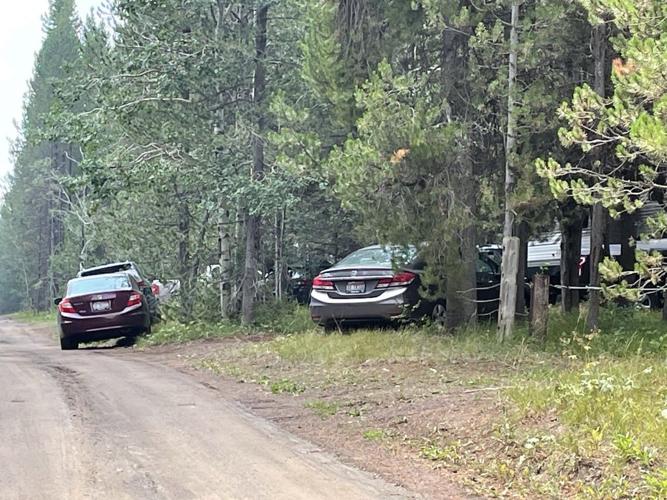
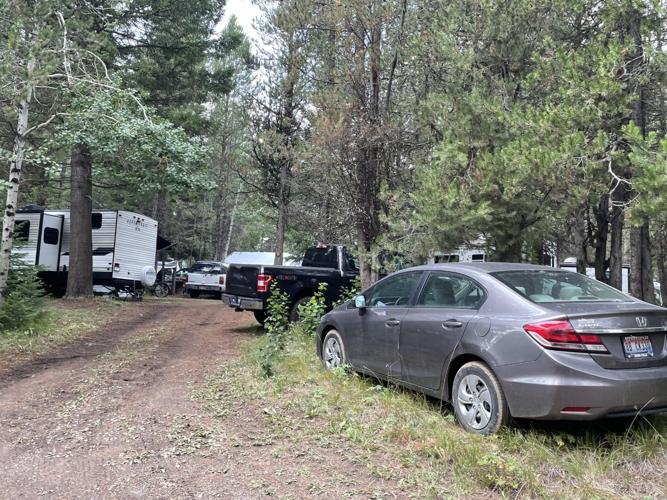
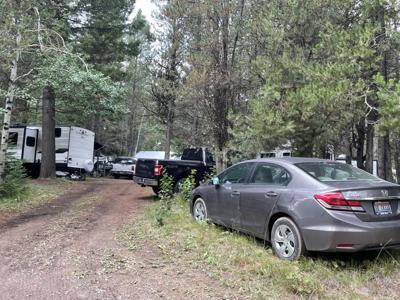
And, just like in the park, not all the visitors are the leave no trace type. Some are noisy and disruptive and their vehicles clog area roads or worse.
“It is so disheartening when you see someone on their four-wheeler chasing a moose through your private property because they wanted to try and get a better picture of it,” Ehresman said.
Ehresman is among many Island Park residents who’ve grown frustrated at an influx of tourists staying in Island Park through short-term rentals.
Another resident, Ron Folsom, said renters have shown a lack of knowledge about the area, far too often leading to unsafe situations or disrespect toward property owners and their neighborhoods.
“People come up here to subdivisions and they think they’re in the forest,” Folsom said. “I have almost five acres of property that I hand-raked … I’ve had people come onto my private property and dig up plants.”
While short-term rentals have been steadily increasing in Island Park over the last decade, the number of short-term visitors exploded during the pandemic, Folsom said. This led to some local residents forming a group called the Involved Property Owners of Island Park in winter 2020 to try to address some of the issues the onslaught has brought. They’re disappointed by the local government’s lack of short-term rental regulations as well as the lack of enforcement of those that are in place.
Lodging sales in Fremont County, which are made up of temporary housing including hotels and short-term rentals, jumped to more than $5 million in June 2021, according to tax collection data from the Idaho Department of Commerce. In June 2019, lodging sales in the county were just over $2 million.
Residents argue the city does not have the infrastructure for the increase of visitors, who on any given weekend vastly outnumber the locals. Folsom said restaurants in the city that typically opened for lunch had to change hours and open later during the day due to limited staff and the increase of demand from travelers.
“When you walk into a restaurant in Island Park and you have a 45-minute wait time, that’s off the charts,” Folsom said. “On top of not being able to have enough housing (here), we suddenly lose restaurants that have traditionally served the clientele of Island Park for hours of the day and they can’t hire employees because of a lack of housing.”
Ken Watts, chairman of the Island Park Preservation Coalition, told the Idaho Capital Sun in June that the short-term rentals are causing conflict in the community.
Watts told the website that the rental across the road from his home costs $735 per night and that others in the area run more than $1,000 per night. Those high rental prices sometimes draw big groups which park several vehicles in front of the home. Sometimes the groups are noisy and occasionally people shoot off guns or yell at neighbors, Watts told the Idaho Capital Sun.
“You cannot believe the tension and conflict it’s causing for the people who live here. The people who live here full time or part time, they just hate it,” Watts said in the article. “The peace and tranquility of the area they moved to and built homes in is gone.”
Fremont County Commissioner Blair Dance is aware of the safety issues that can arise with short-term rentals. He said guns were drawn at one of his neighbors’ houses because renters showed up to the wrong house.
Is HB 216 the problem?
Many Island Park residents point to the Idaho 2017 Legislature’s House Bill 216 as a key factor in many of the issues regarding short-term rentals. The bill, which became law in January 2018, was intended to protect property rights by preventing cities and counties in Idaho from enacting or enforcing any ordinance that would prohibit a short-term rental from certain parts of their jurisdictions.
Dance said the law has shackled county officials, keeping them from taking the appropriate actions to regulate short-term housing.
“Our civil deputy feels like there’s some pretty strong limitations to what we can and cannot do,” Dance said.
The bill says “a county or city may implement such reasonable regulations as it deems necessary to safeguard the public health, safety and general welfare in order to protect the integrity of residential neighborhoods in which short-term rentals or vacation rentals operate.”
This has created confusion for many county officials as regulations have now become a subjective matter of opinion, in the eyes of many, said Folsom, a former planning administrator for the city of Ammon.
“House Bill 216 and the regulations that came along with it intimidated cities and counties and made them fear writing reasonable regulations because who gets to determine what is reasonable,” Folsom said.
Folsom said that the lack of action from Fremont County frustrates him because as he’s followed the law since it was passed, he hasn’t seen one case filed against any regulations a city or county enacted on short-term rentals.
Fremont County’s role
Dance said the issue has caused an adversarial relationship between the county and some Island Park residents. He said while there is no one-size-fits-all solution, there needs to be a collaborative effort between all parties.
Along with the county’s role, Dance said he wanted to see homeowners’ associations regulate what happens in their neighborhoods and property management companies to be responsible for properties that receive complaints.
“Every homeowners’ association in my mind should require a proof of permit for short-term rentals,” Dance said. “That ensures properties are safe and sound and it helps us.”
The property owners group pointed out there may be around 1,000 short-term rental properties available in Island Park based off data from short-term rental websites including VRBO.
The Idaho Capital Sun reported that Fremont County’s planning and building administrator found nearly 600 permitted cabin rentals in Fremont County and estimated about 60% of the cabin rentals in the area are permitted.
Dance said he doesn’t believe the number of cabin rentals is around 1,000 because he’s found errors with short-term rental websites such as duplicate listings.
Fremont County is looking into software tools to help manage short-term rental licenses, Dance said. However, he said some patience is needed from residents as government processes are often lengthy and the county has a budget and other business it needs to stick to.
Dance said there are two Idaho State Police officers that patrol the Island Park area, two Fremont County deputies and an additional law enforcement area assigned to the area.

Visitors to a short-term rental in Island Park rented this UTV and, after wrecking it, just left it in the meadow.
“Sometimes these law enforcement officers have to make a decision whether they’re going to go to house that’s making too much noise or go to somebody that’s wrecked an ATV,” Dance said. “We’re not going to be able to solve all the problems.”
Some residents feel there’s a lack of representation of Island Park with county government, which means their concerns aren’t heard or dealt with.
In an email to the Post Register, Ehresman highlighted the distance for Island Park residents to travel to St. Anthony for county commissioner meetings make it hard for them to attend. It’s 41 miles from the Island Park City Hall to the Fremont County Courthouse in St. Anthony and, for several months a year, winter conditions can make the drive difficult.
She also mentioned that six of the nine members of the county’s Planning and Zoning Commission live within five miles of St. Anthony.
“This truly doesn’t provide a distributed representation within other parts of the county,” Ehresman wrote.
Safety concerns
Although some Island Park residents would like to see short-term rentals banned in the county, most recognize the benefits short-term rentals bring to the county and Island Park. Their primary issue is the lack of regulation and negligence from some property owners that creates safety issues.
Another resident, Lyssa Linger, said she and others want to ensure Island Park continues to be a place where people can live long term and raise their families.
“We don’t want to get rid of short-term rentals. We just want some control over those who are not doing it legally to protect the rest of the community,” Linger said. “Once you turn your home into a business, you should be held to higher standards.”
Linger said with few law enforcement officers in the area, short-term property rental owners aren’t compelled to follow laws including licensing their properties.
“There’s nobody to enforce (county laws) and they know that,” Linger said. “It’s like if there’s no cops to enforce the speed limit, how many people are going to speed?”
A statewide issue
The problem with short-term rentals does not exclusively apply to Fremont County in Idaho. Other parts of the state, including Driggs, McCall, Coeur d’Alene, Sandpoint, Hailey, Ketchum and Boise, have experienced similar issues.
Hailey officials pointed to short-term rentals causing issues for local workers trying to find housing, according to a Nov. 24 article from Idaho Mountain Express. In Ketchum, a group of residents have launched the website airbnbkills5b.com to urge officials to reduce the number of non-owner-occupied short-term rentals and to raise taxes on them. The group says short-term rentals are the root cause of Ketchum’s housing crisis because they have increased rents and housing prices.
The north Idaho city of Sandpoint has enacted several strict regulations on short-term rentals including that each short term rental must have a local representative who permanently resides within 20 vehicular miles of city limits and that each short-term rental must pass a public safety inspection.
Folsom said most residents don’t want ordinances as restrictive as those other parts of the state. Instead they’re asking for regulations including quiet hours, ensuring rental properties have sufficient parking spaces, occupancy regulations, emergency contacts to be posted in properties and notices of crucial local laws such as seasonal fire bans, Folsom said.
“We recognize that this is a recreation area,” Folsom said. “(The problem is) short-term rentals are only short-term for the renter. As soon as the renter leaves, there’s another one that takes their place.”

(0) comments
Welcome to the discussion.
Log In