

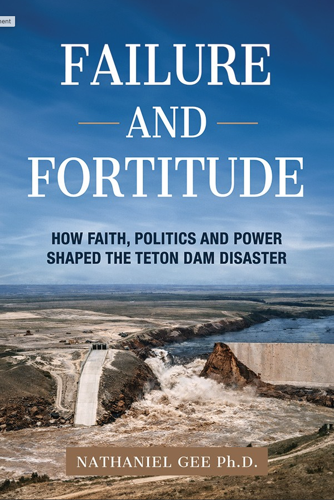

Failure and Fortitude: How Faith, Politics, and Power shaped the Teton Dam Disaster.
That’s the name of soon to be published book about the Teton Dam Flood that nearly wiped-out Wilford, Sugar City and parts of Rexburg.
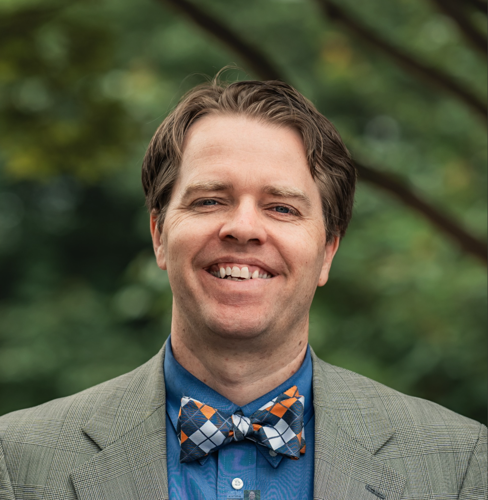
Written by Nathaniel Gee, Ph.D., the book details what caused the disaster and how the community showed resilience following the tragedy that killed 11 people and damaged billions of dollars in Upper Valley property on June 5, 1976.
Gee’s Dad, Merrill Gee, worked in Rexburg when the dam failed.
“His sister lived there, and he spent the night in the basement that would be flooded,” Nathaniel Gee said. “Had it failed 12 hours earlier, I probably never would have existed.”
Gee grew up hearing about the dam disaster.
“Having family that were there — they would talk about it from time to time,” he said. “When I got older, I became a dam safety engineer. I studied how dams would fail and how to stop dams from failing. I worked at the Bureau of Reclamation. The Teton Dam was the starting of the career I ended up in. The safety program started after it failed.”
Gee’s book focuses on what caused the Teton Dam to break at 11:57 a.m. “that day in June” as it is commonly referred to as.
While building the dam, engineers noted “some concerns” while using a new “unique design.”
“(They said) ‘We’ve never done this before,” Gee said. “(They asked) ’How do we prepare the key trench from eroding this soil?’ They knew it was going to be very expensive, so they came up with a unique design to build it cheaper.”
That unique design involved creating what they called a “Key Trench” that cuts a trench into the rock.
“They said, ‘If we just cut a narrow trench and fill that with good silk clay material, that will work for us,” Gee reported. “(They said) ’Basically, the silt and clay will act as a barrier rather than us having to dig down all the way to the good solid rock.’ It saved a lot of money.”
Sadly, those cost-cutting measures caused a lot of damage, Gee said.
“The water gets in there and basically erodes the soil, and takes it down stream through fractured rocks,” he said. “It creates a hole in the soil above it and collapses in, slowly moving out more and more material. As you get more and more water pressure — that’s what ultimately failed the dam — this thing they did to try and save money.”
The dam hadn’t been open very long when on June 5, workers noticed some seepage around 7 a.m.
“They called out the project construction engineer,” Gee said. “He got on the site at 8:30, and things started to get really bad, really fast.”
Gee sites how Bulldozer operator Jake Calderwood told of a hole forming on the dam and his efforts to plug that hole.
“(He said) ‘I knew it wasn’t going to do any good, but I wasn’t going to go out without fighting.’” Gee said. “He’s literally pushing material just a few minutes before the dam failed. On the downstream side of the dam, bulldozer operator Owen Daley saw the hole, and his bulldozer gets stuck. He goes up to the top and has them throw down a ‘wire rope’ to pull them out. They got out of the bulldozer while their bulldozers are washed away.”
In the midst of this Daryl Griggs and his friend David Benson are enjoying breakfast at a favorite fishing hole not far from the dam. While the young men were eating, workers at the dam wondered if they should call for an evacuation, he said.
“(They said) ‘We don’t want to cause a panic,’” Gee stated. “We’re not going to evacuate yet.’”
Shortly afterwards, flood waters tore through the region washing Griggs and Benson down the valley. Griggs wound up in a tree and suffered from broken ribs and a collapsed lung before being rescued. Sadly, Benson, drowned during the flooding, and his body was found not far from where Griggs had been located.
Wilford residents Clarence and Florence Daw attempted to outrun the flood waters but drowned in their truck that was found still running. Three young men who attempted to retrieve items from Wilford were unable to escape the flood waters and drowned. Other individuals died from heart attacks or from gunshot wounds.
Gee’s book also details how countless volunteers poured into the Upper Valley to help with cleanup efforts.
“People were waking up at 4 a.m. to hop on a bus,” he said. “They would pack their own food and would bring food for the family they were helping,” he said. “They would spend all day working and get on a bus at 10 p.m. and get home at midnight. Hundreds of volunteers did that every day.”
Gee tells of Sugar City Stake President Ferron W. Sonderegger helping to oversee disaster relief. Sonderegger met with the bishops in his stake every day to check on volunteers coming in and to get a count of homes destroyed by flood waters. At the time Ricks College provided housing for those who had lost their homes during the tragedy.
“They had to account for everyone — who was living where, who was up at the college campus, and who was waiting for a home,” he said. “Sonderegger said those meetings went until midnight. Afterward he goes to visit his wife at the hospital and then goes to a friend’s house who’s housing his family for him. He does this all summer — this becomes his summer. So many people put their lives on hold to get their community back.”
Gee reports how the church created its own version of “Meals on Wheels” for people working and volunteering in the region.
“The Red Cross was one organization that brought in meals,” he said. “The church told them, ‘Thank you, but we’ll feed people.’ The Red Cross official was blown away by that. Everywhere he went, he never heard anyone say, ‘we’ll take care of this.’ He wrote how impressed he was with the church’s willingness to take that on, and how that freed them up to do other things.”
Gee also tells of then Church President Spencer W. Kimball and Church Apostle Boyd K. Packer arriving in Rexburg to comfort everyone.
“The church meeting I highlighted happened on Sunday where they had an impromptu church meeting with people from all over the valley who had gathered there,” he said. “Most didn’t have Sunday clothes. I think it’s really telling how they sang ‘Come, Come Ye Saints’. They said it was very emotional. A lot of them didn’t know who had died.”
Even more telling was the hymn “Put your Shoulder to the Wheel” that the congregation sang, Gee said.
“The situation they were in and how they had lost — how much of their farms? — they chose the song ‘Put your shoulder to the Wheel.’ ‘The thing to do is not to worry, not to blame. We’re going to get out and get to work.’ That’s always impressed me.”
Gee’s book will be available on Amazon, at Deseret Book and Barns and Noble on May 1.

(0) comments
Welcome to the discussion.
Log In