


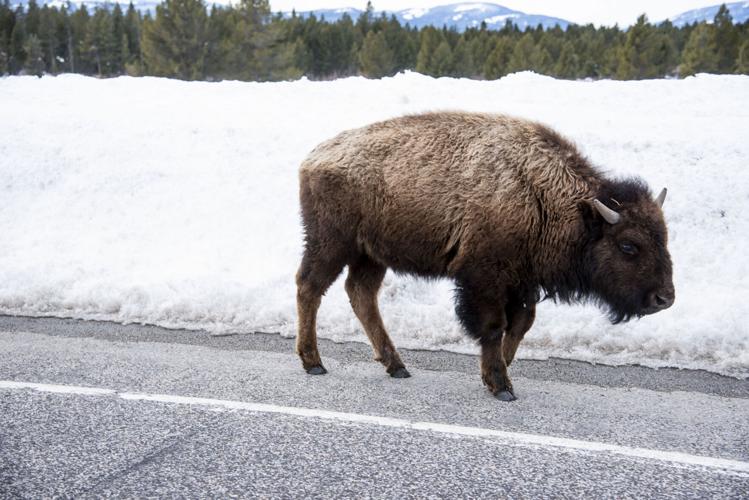
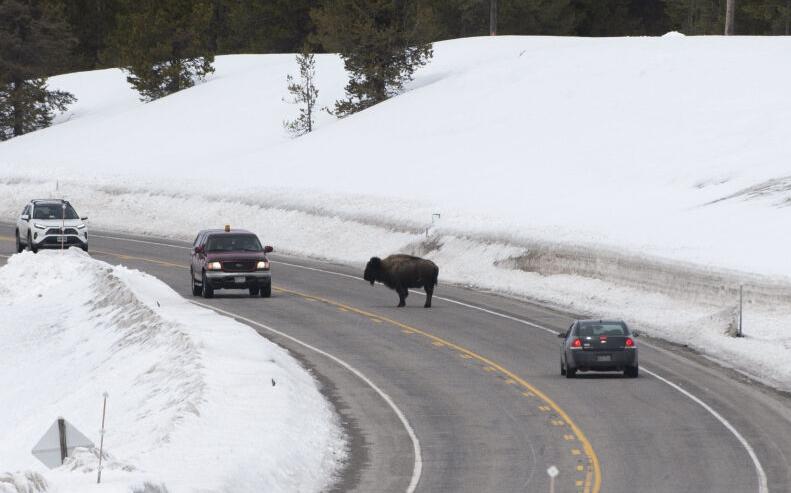
A bison evades vehicle traffic while crossing Highway 191 near West Yellowstone, Montana, on Tuesday, April 4, 2023.
WEST YELLOWSTONE, Mont. — A lone bison walked north on a snowmobile path last Tuesday, parallel to U.S. Highway 191. It crossed the Madison River on a Jeep trail bridge about 4 miles outside of town, then maneuvered down a steep snow berm onto the road.
The bison lumbered north toward oncoming cars and semi trucks, loosely following the median strip. Vehicles slowed to a near-halt, swerved around the animal and sped back up.
At the turn of spring, a wall of snow still lined the roads around West Yellowstone. Hundreds of bison from the park’s central herd were about to migrate toward their calving grounds at the Horse Butte.
To get there, the animals first have to navigate Highway 191. Usually they follow river corridors, but advocates fear that an unusually robust snowpack could funnel the bison onto the highway and into traffic this spring, said Mike Mease, co-founder of Buffalo Field Campaign.
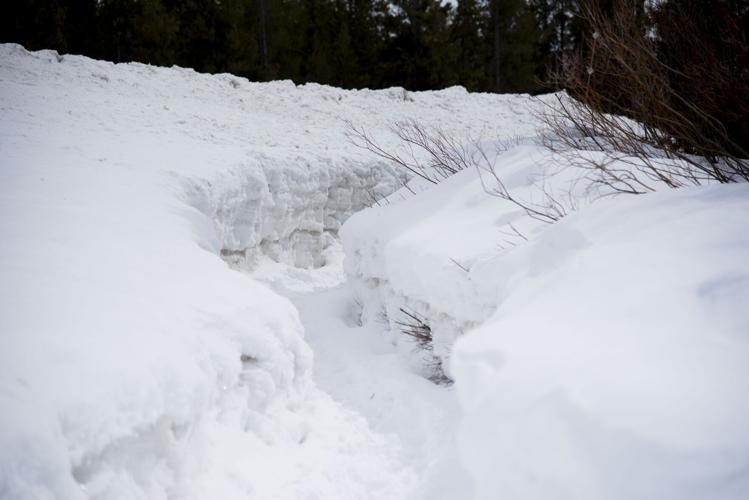
Due to their dark brown color, bison don’t reflect light very well when it’s dark, he said. To entice them away from the road, particularly at night, volunteers have worked with the Montana Department of Transportation to dig deep canals in the snow.
Plows poked holes in snow berms, outside of guardrails. Then the volunteers arrived with pickaxes and shovels. They cut deep channels in the snow — pathways that they hoped would draw the massive animals toward grass along waterways and away from traffic, Mease said.

A trench, dug by volunteers with the Buffalo Field Campaign and the Montana Department of Transportation, provide an easier option for bison hoping to access and cross Highway 191 near the Madison River on Tuesday, April 4, 2023.
“If you’re going down Highway 191 anytime this spring, please slow down. Go real slow at night,” he said. “We’re going to try and have signs and everything to do what we can to warn people, but just to know that in this area at this time of year, it can be treacherous.”
This snow year has already been tragic for bison in Yellowstone National Park, Mease said. More than a quarter of the park’s bison population was culled outside of its boundaries, mostly through legal hunts coordinated by multiple tribal nations and the state of Montana.
An interagency report showed that hunters had killed 1,139 of the animals by March 31. Another 374 bison were removed from the population as part of efforts to protect Montana cattle from brucellosis — a disease that many Yellowstone bison have been exposed to.
The bulk of this winter’s losses were concentrated in hunts north of Yellowstone, but an additional 20 bison were killed in vehicle collisions along a 7-mile stretch of Highway 191, just north of West Yellowstone, counts from Buffalo Field Campaign indicated.
In December, a semi truck struck a group of bison in the evening, at approximately the same location where the lone bison walked last Tuesday. The driver survived the wreck, but the accident killed 13 of the animals at once.
“The year has been so tragic, and we can’t really afford to have many more of the central herd taken this year,” Mease said. “Anything we can do to help them is the honor of my life.” He added that with winter kill, more losses will be revealed.
The canals in the snow are a short-term solution meant to protect migrating bison and travelers along Highway 191, but nonprofit organizations, biologists, road ecologists, agency officials and other advocates are also looking toward longer-term solutions.
Following the wreck that left 13 bison dead last year, Buffalo Field Campaign organized a Change.org petition advocating for a wildlife bridge at the Madison River crossing. The petition has since garnered close to 73,000 signatures.

A juvenile bison walks against traffic on Highway 191 north of West Yellowstone on Tuesday, April 4, 2023.
While that effort gains steam, experts are identifying areas along Highway 191 that could benefit from crossings and other wildlife accommodations. They are poised to release a detailed report this spring. A similar assessment is underway on U.S. Highway 89 from Livingston to Gardiner.
As progress is made locally, Montana officials and their nonprofit partners are looking toward solutions at the state level. They’ve introduced two new tools, meant to streamline the process for getting wildlife crossings built.
Those accomplishments coincided with a new federal Wildlife Crossings Pilot Program, approved through the Bipartisan Infrastructure Law. States can begin to apply for grants to fund the construction of wildlife crossings from an initial pool of $112 million.
Rob Ament, road ecology program manager at Montana State University’s Western Transportation Institute, said some money is always available for wildlife crossings through various transportation programs, but the new federal pilot program is a standalone.
“It’s dedicated just to wildlife crossings. That has never been done before at the federal level,” he said. “I believe it’s a landmark conservation program for transportation. And it’s a pilot, but easily, with its popularity, I believe it could be institutionalized in the next transportation act.”

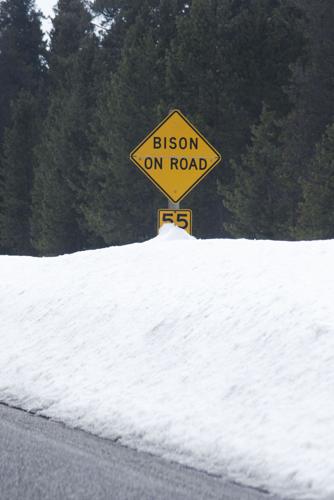
A sign warning drivers of bison on Highway 191 north of West Yellowstone barely stands above the snow on Tuesday, April 4, 2023.
Montana is ranked second among states where drivers run the highest risk of hitting wildlife, statistics from State Farm Insurance show. Here, 10% of all reported crashes are with wildlife. The rates are elevated on Highway 191, where about a quarter of all crashes are with wildlife.
Economists calculated that between 2008 and 2017, vehicle collisions with deer, elk and moose in Montana amounted to an estimated $87 million in associated costs, annually. An average of about four people are killed in collisions with animals in the state every year, Ament said.

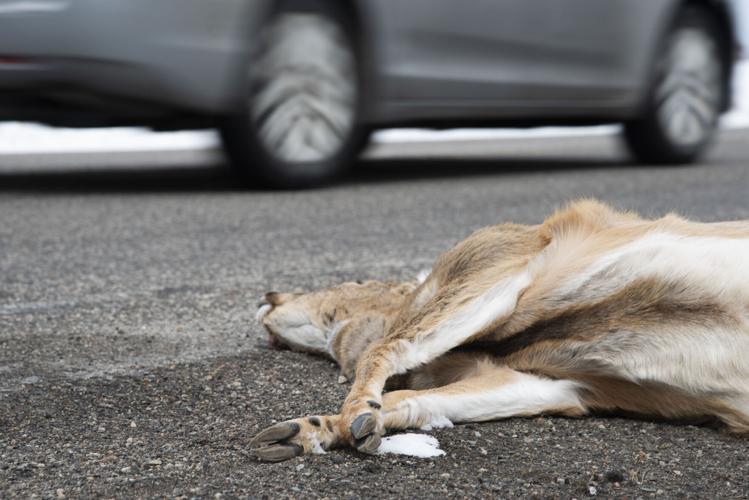
A car speeds past a deer, dead on the side of 19th Avenue in Bozeman on Tuesday, April 4, 2023.
Back in March, Ament and other experts with the Western Transportation Institute released more than a dozen new reports investigating the costs and benefits of building wildlife crossing structures as a part of a broader multi-state and Canadian research initiative.
Experts tested animal detection systems, various forms of signage and other technologies, but one of the reports indicated that crossings to separate animals from traffic are the most consistently effective mechanism for reducing wildlife-vehicle collisions, Ament said.
Assuming the structures are designed well, combined with at least a mile of exclusionary fencing and constructed in the right locations, overpasses and underpasses can reduce vehicle collisions with wildlife by 85% or more, according to Ament. They typically last around 75 years.
Small mammals can benefit from crossings that are designed for larger animals, especially if the structures are fit with features that can improve hiding cover, he added. Options for smaller, relatively inexpensive crossings for animals like salamanders and rodents also exist.

The catch is that large wildlife crossings are expensive, costing anywhere from $200,000 to upward of $7 million, depending on the size and model. While the up-front costs are high, the reduction in collisions can make the investment worth it, according to Ament.
Where crossings are placed along a road corridor is key, and it takes finer-scale assessments to identify effective locations. For several years, road ecologists, biologists and other experts have been collecting data and analyzing various possibilities for projects on Highway 191.
Road ecologist Liz Fairbank with the Center for Large Landscape Conservation is among those working on the Highway 191 Wildlife and Transportation Assessment, which will inform decision-making for wildlife accommodations along that road corridor.
Private entities — the Big Sky Resort Tax District, Yellowstone Club Community Foundation, Moonlight Community Foundation and Volgenau Foundation — are funding the assessment, which will culminate in a final report this spring.
Federal, state and local agencies are advising the effort, and while results aren’t public yet, they demonstrate that different sections of the highway are important for different reasons, Fairbank said.
They’ve shown that wildlife-vehicle collisions are particularly frequent between Four Corners and the mouth of Gallatin Canyon. But they’ve also revealed that certain zones with fewer crashes are critical for wildlife movement, including some highway segments south of Big Sky.
“It’s really about, ‘Where is the road a barrier? Where are we having collisions with wildlife? Where is it important that we maintain connectivity, given the rapid pace of growth and development in the area?’” Fairbank said.

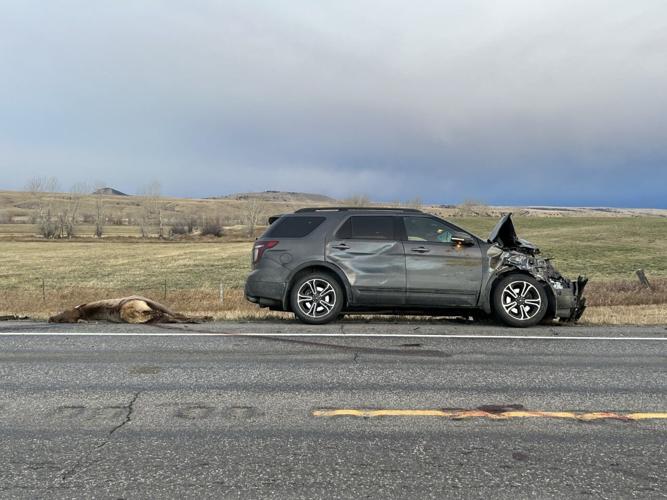
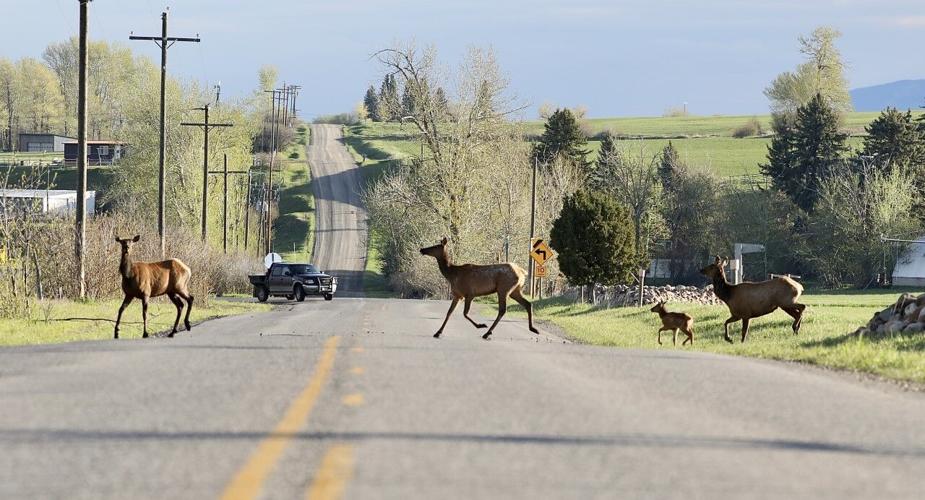
Conflicts between cars and wildlife is common along U.S. Highway 191.
Momentum to accommodate animals on Highway 191 is growing, but all north-south highways in the Greater Yellowstone ecosystem have very high rates of wildlife vehicle-collisions. As one fine-scale assessment in the region wraps up, another is taking off.
Yellowstone Safe Passages, led by liaison Daniel Anderson, has amassed the funding to assess possibilities around installing similar infrastructure on the 55-mile stretch of U.S. Highway 89 between Livingston and Gardiner.
The loose coalition of conservation groups banded together in 2020 to raise awareness about wildlife-vehicle collisions on the route, and they’ve since partnered with philanthropists, local landowners, agency officials and others to come up with solutions.
A team of road ecologists and other experts will work to pinpoint wildlife-vehicle collision hotspots and identify ideal locations for overpasses, culverts and other projects. Anderson expects the information-gathering process could wrap up by early fall.
Once that’s done, Yellowstone Safe Passages could submit applications through a new program from the Montana Wildlife and Transportation Partnership — a statewide coalition led by experts from MDT, Montana FWP, and Montanans for Safe Wildlife Passage.

MDT, FWP and the coalition of conservation organizations banded together to address wildlife-vehicle collisions after a Montana Wildlife and Transportation Summit was held in Helena back in 2018.
In the years after the summit, the three entities signed a formal agreement to coordinate and share resources. Recently, their efforts culminated in a new program and interactive map — tools that are designed to expedite and inform projects that help to keep animals off of highways.
The planning tool is a heat map of wildlife-vehicle collisions on all the highways in Montana, said Anderson, who also serves as the Montanans for Safe Wildlife Passage coordinator. Based on five criteria, it shows the specific areas where issues are most acute.
“It’s like a big stepping stone — an invitation for people to lean in and get closer to the ground in specific communities,” Anderson said. “The tool itself is not that detailed, but it invites getting into that kind of detail.”
In contrast, the partnership’s new program is a brand new avenue by which public and private entities can propose standalone projects that accommodate wildlife, said Deb Wambach, Butte District biologist for MDT.
In the past, such projects were only proposed through the transportation department’s internal highway program. Biologists would evaluate needs along highways and incorporate wildlife accommodation recommendations into improvement projects, like bridge replacements, she said.

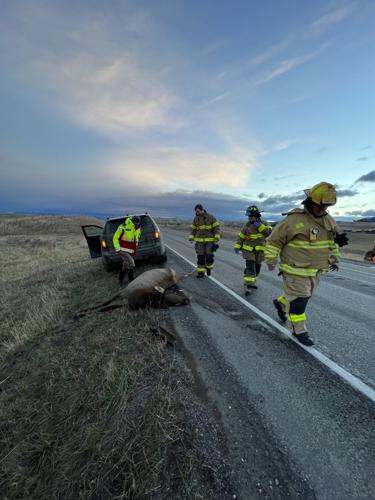
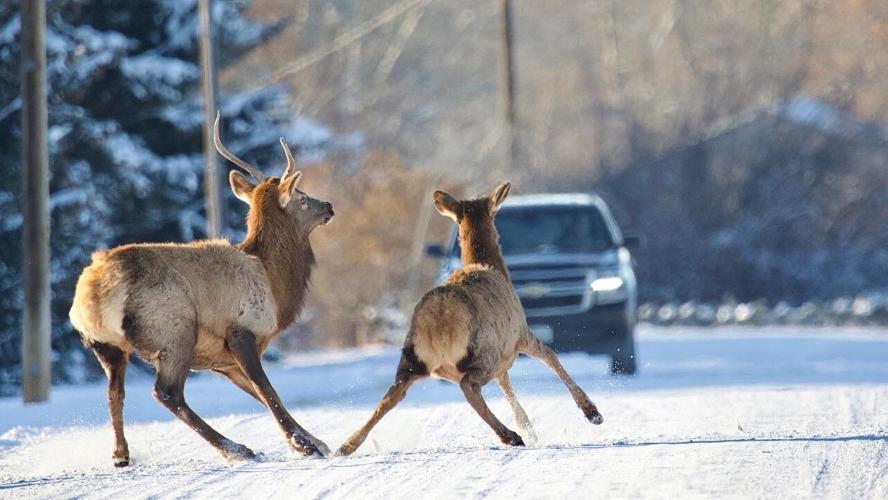
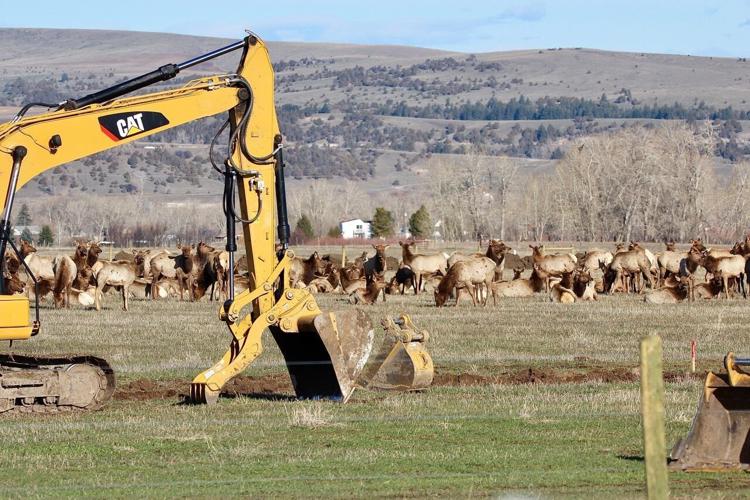
Elk on a building site along U.S. Highway 191.
Through the new external program, partners from the public and private sectors can leverage one another’s resources, capacity and funding to implement projects that fall outside the scope of the agency’s highway program, Wambach said.
The program’s application process is robust, but assuming groups and entities do their homework, MDT will have the tools and information needed to expedite projects, Anderson said. That could make it easier for the state to secure matching federal funds, which are competitive.
“Right now, they say even just the highway needs for operation and performance — they outweigh our available funding at least 3 to 1,” Wambach said. “To be able to put additional money into dedicated wildlife features… That’s huge. It’s a great opportunity.”
While outside experts like Fairbank analyze wildlife accommodation possibilities on Highway 191, MDT is conducting its own feasibility study into improvement projects along the road corridor, through the agency’s traditional track, Wambach said.
One project is already underway along the Cougar Creek bridge, several miles north of West Yellowstone. Crews are incorporating 20-foot-long wildlife paths on either side of the structure, and they’re raising the grade so large animals like bison can move through, she said.
In addition, the department is proposing to add animal detection systems on a mile-long section of the highway in that area. If it’s successful, the feature will lock in on bison and warn drivers of their presence in real time, Wambach said.
“Bison are a very unique challenge because they move parallel and along the road. They lay down in the road, and they’re seasonal, so they just don’t behave like traditional wildlife,” she said. “Just building a bridge for bison isn’t going to be the answer.”
Due to their conservation value and proximity to Yellowstone National Park, Anderson expects Highway 191 and Highway 89 will be strong candidates for federal matching dollars.
However, to set the stage for resilient, well-funded infrastructure, it’s important to build social bridges before physical bridges, since the Federal Highway Administration won’t put money into crossings that don’t span protected land, he said.
“If a wildlife overpass is put on private land without protection, 10 years later there could be subdivision development on both sides of that structure, and wildlife have moved to a different location along the highway,” he said. “It’s not a wise use of money.”
“That right there is the reason we have to partner with landowners because there’s a conversation with them about, ‘Are you willing to put some of your property into a conservation easement?’” Anderson said. “And that’s a delicate conversation.”
South of Wilson Creek Road, along the stretch of Highway 191 between Gallatin Gateway and Spanish Creek Road where vehicles regularly hit and kill elk, Rob Sisson once had a chance to get a wildlife overpass funded.
Sisson identified a donor who was interested in funding the project. The structure could have been placed on a 90-acre field where elk would graze regularly in the winter.
The Gallatin County Commission did not act on Sisson’s request for emergency zoning, and now the parcel is being developed, he said.
There is land west of the highway where a crossing could be built, but finding suitable land on its east remains a challenge, said Holly Pippel, a Gallatin Gateway resident.
“The elk are kind of getting pushed out in a way. Everywhere they go, they have new challenges, whether it’s a new house, a new fence, more traffic or more people during the hunting season,” she said.
“We who have lived here so long — all we see is the density coming in, and the loss of open space and habitat. But when people come from cities, they see wide open spaces. They don’t see the density, so they think this is wild,” Pippel said. “We just hope they leave the valley a little bit more whole.


(0) comments
Welcome to the discussion.
Log In