

Confusion remains over the origins of a white, powdery substance found leaking from a package in the Idaho State University mail room Dec. 3.
The Pocatello Police Department and ISU officials have provided conflicting stories on the substance, which was identified as crushed Oxycontin.
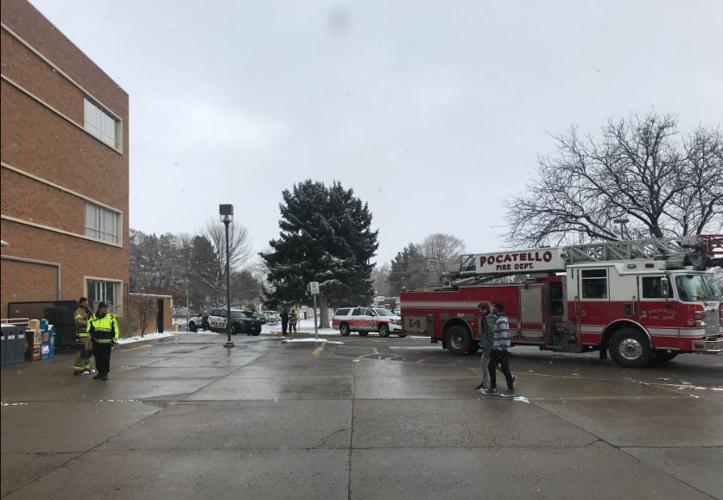
When the powder was first discovered, it triggered a response from the Pocatello Fire Department Hazardous Materials Team and caused the bottom floor of the Pond Student Union, in which the mail room is located, to be evacuated.
Police said Thursday the prescription opioid pills were mailed for use in research within ISU’s College of Health Professions and that the pills had become crushed during shipping, which caused them to leak.
However, ISU officials said the package was not connected to ISU in any way.
ISU’s Kasiska Division of Health Sciences shared a video to their Facebook page Friday night in which Rex Force, the vice president for Health Sciences, denied that the substance was related to ISU.
“This powder was discovered in an envelope that had been repurposed and utilized by and sent from an outside individual,” Force said in the video. “None of these products originated within the university.”
He also denied that the substance was in any way related to research done by the school.
“Standard research protocol, as well as federal and state guidelines and laws would preclude us from shipping medications in this manner,” he said.
However, Capt. James McCoy of the Pocatello Police Department said the substance was related to research, though it was indeed sent by an outside source.
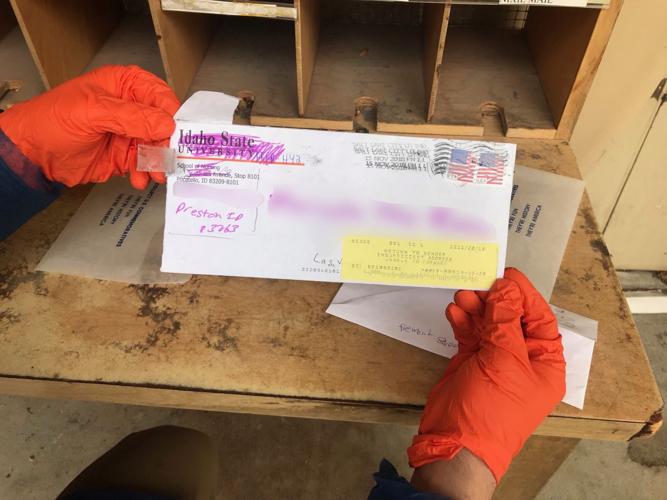
According to McCoy, a patient in a nursing department graduate study erroneously mailed the medication reusing an envelope from the ISU nursing department.
The patient had reportedly crossed out the ISU return address, but the address was still readable.
McCoy said the letter was sent out of state but was returned to ISU as undeliverable, likely due to it being processed through an automated routing system that could still read the address.
The study participant was identified by a patient I.D. number, according to McCoy, and due to the participant’s medical status and the fact that there was no malicious intent or threat to the public, McCoy said no further action would be pursued.
A representative from the Kasiska Division of Health Sciences said the department would need to investigate whether or not the patient was actually involved in university research and did not know why the police reported that they were.

(0) comments
Welcome to the discussion.
Log In