




The city of Boise’s look back at an incident that occurred at the most recent Idaho Potato Drop has shed light on repeated issues with organizers of the iconic New Year’s Eve event.
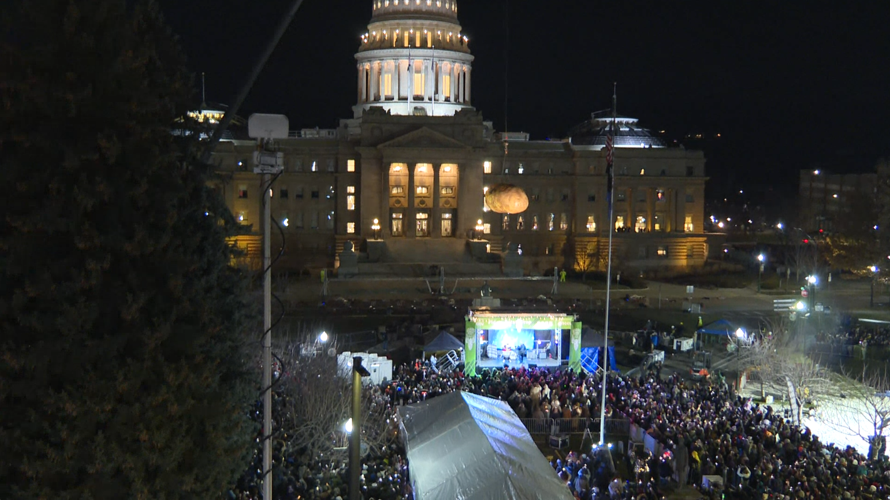
As the clock struck midnight at Cecil D. Andrus Park, celebration turned to concern after the fireworks display shattered windows, injuring a young child. The girl, Isabella, was struck by shards of glass, resulting in a laceration from her left eye down to her lower right jaw. She was taken to St. Luke’s Children’s Hospital, where she underwent surgery and received skin grafts.
Tuesday at a Boise City Council workshop, city staff reflected on their collaboration with the event organizers and where things went wrong.
Assistant Fire Chief Romeo Gervais said that nothing appeared unusual at the end of the event.
“Unfortunately, explosions are a little unique and sometimes difficult to figure out exactly how it reflected or what happened or what was different,” Gervais said. “We just don’t know that answer right now.”
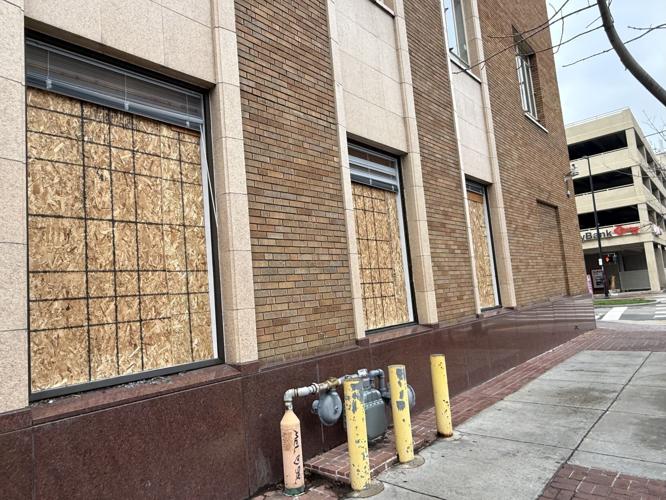
According to police reports, the “Wall of Fire,” a blast which consisted of eight fireballs, shattered three windows at the AT&T building on the corner of West Bannock Street and North Capitol Boulevard, ultimately injuring Isabella.
The fireworks display also resulted in two shattered windows on the Idaho State Capitol building’s fourth-floor rotunda.
Following an investigation, the organizers were not found to be at fault for the incident by Boise Fire or the Boise Police Department.
Gervais said the Boise Fire Department had reviewed the fireworks plan prior to the event and that the Potato Drop has previously featured similar fireworks. In the future, Gervais suggested providing supplemental engineering calculations to help planning.
“What I’m hearing is that fireworks and pyrotechnics are hard to predict in how they’ll impact,” Council President Meredith Stead said. “How should we be looking at this from a policy perspective? Is it that it is unpredictable, and therefore we should not allow fireworks downtown?”
Gervais said he has seen similar fireworks shows go off without incident, including displays inside arenas.
“We could do that, (but) I don’t know that that’s the right answer,” he said. “I think that they can be done safely. We have done numerous displays downtown safely.”
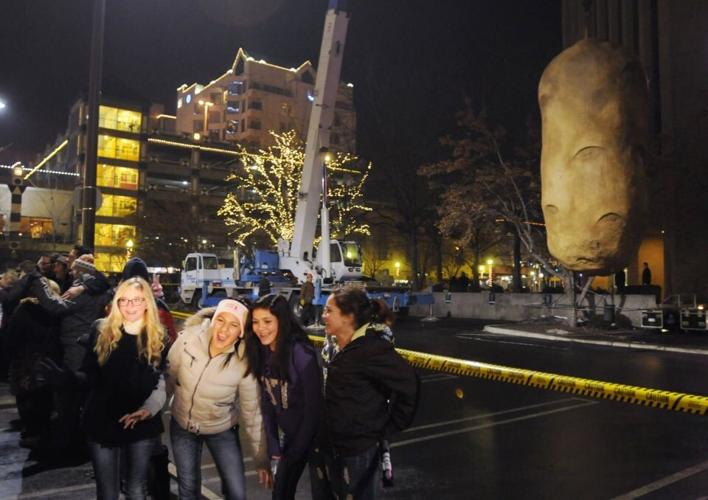
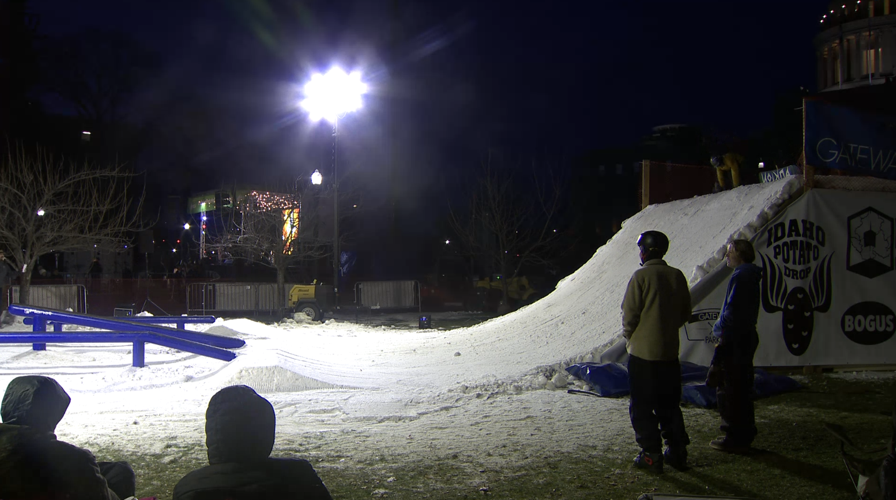
The Idaho Potato Drop has been around since 2013 and features a ski and snowboard course, live music and, most importantly, a 2,000-pound “potato” made of foam. The event is put on by its own private business.
Boise Community Engagement Director Maria Weeg described a history of inconsistent communication and issues with the event’s layout. Typically when staff do a walkthrough the day of an event, Weeg said they don’t expect to make major changes, sometimes just asking an organizer to move a trash can.
“Almost every walkthrough, I get some major note,” Weeg said about the Potato Drop.
One year, Weeg said the event’s ski jump wasn’t accessible and that a lift was brought in the day of. This year, the area designated for food trucks had to be moved.
Weeg said the placement of an on-site medical team has been a low priority for event organizers and “a real pain point” as far as having the location solidified.
In its 13 years, the event has resulted in three minor and two major injuries, according to Weeg. All of the injuries, besides Isabella’s, were related to the ski course. This includes 20-year-old Alex Church, who was left paralyzed after a fall while on the event’s ski course on Dec. 31, 2023, as reported by KTVB.
Weeg hesitated to “put too fine of a point” on whether issues have been consistent with and/or worse than other events.
“Our communication and collaboration experience with this event has been quite different than other events,” Weeg said. “You get thousands of people anywhere, something’s going to happen, but I don’t think we have seen the level as we have with this event.”
Stead cited her previous work experience organizing freestyle ski and snowboard competitions. She said her company never had a track record like the Potato Drop’s.
“I think we probably would have been shut down if we did,” Stead said.
Council Member Jimmy Hallyburton said there was one year when the event was not approved for an open fire permit, but it proceeded to have bonfires anyway. He went on to describe an unfriendly working relationship with the organizers.
Founder and CEO of the Potato Drop, Dylan Cline, was quoted in the police investigation the night of Isabella’s injury. Before being told about the injury, Cline celebrated the broken windows, saying that the Idaho Potato Drop would not be taking place “down here again.”
He included derogatory language directed toward the city and Mayor Lauren McLean.
He went on to say that the event’s insurance would cover the broken windows.
Weeg said this most recent Potato Drop was a difficult one as far as communication and changes to the event layout.
“The event organizer makes it pretty clear that they do not intend to come back to Boise,” Weeg said.
In an email to the Idaho Press, Cline addressed the perceived tense relationship, pointing to previous meetings with the Boise special events team where he said the city had commended them for doing a wonderful job.
At a Dec. 3 planning meeting, city staff exchanged pleasantries with the Potato Drop team.
“We know how hard you guys work on this, so thank you,” Emergency Preparedness Manager Rachel Holford said.
On the other hand, the friction between the event planners and the city has a longer history.
In 2021, the Idaho Press reported on a blow-up at a meeting between the city and Cline.
After the Boise Special Events Team pressed organizers for an estimated head-count — despite the Potato Drop not selling tickets for the free public event — and brought up past complaints from neighboring businesses, Cline interrupted. “It’s obvious that nobody appreciates what we do here,” he said, followed by some “choice words.”
After the October 2021 meeting, Cline told the Idaho Press that his remarks were a culmination of frustrations, and that he was “fond of” and has “worked well with” city officials over the years.
For the future, council members said there is a need to clearly define major violations, such as the use of fire without a permit, in order to address consequences and how the city should proceed with certain event organizers.
“If somebody has a major violation, which I would argue this one does, we give them a warning that (with) their next violation, they are out,” Hallyburton suggested. “... I would be absolutely for it. I don’t appreciate the disrespectful nature (in which) this event organizer has treated our staff and all of our agency partners, I think we have given them a lot of chances.”



(0) comments
Welcome to the discussion.
Log In