

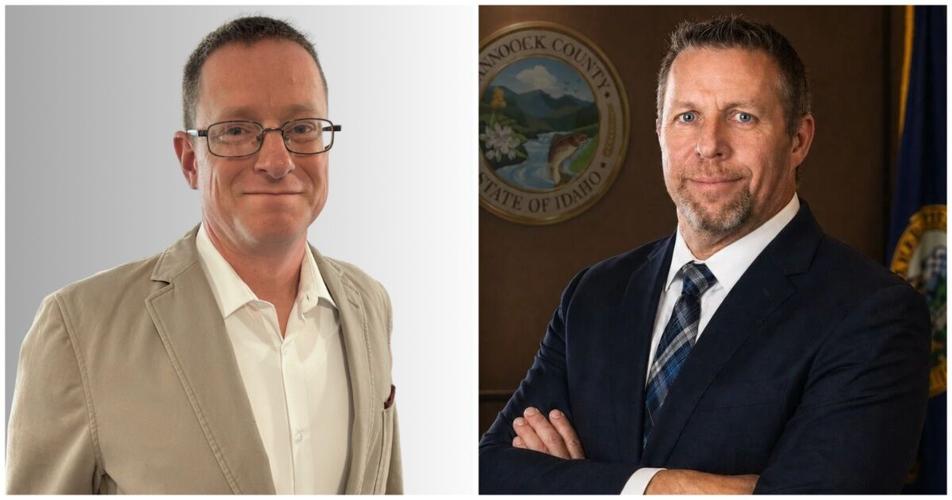




POCATELLO — The District 2 Bannock County commissioner race will feature incumbent Jeff Hough facing a challenge from Chris Schnitzler in the May election.
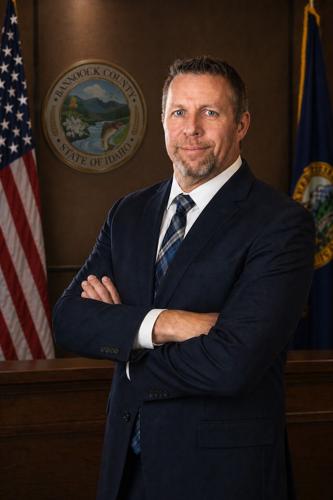
Hough, the current commission chair, is a lifelong Bannock County resident and Idaho State University finance graduate who has served six years on the commission. A Pocatello resident for more than 50 years, Hough graduated from Marsh Valley High School and remains active in the community, refereeing high school sports.
"One of the goals I set up when I first ran was to create a place our kids can come home to," Hough said. "I feel the last six years I've been working for that, and we've made some good progress."

Jeff Hough
That progress, Hough said, includes the recent addition of full-time advanced life support services in McCammon, the return of the pro rodeo to Pocatello and work done through The Village, a youth and family center. He said those contributions continue to make Bannock County a place where future generations can thrive.
Hough said there is still more to accomplish and is seeking reelection to continue that work.
Among his top priorities if returned to office are improving parking at the Bannock County Events Complex, expanding emergency services in the northern part of the county and maintaining business-friendly zoning ordinances that encourage economic development rather than restrict it.
On emergency services, Hough said the county should consider adding another ambulance to serve the Chubbuck area and northern county.

Chris Schnitzler
Schnitzler was born in Idaho Falls and moved to Pocatello in 2003 with his wife, where they have raised their family over the past 20 years. He has worked with the local Department of Corrections and at Verizon Wireless as a sales manager and has been in real estate since 2016. Schnitzler said he is running because he wants Bannock County to be a place where his children can not only survive but thrive if they choose to stay.
Schnitzler said he brings a unique perspective and substantial leadership experience to the commissioner position and that voters deserve choices at the ballot box.
"My campaign has been built on integrity, transparency and stewardship," Schnitzler said. "Most people understand the simple definition of integrity as doing the right thing, even when nobody's watching. Transparency means open doors, open conversations, open books. What the county needs is transparency of the budget — how the money is spent, why it's moved around if it's moved around — and reducing unnecessary expenditures. I think a lot of times people say wasteful, and I think some of the spending in the county isn't necessarily wasteful, but it is unnecessary, and the tax burden is significant."
Schnitzler said many area families are working multiple jobs to make ends meet and living paycheck to paycheck as taxes rise. His plan is to minimize the tax burden by controlling unnecessary spending, which he argues is the most effective way commissioners can deliver results for voters.
One of Schnitzler's criticisms of his opponent stems from a recent post in which Hough claimed the tax levy has been reduced by $15 per $100,000 in taxable value over the past five years.
"The ultimate reason why that levy went down was not because the commissioners were controlling the budget, but because the taxable value of real estate in the county almost doubled during that time," Schnitzler said.
In conversations with area voters in recent months, Schnitzler said infrastructure has emerged as a top concern.
"Road conditions are no secret to people in the area, but there are also concerns over the projects that get approved and the spending behind them," Schnitzler said. "An example would be the Portneuf amphitheater. There's a $2.5 million line item in the 2026 budget for concerts, and over the last three years the county has lost an average of $500,000 per year on the amphitheater. Figuring out how to manage that differently — so that taxpayer dollars aren't going toward entertainment — would be a good first step."
Regarding other county expenditures, Schnitzler said a collaborative approach with department heads is needed to identify areas where spending can be reduced.
"Some of those projects have momentum and expenses already associated with them," Schnitzler said. "I think an example of one that could have been avoided is the coroner's facility. A request was made for alterations — I believe in the $300,000 range — and then in the budget it ended up being almost a million-dollar line item. I don't have all the details, but things of that nature are concerning to the average taxpayer. There's not a lot of transparency as to why those decisions were made and what the driving force behind them is."
For more information on the May election, visit VoteIdaho.gov.

(0) comments
Welcome to the discussion.
Log In