

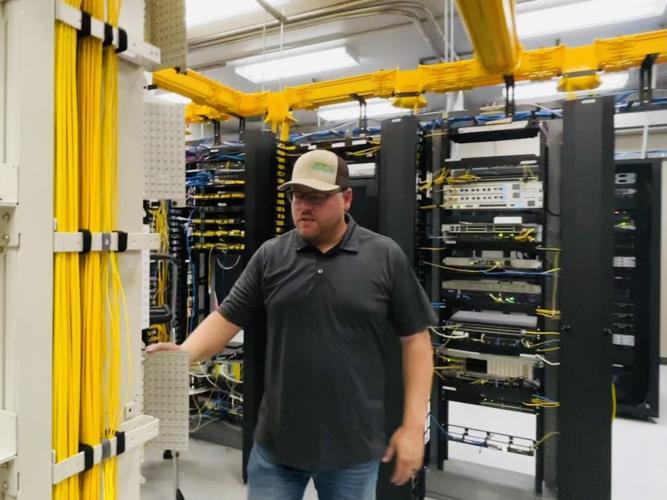
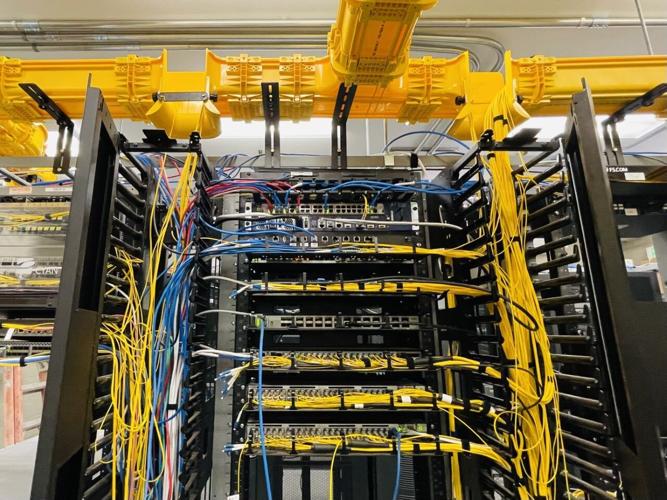


Ammon has been recognized internationally for its “Ammon Model” of fiber-optic internet, which offers some of the cheapest internet costs in the world.
“In 2010, the city of Ammon began construction of a municipally owned fiber optic system,” said Dan Tracy, director of information technology for Ammon Fiber Optics. “Since this time, we have invested in several hundred miles of fiber optic infrastructure. … Today, this infrastructure serves city operations, the local 911 dispatch center, first responders, eight different service providers, 110 businesses and over 1,500 residential properties.”
Harvard University researchers devoted a 2017 case study to the fiber-optic network.
In 2019, Fast Company, a monthly business magazine and website, called Ammon’s network “the best fiber-optic network in America.”
Micah Austin, Ammon’s city administrator, shared his pride in the accomplishments of the city and its fiber-optic accomplishments.
“Ammon has some of the cheapest internet in the world,” Austin said. “Last year a report came out that said we had the 7th cheapest internet on the Earth.”
With more than 1,500 homes connected, including 600 within the last year, Ammon Fiber is more than 60 percent done connecting the entire city to its network and Ammon Fiber officials plan to be completely done with the network’s build-out by 2027, Tracy said.
“We live in a day and age where something like the internet can bring life-altering changes to people,” Tracy said. With the Ammon model, the city has found a way to make fiber-optic internet services as cheap and reliable as other essential utilities such as water and gas.
Ammon created its model not as a way to gain profit for the city, but instead to provide its residents and business owners with a resource city leaders deemed essential but had found was becoming far too expensive in the private market.
The Ammon Model provides property owners within the city the opportunity to own their broadband connectivity without being tied into plans and contracts.
The model’s objective is to build a next-generation fiber-optic utility infrastructure that will accommodate change and innovation for the foreseeable future, Tracy said.

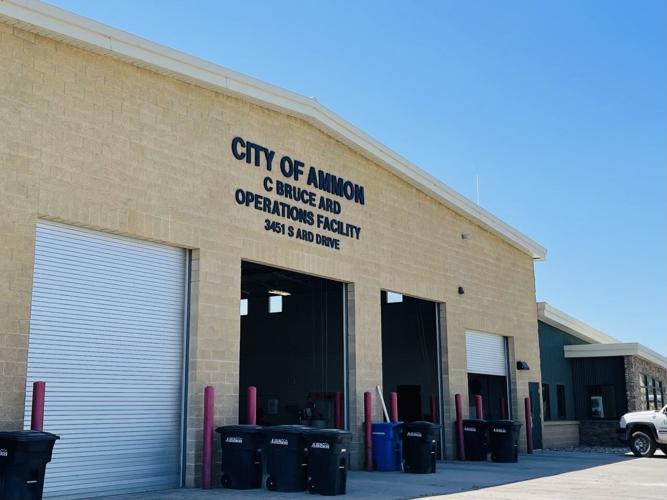
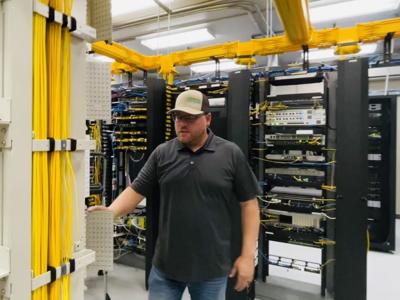
The city of Ammon's C. Bruce Ard Operations Facility at 3451 S. Ard Drive is home to Ammon Fiber.
To ensure the best prices for consumers, there must be a careful and deliberate unbundling of services from infrastructure both technically as well as economically. The Ammon Model is special in that it has perfected this, Tracy said.
In Ammon, this unbundling of services and model of funding was accomplished through the creation of local improvement districts or LIDs. The districts provide a group of property owners the ability to share in the cost of infrastructure or updates on a voluntary basis.
Many cities across the country form local improvement districts as a method by which a group of property owners can share in the cost of infrastructure improvements in their neighborhoods. The improvement districts are most commonly used for projects such as improving streets, building sidewalks, stormwater preparation, etc. Ammon is just using them to provide fiber-optic infrastructure.

Fiber-optic internet connections for more than 400 properties are seen in this photo.
In the Ammon Model, the city facilitates the financing and construction of the infrastructure and then takes on the maintenance and operational responsibilities post construction. This is all accomplished with the participation and support of the people living within the LID.
The percentage of property owners choosing to opt-in to the fiber-optic connection ranges based on which LID they reside in:
• LID1 (Brick Estates, Felt & Waite, Mountain Valley Estates, Stonehaven, The Cottages, The Villas) — 72.90 percent
• LID2 (Cottonwood Hills, Eagle Point, Founders Point, Mountain Valley Estates, The Villas) — 53.09 percent
• LID3 (Bridgewater, Centennial Ranch, Hawks Landing, Jennie Jean Estates Area, Utterbeck Addition) — 56.04 percent
• LID4 (Cortland Ridge, Fox Hollow, Highland Springs, Woodland Hills) — 58.83 percent
• LID5 (Ammon Townsite, Arnold Wadsworth, Barbara Jean Estates, Centennial Ranch, East Hills Addition, Hillview Village, Maibean Jones Addition, Oak Ridge, Peterson Park Subdivision, Pony Acres Addition, Shangila Homes, Tie Breaker Village, Tom Bird, Trailwood Village, Warren Bird) — To be completed May 2023
• LID6 (Unconfirmed)- To be completed in 2025
• LID7 (Unconfirmed)- To be completed in 2027

Joseph Daniello controls a horizontal directional drill pulling conduit under a road that will later hold fiber.
Once construction and installation of the fiber-optic lines are completed in a LID, property owners receive cost estimates, and their participation is optional. The total cost of the project is then equally divided among the participating properties within the district.
The more individual property owners that participate, the lower the installation will cost for each property. The amount due is then attached to the property as a lien and paid over the course of 20 years at a low municipal bond rate of less than 3 percent, Tracy said. The property owner can avoid the bond rate by paying in full at any time.
Operational expenses are paid to the city as an additional charge on residents’ monthly utility bills, the monthly utility fee for fiber-optic access in Ammon is $16.50 for participating households in order to maintain service. This is a fairly standard utility practice, as property owners can suspend water and sewer service for periods of time when they no longer want the service. The city uses these fees to maintain the ability to provide members with access to an online marketplace where they purchase a range of internet services.
These three unbundled and separate costs all are associated with achieving the desired end. A customer will pay the $16.50 operational expense, their chosen plan, most of which purchase a plan for $9.99, and the either one-time, annual, or monthly cost of their LID estimate.
The Ammon model is about democratizing a critical infrastructure, providing the opportunity for all to have it, and making it as cheap as possible. The process requires dedication, cooperation and community engagement. The payoff for all of this is the 1 Gbps internet choices for less than $55 a month including a property owner’s LID payment, but as low as $26.49 a month after the LID is completely paid, with no contracts or data limits.
Tracy shared that because he currently lives outside of Ammon, he is unable to get a fiber-optic connection to his home. Without this connection Tracy pays $70 a month for 40 Mbps. To put this in perspective, 1 Gbps is 1000 Mbps. Tracy is paying $15.00-$43.51 more for 960 Mbps less than the average fiber-optic owner.
“We have 18 different fiber sites in Ammon and we could connect 10,000 properties to a fiber-optic internet service in one of those sites,” Tracy said. This giving the opportunity for 180,000 connections within the city.
The Ammon Model is ready for the future, a future in which Tracy feels is coming soon.
“Ammon is growing quickly and we are trying to move just as quickly, preparing it for a much larger population, and technology driven future than we have right now,” Tracy said.

(0) comments
Welcome to the discussion.
Log In