

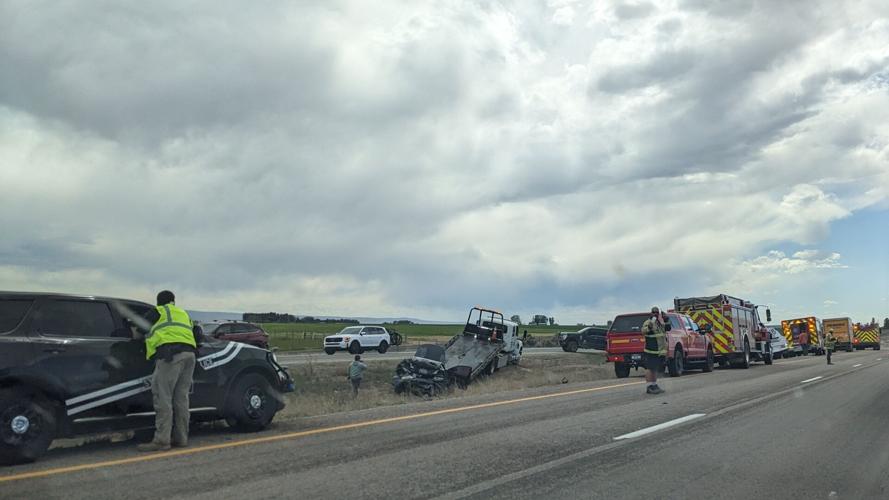
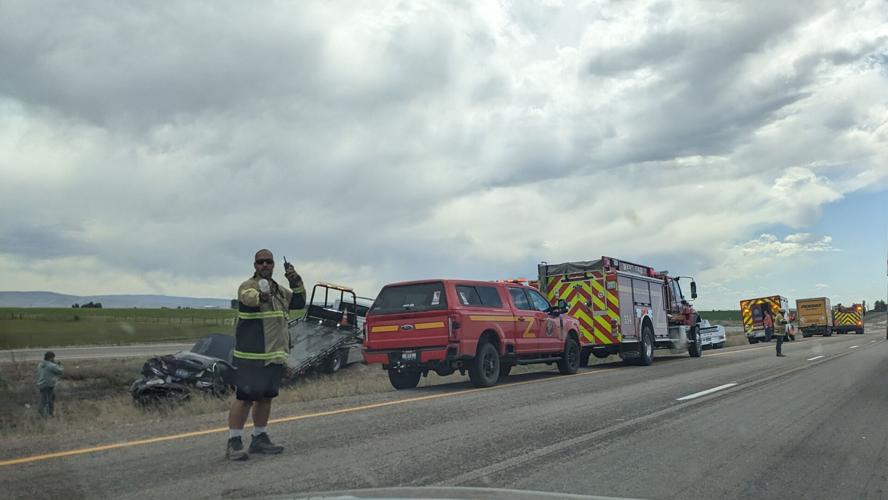
Summer is the busiest time for car travel and the deadliest.
There are more events to attend, more hours of daylight, more celebrations and more reasons — from work to vacation — to hit the road. So even though weather is largely removed as a driving hazard, the 100 days or so between Memorial Day and Labor Day are when the bulk of serious traffic accidents occur.
But don’t use that term.
“We don’t call them accidents. We call them crashes,” said Idaho State Patrol Sgt. Travis Hight. “Most of them can be avoided.”
He can count on one hand the number of crashes he has responded to that could be classified as true accidents. For example, Hight said if a tire shop fails to properly tighten lug nuts on a set of new tires, resulting in the wheels literally falling off, the crash wouldn’t be the fault of the driver.
But those types of equipment failures are rare.
“It’s always somebody drove in a way, or made some kind of steering maneuver, something that caused the crash.”
Slow down
Speed is the big one. Without the threat of ice or snow and with more daylight, people tend to have heavier feet in the summer months.
“It’s not that there are more crashes,” Hight said. “It’s that the speeds get higher and it makes (crashes) more deadly.
“People drive more cautiously in snow and adverse weather. They feel comfortable and complacent in good weather.”
Which is another cause of summertime crashes. Even if people aren’t speeding, Hight said they can let their guard down. The white-knuckle driving of winter that demands focus turns to relaxed summer cruising.
Drivers might be more apt to check a text message, fiddle with their tunes, or divert their attention from the roadway for any number of reasons.
“It takes a fraction of a second to go over the center line and the next thing you know you have a head-on crash.”
Sober and safe
Impaired driving also spikes during the 100 deadliest days. Hight said people may hit the beach or a barbecue and have a few beers. They may prefunction before a concert or demolition derby by imbibing alcohol or other intoxicants. Parties and other gatherings that extend past sunset are abundant.
“All those kinds of things increase the dangers on the road.”
Idaho State Police troopers try to counter those inclinations by doing emphasis patrols in places they know generate unsafe and impaired driving.
“We want to be in the places most crashes happen, when they happen the most,” he said. “We try to become a deterrent and go to places people are more likely to drive drunk or impaired.”
Hight hesitated to single out dangerous stretches of road in Idaho’s sprawling District 2 that stretches roughly from Potlatch to Riggins and Lewiston to Lolo Pass. But he did note the Aht’Wy Plaza on U.S. Highway 12/95 in front of the Clearwater River Casino east of Lewiston has mitigated what was once a dangerous intersection. Instead of drivers making cross-traffic left turns in and out of the casino, they now use an overpass that puts them on the roadway with the flow of traffic.
There had been nine fatalities in the area near the casino between 2004 and the opening of the interchange in November 2024. There haven’t been any since.
Hight said other developments have helped elsewhere. For example, he said one of the region’s major transport companies no longer uses the beautiful but twisting U.S. Highway 12 that has few passing lanes as an east-west route. Instead, its drivers use Interstate 90.
Looks that kill
The Gem State is known for its gorgeous landscapes. Certain routes, like Highway 12 that traces the Clearwater and Lochsa rivers, attract plenty of visitors seeking scenic beauty that ranges from bucolic to pristine. Look too long and beauty can turn deadly.
“It only takes fractions of a second to be looking out into the glorious scenery of U.S. 12 and the next thing you know there is a serious injury or fatality,” he said. “It’s a beautiful area. You are going that route because it is beautiful. You are not going to look at anything besides the pavement? It’s a bad catch-22 for that.”
Motorcyclists flock to Highway 12 and other scenic routes in the state. While he said it is important for drivers to be on the lookout for the two-wheelers that can sometimes blend in, Hight noted being hit by other motorists is not the most common cause of crashes involving motorcycles.
“When you go and look at the stats, it’s motorcycles taking themselves out,” he said. “Less motorcycles get taken out by other vehicles. It is the motorcyclists themselves contributing to that crash. That is more out on the highways. It might be different in towns.”
So Hight’s advice for surviving the summer driving season? Stay alert. Avoid aggressive driving. Stay sober and slow down.
“It’s amazing how many people never get in crashes because they are able to stay attentive and aren’t driving in a way that risks themselves.”

(0) comments
Welcome to the discussion.
Log In