



When Steve Snow was first buying a house in 2001, he sought out advice from friends, colleagues and family members. Even then, the process was still frustrating.
“I knew that most of the (real estate) agents would not provide interpreters or provide any communication accommodations, and I knew that the house-buying process was a huge, life-changing event,” said Snow, who was born deaf, over email. “At first, it was frustrating trying to find an agent who has experience working with deaf folks.”
Residents like Snow in the Treasure Valley’s deaf community face challenges accessing information about buying a house and finding real estate agents and mortgage brokers willing to provide an interpreter.
The deaf community is far more likely to rent a home compared to the general population. In the Treasure Valley, 75 percent of deaf residents rent instead of buy a home, said Snow, executive director of the Council for the Deaf and Hard of Hearing. The state overall in 2016 had a rental rate of just 32 percent, according to U.S. Census data.
This can present itself as a problem when owning a house provides someone with financial stability, empowerment and a place to live where an oppressive or discriminatory landlord isn’t an issue.
The deaf population in the Treasure Valley
While 13 percent of the population has some form of hearing loss, about 1 percent — or roughly 6,000 people — in the Treasure Valley have profound hearing loss. Among them, approximately 1,800 depend on interpreters or other technologies for communication access, said Snow.
A person who is profoundly deaf can’t hear anything below 81 decibels, according to the U.S. National Library of Medicine. Normal conversation is around 60 decibels, and nearby traffic is around 80 decibels.
“It’s a wide spectrum, so that 13 percent is a minimum number,” Snow said. “More recent research shows that the number is closer to 20 percent. That’s one out of five Idahoans experiencing some kind of hearing loss.”
Real estate broker with HTM Real Estate Holly Thomas-Mowery is bilingual and connects with about 10 to 15 deaf clients monthly.
“Deaf people needing or wanting houses is the same thing as people who can hear needing or wanting houses — the big difference is that they don’t have access to information about the lending process, the purchasing process or the inspection process,” she said.
While the popularization of vlogs, or video blogs, has made it easier for the deaf community to share announcements in sign language across the nation, she said there is still a gap in the real estate information available to deaf individuals.
“My job is locally, ‘OK, now that you have this information, let’s go and look at houses, let’s see if you qualify for a mortgage,’” she said.
The language gap
Thomas-Mowery said a lot of people don’t realize that for many deaf individuals, English is their second language — American Sign Language being their first.
“So many people mean well, they just don’t know the needs of this community,” she said. “That well meaning doesn’t go very far because the barriers are rampant.”
Snow said the fight to receive interpreting services frequently occurs in health care.
While Thomas-Mowery was taking her deaf son to the doctor’s office last Saturday, the office’s staff informed them their interpreter didn’t work on weekends and asked if her son could just read lips, or if he and the doctor could just write back and forth.
“It’s the majority of a deaf person’s life,” she said.
Not providing a deaf person with a translator bars them from understanding the information they need to make that important real estate decision, Thomas-Mowery said.
Ron Wieczorek, senior loan officer at Eagle Home Mortgages, said unless someone has a background in finances, it can be really difficult to understand the details of getting a mortgage.
“I don’t think anybody can understand (that) without having someone who can speak the same language,” Wieczorek said, who works with two to three deaf clients a month and always requests an interpreter for the meeting.
Thomas-Mowery said a lot of lenders require deaf people to jump through other hoops, such as show extra documents online, to prove their level of interest before even setting up an initial meeting to discuss a possible mortgage — information they don’t require from a hearing client.
“There is a huge value in having people who say … ’Let’s meet, let’s figure this out, and maybe in three years you’ll be ready to buy a house,’” she said. “It’s really powerful to not have to constantly fight to get a meeting.”
This treatment has created in the deaf community a distrust of systems, including real estate, because they feel a system might be trying to exploit or take advantage of them.
In some cases that distrust may be warranted. It is legally required to offer deaf individuals access to an American Sign Language interpreter, Snow said. Companies can also receive a tax credits for whatever cost they spend on an interpreter. Despite this, some title companies will try to pad the closing costs of a house with the expenses of offering an interpreter at the closing table, Thomas-Mowery said.
“Then we have to fight and say it doesn’t cost a deaf person more to close on a house than a hearing person,” she said.
The wage gap
Even if deaf individuals do get the information they need about real estate and lending, they face other obstacles to homeownership.
“To buy a house you need a job — because that’s how you buy a house — but deaf people often struggle to get good employment,” Snow said.
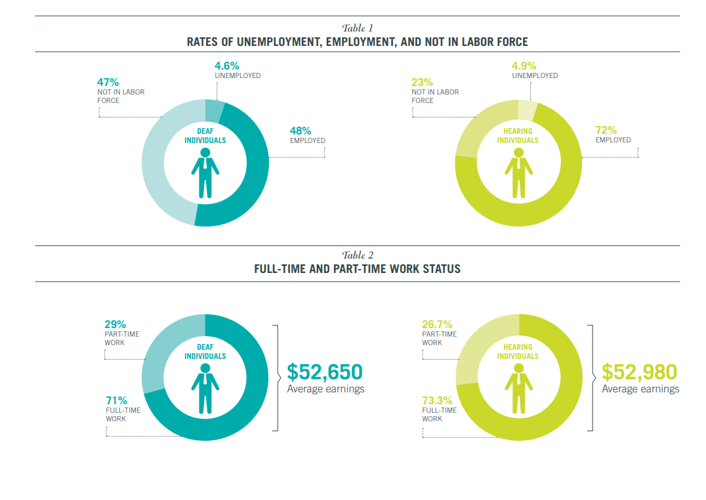
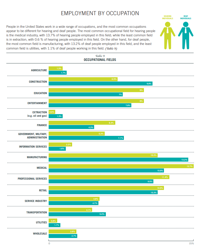
According to a study by the National Deaf Center, in 2016 roughly 47 percent of deaf individuals were not in the labor force — compared to 23 percent of hearing individuals — and 4.6 percent were unemployed, compared to 4.9 percent of hearing individuals.

This graphic was taken from the Deaf People and Employment in the United Stated: 2016 report done by the National Deaf Center on Postsecondary Outcomes.
Snow said about 90 percent of deaf individuals are either unemployed or underemployed. While Snow attended a university for the deaf — Gallaudet University in Washington, D.C. — and was able to find a job first with that university and then with the Council for the Deaf and Hard of Hearing, he said rarely do other deaf individuals have the same opportunities.
“They may be the first people laid off, they face discrimination, they may be underemployed,” he said. “Many of them also do not feel that they have many chances for promotion.”
For those who are employed, the average income of a deaf individual in the U.S. is $52,650, which is slightly lower than hearing person, around $53,000, according a 2016 report by the National Deaf Center.
Phil Mount, 2018 president-elect for Boise Regional Realtors, said housing affordability for anyone, let alone a deaf individual, is tough at this time in the Treasure Valley.
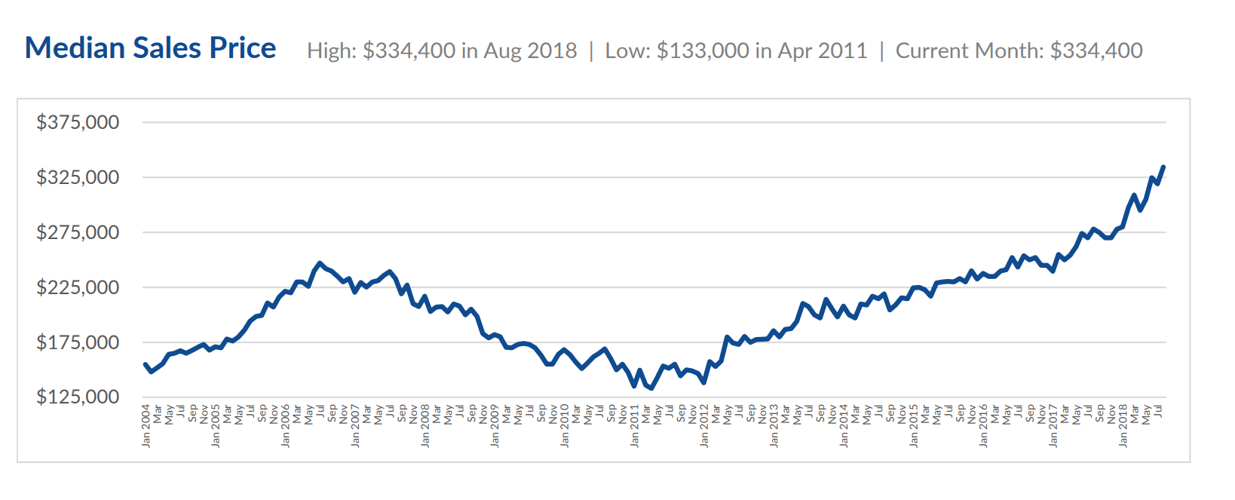
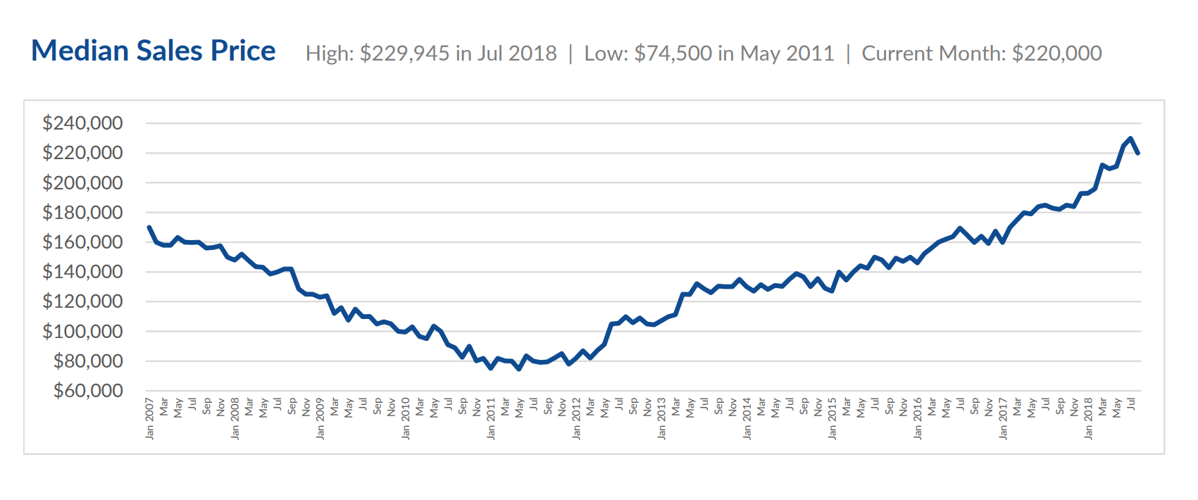
The median sale price for single family homes in Ada County in August was $334,400, the highest it has been the last 14 years. The median sales price for single family homes in Canyon County was $220,000, close to the 10-year peak in July, which was $229,945.

This graph shows the median sales prices for houses in Ada County. It was taken from the August 2018 Market Statistics for Ada County report created by Boise Regional Realtors.
Mount said wages are not keeping up with escalating home prices in the Boise area and nationally.
“We’ve been building at roughly half the rate we need to keep up with demand,” he said. “When the recession hit, a lot of the trades people left the industry, so we’ve been playing a catch-up game.”
Making the decision
For most people, buying a house is one of the largest decisions they’ll make in their lives.
“In a typical family, children grow up hearing their parents make decisions and having some insight into what that decision making process looks like,” Snow said. “And they internalize that regardless of the seriousness of the decision.”
Snow said deaf children don’t have the same access to those conversation, so there is a “gap in their knowledge of what the decision making process looks like.”
“Now they’re coming to buy a house and they don’t have the process of making a decision or the information everyone else has access to,” Snow said. “It’s really a double whammy.”
Snow said as members of the deaf community have more positive experiences with people in the homeowning system, they will warm up to the idea of buying a house.
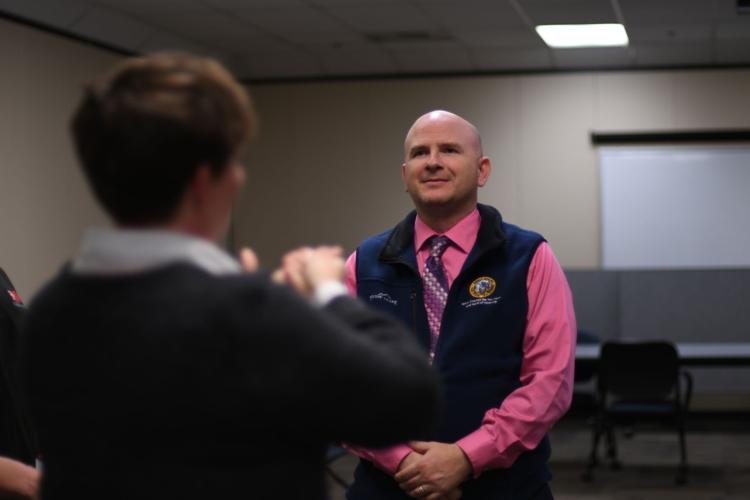
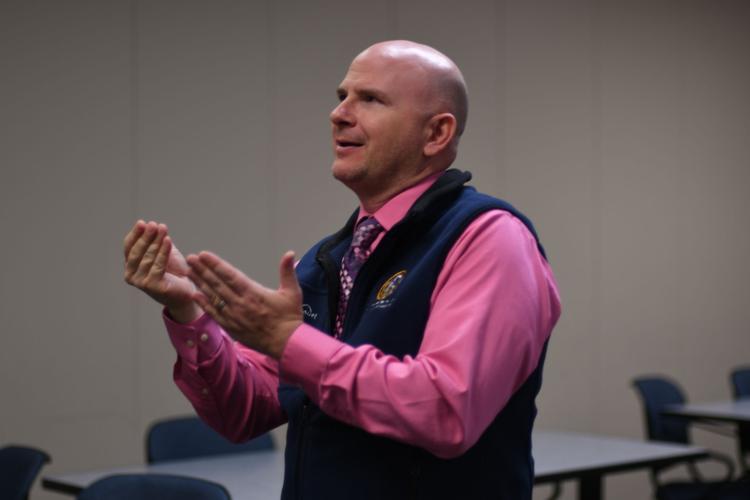
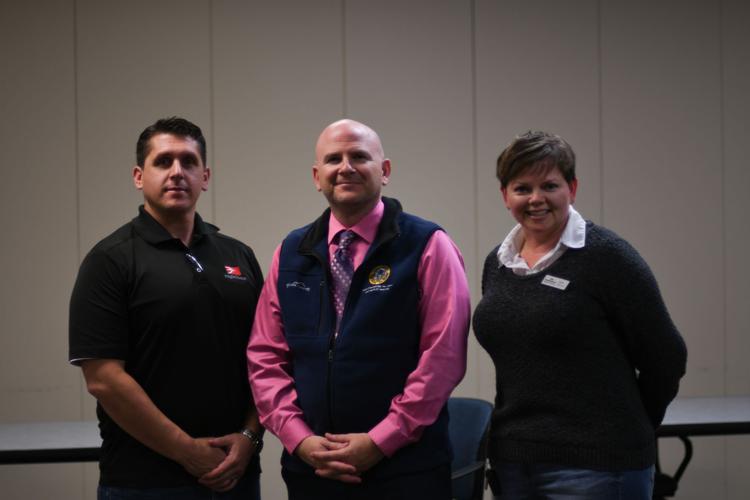
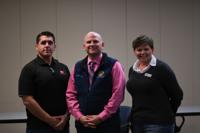
HTM Real Estate and Council for the Deaf and Hard of Hearing with Eagle Home Mortgage in Meridian led their second workshop last month teaching members of the deaf community the ins and outs of real estate.
“We’re seeing something start to shift,” Snow said. “I think that is the key, as there is more visibility — as the community sees the deaf community is really is an asset — I think people will feel more inclined to welcome them.”
The deaf community
Snow said he was prompted to become the executive director for the Council for the Deaf and Hard of Hearing because he wanted to create positive change for those in the community.
“For the changes to occur, I must be the change,” he said. “Participating in any opportunity to transform or enhance public policies that would advance the quality of life for deaf Idahoans is what gets me out of my bed every morning.”
Snow said the deaf community was filled with a variety of people who are genuinely proud to be deaf. It is also “vibrant, filled with art, culture, and other fun activities that just wouldn’t be the same if everyone could hear,” he said.
“This bond between people who cannot hear is something you don’t often find among those who can,” Snow said. “ Whether you were born deaf or are experiencing hearing loss later in life, it is possible to find others who share your experiences.”
Correction: This article has been corrected to show that HTM Real Estate and Council for the Deaf and Hard of Hearing led their second workshop with Eagle Home Mortgage and that Holly Thomas-Mowery is a real estate broker.

(0) comments
Welcome to the discussion.
Log In