

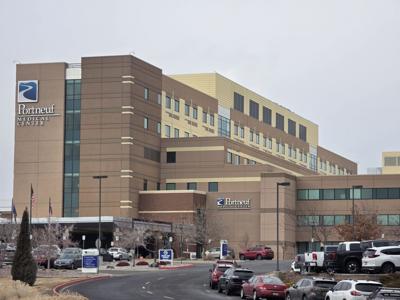

Thousands of Southeast Idaho residents could lose in-network access to Portneuf Medical Center and its affiliated providers by June 15 if its contract negotiations with Regence BlueShield of Idaho — one of the largest health insurance providers in the state — fail to produce an agreement.
The potential disruption would affect Regence members who rely on PMC, Pocatello Health Services, PHS Ambulatory Services and Portneuf Ambulatory Surgical Center for their health care. For Southeast Idahoans who carry Regence insurance and depend on PMC as their primary source of care the stakes are significant — losing in-network access would likely mean higher out-of-pocket costs for most non-emergency services.
Both sides have gone public with their positions — and their accounts of what is driving the dispute differ significantly. PMC contends that Regence reimburses the health system at unfairly low rates compared to other insurers and has created mounting administrative barriers that delay patient care. Regence counters that PMC’s parent company — Tennessee-based Ardent Health — is demanding double-digit rate increases that would ultimately drive up costs for local businesses and health plan members.
The state is monitoring the situation and the Idaho Office of Group Insurance sent an email Friday regarding the contract dispute.
“These negotiations are being conducted on Portneuf’s behalf by executives of Ardent Health, a Tennessee-based, private-equity-backed, for-profit healthcare organization that jointly operates and manages Portneuf,” the Idaho Office of Group Insurance stated. “According to Regence, Ardent’s initial proposal sought a 73% increase in healthcare costs over seven years. Their most recent proposal reflects a 41.6% increase over five years. Regence has indicated that increases of this magnitude, more than double the rate of inflation, could lead to substantial and unsustainable premium increases for members.”
But PMC says the dispute goes far beyond reimbursement rates — though rates are a central concern. According to PMC, Regence reimburses the health system significantly less than other major insurers in the market and less than it pays many other Idaho health systems. PMC says it is seeking a fair agreement that helps narrow that gap and supports the long-term sustainability of care in the community.
But PMC says the problems run deeper than rates alone. In addition to reimbursement concerns, PMC cited what it described as growing administrative challenges including unpaid claims, claim denials, down coding and repeated reprocessing requirements — issues it says have increased administrative burden and delayed patient care.
“This is not simply a dispute over rates,” PMC said in a statement. “It is about whether Regence is willing to support the staffing, services, and infrastructure needed to maintain a strong local health system for its members.”
Regence tells a different story about who is driving the potential disruption. In a statement released April 24 Regence said PMC’s parent company, the “for-profit Ardent Health,” is demanding double-digit reimbursement rate increases, which Regence described as more than twice the rate of inflation.
“As your local, nonprofit health plan, our premiums directly reflect the prices provider systems charge for health care,” Regence said. “While we are open to negotiating increases, we cannot accept the rates currently being demanded by Ardent Health’s executives.”
Regence framed the potential departure as PMC’s choice rather than a negotiating failure — saying PMC’s leaders have informed Regence that they wish to end their contract if their demands are not met. The insurer pointed out that it invests 87 cents of every premium dollar directly into members’ health care and argued that accepting PMC’s demands would drive up costs for local businesses and health plan members.
Emergency care would not be affected by a contract breakdown. Both sides confirm that federal law requires emergency services to be covered at in-network rates regardless of whether a contract is in place. Patients who are pregnant or undergoing active treatment for serious conditions may also qualify for continuity of care coverage under the No Surprises Act — both PMC and Regence are encouraging affected patients to call the number on the back of their insurance card for details.
Regence has identified alternative in-network providers for members who may need care if PMC goes out of network. In-network hospital options include Bingham Memorial Hospital in Blackfoot, Caribou Medical Center in Soda Springs, Mountain View Hospital in Idaho Falls and Idaho Falls Community Hospital. In-network primary care and multispecialty clinic options in the Pocatello area include Bingham Memorial Clinics, MVH Physicians Immediate Care, Brandon A. West Clinic, Health West and Family Practice Group. Several virtual care providers are also available in the Regence network. Members with questions can call the number on the back of their Regence member ID card or visit regence.com.
PMC is encouraging Regence members who want to maintain in-network access to its facilities to contact their employer or insurance broker about plan options that include PMC as an in-network provider. A full list of insurance plans accepted at PMC is available at portneuf.org/insurance.
The Idaho Office of Group Insurance said in its email: “While this situation is concerning, both Ardent and Regence have stated they are continuing to negotiate in good faith and remain hopeful that a fair agreement can be reached. In the meantime, we are working closely with our Regence account team to ensure that impacted State of Idaho members have access to clear information, including alternative providers and facilities, should an agreement not be finalized.”
Both Regence and PMC say they remain committed to reaching an agreement — but the June 15 deadline is approaching and the gap between their positions remains significant. For the thousands of Southeast Idaho residents who rely on PMC for their health care and carry Regence insurance the outcome of these negotiations matters enormously.


(4) comments
I agree 100% with The Best response. No private equity firm should come near our health care.
We were on regular Medicare for years, then a few years ago we were sold on HMO plans has my wife developed some serious health issues plus the "extra minor benefits" were attractive. Then after the 2nd year the nightmares began. Dropped plan coverage by insurers, claim deniles, etc. My plans were cancelled 2 years in a row even though I had nearly zero medical issues which only involved minor in office visits. So now we both are back on regular Medicare. The Part B and Part D aren't cheap but it's better than going thru the scary denial process.
Would like to mention that my wife's Part B rose 28% this year. Mine rose 39% and I never was in a doctor office in a year! Thank you Humana.
Universal Health Care may be the answer but we all know how government works. If we put the federal government in charge of the Sahara Desert, it soon would run out of sand.
www.youtube.com/watch?v=3skU5PtXjGg
The elephant in the room is that the healthcare, other then some elective cosmetic procedures, is generally not a businesses but rather a public service, very much like a police and public safety, fire department, roads, national weather service, courts of law, education, roads, water, etc. Healthcare system in the United States is barbaric, dysfunctional, wasteful, cruel, callus, and immoral. (Though to be fair, we have to acknowledge that it works well for a small minority of us at the top of the wealth distribution, who is able to pay the bills, and who is living in gated communities, and are protected by a private guards and the US secret service. But please let me not to go into a subject of income inequality for now.)
Healthcare system in this country is barbaric because a social problem like this can not be solved well based of individual responsibility approach alone. Every single civilized developed country, but us, understands it. So they has some king of a national health service taking care of the general population.
Our healthcare system is dysfunctional because the main function of it is not to make us well, sound, and healthy. But instead, the main function of the system is the profits of the hospital chains and the insurance companies, delivered to their shareholder and hedge fund investors. So the solution is: (a) to take all the private insurance companies out of the healthcare. Nonprofit insurance company like Regence is an oxymoron. And (b) to get rid of the for profit hospital chains like Ardent Health, converting all health care entities to nonprofits. Therefore, what we see going on now is the two entities, which both should not be there in the first place, are fighting each other for a slice of a pie paid by our money as patients, jeopardizing “health care for thousands of Southeast Idahoans”. And by the way, the Idaho Office of Group Insurance is toothless exactly because the system is dysfunctional.
Our healthcare system is wasteful because we are spending almost twice as much per capita per year on healthcare than any other high-income nation, and our outcome is close to the bottom of the list in areas like life expectancy and chronic disease management. The US healthcare system wastes an estimated $760 billion to $1 trillion annually—roughly 25% of total spending—due to administrative complexity, overpriced services, and unnecessary care. This inefficiency, driven by fragmented insurance systems and high unit prices, fails to deliver better health outcomes compared to other nations despite significantly higher costs.
Our healthcare system is cruel because the medical debt remains a leading cause of bankruptcy in the country, as even those with insurance can face high deductibles and "surprise" out-of-network bills. Denial of Care: insurance companies often use "pre-authorization" or flawed AI tools to deny claims, sometimes delaying life-saving treatments until it is too late for the patient.
Our healthcare system is self-serving because of it’s focus on treatment over prevention: The current model often rewards high-cost, high-volume interventions rather than preventative measures that could improve overall public health at a lower cost. Consequently, the system often functions as a "sick care" industry rather than a healthcare system, focusing on managing illness for profit rather than promoting overall wellness.
Our healthcare system is callous because approximately 26.7 million people ages 0–64 in the U.S. are uninsured (9.8% of that population). Additionally, roughly 23% of working-age adults are considered underinsured, meaning their coverage does not provide affordable access to health care. Healthcare providers often experience "moral distress" or "moral injury" when systemic constraints, such as time and resource shortages, prevent them from providing the care they know a patient needs. The emergency rooms are crowded and are a high stress environment.
Our healthcare system is immoral because of the inequity of access caused by the prioritization of profit over patient well-being. Insurance terms like premium, coverage, deductibles, co-payment, coinsurance, out of pocket etc are an abomination that should not be used in a health care area.
American Health care system urgently needs a fundamental reform as follows:
1. Get private the insurance companies out of healthcare,
2. Get rid of for profit entities, such as hospitals.
So I think we need a single payer healthcare care system.
MEDICARE FOR ALL!
Best, you wrote, "Though to be fair, we have to acknowledge that it works well for a small minority of us at the top of the wealth distribution... ...and are protected by a private guards and the US secret service."
To be more accurate, when Congress foisted Obamacare on us, our civil servants gave themselves a separate and better version, which we ultimately pay for.
Yeah, I agree with you there. One hundred percent.
Welcome to the discussion.
Log In