

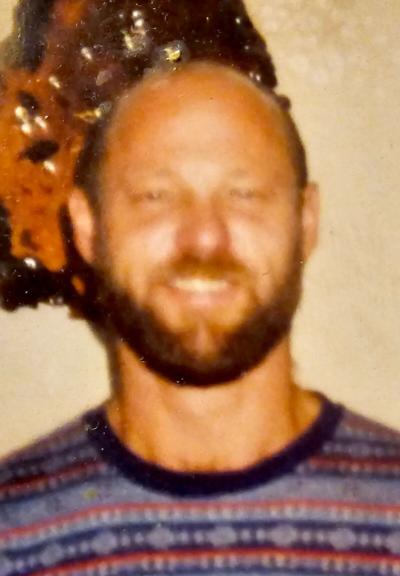
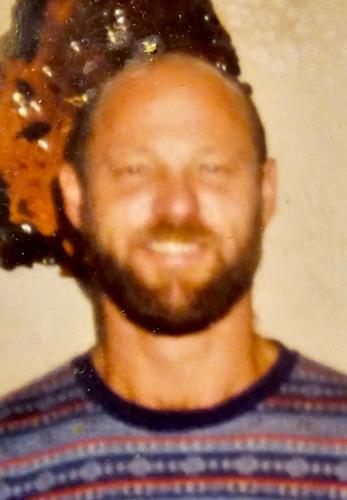
Fifty years ago, a 17-year-old Clarkston boy clubbed a man unconscious behind a Lewiston grocery store and stole his wallet. Now, the robber wants help identifying the man so he can pay back the money.
“I want to make (restitution) to the family of the one I harmed,” Kerry Houston, 67, told the Tribune. “I’ve saved some money and I don’t know if that will be enough. I want to find out, and talk to them.”
Houston has guarded the secret his entire adult life. He never knew who the man was.
Nowadays, he is getting old and “calmer.” He lives in a “spot in the road” called Otis, Ore., a few miles from the coast. He is the father of two sons in their 40s, and he is grateful they still speak to him despite his struggle with anger and alcohol abuse.
People who knew him as a “long-haired” kid back in 1975 would have been shocked to hear he’d committed such a violent act, he said.
THE ROBBERY: 1975
Kerry Houston lived in a very different America the summer he started his senior year at Clarkston High School.
President Richard Nixon had resigned the year before, and Gerald Ford was president. The movie “Jaws” scared many kids so badly that they wouldn’t go into swimming pools. Stephen King was writing the novel, “The Stand.” Disco was groovy in city clubs, a couple years before John Travolta in “Saturday Night Fever” exported the Brooklyn Shuffle to rural dance halls across the country. A few years earlier, gonzo journalist Hunter S. Thompson mythologized drug culture with his novel, “Fear and Loathing in Las Vegas.”
In Clarkston, a town of 6,300 people according to the 1970 census, Houston was an enthusiastic user of mind-altering substances.
“I did everything but heroin,” Houston said. “We did LSD — we didn’t have meth yet, but we had speed — and other types of speed, and psychedelic mushrooms, peyote buttons. Everything was available back then and we were using everything available.”
So, one day he found himself in want of a keg of beer and drugs for a campout with friends. But he had no money. That was all he recalls being on his mind when spotted an “old man” in his 50s loading an older-model pickup truck with expired green produce — likely being hauled off to use as hog feed — behind the Lewiston Albertsons grocery store.
Houston doesn’t recall if it was still summer or if fall classes had started. He doesn’t remember what he was thinking. The idea of robbing the man just came over him. It was an alien idea. And he wasn’t a big kid or particularly athletic. He was tough enough to defend himself in a fistfight, something he learned battling two older brothers growing up. But he didn’t seek out brawls.
Houston peeled a branch from a tree, breaking it to size. He was now armed with a club.
“I snuck up behind (the man) and he didn’t hear me coming, didn’t hear a thing before that stick hit him,” Houston recalls. “One blow to the back of the head. He never saw it coming.”
Houston fished the man’s wallet out of his pants. He took $80 cash. Later that day, he buried the wallet in a flowerbed at an acquaintance’s house in Lewiston. He doesn’t recall the house’s address. He left the man face-down and doesn’t remember what he looked like. Houston didn’t look at the driver’s license. He didn’t want to. The violent thing he’d done scared him.
“Once he fell, I was assuming he was unconscious because he didn’t move,” Houston said. “I’ve wondered since then if it killed him.”
The man wasn’t killed, otherwise there would be an open file for an unsolved murder, according to the Lewiston Police Department.
The $80 bought alcohol and drugs for rebellious teenage revelry on a sandy beach up Hells Canyon along the Snake River south of town.
“Well, it was kind of a weekend thing but I can’t remember anything about it,” Houston said, “because I had a good time and drank to excess and probably passed out on the beach.”
LIFE AFTER 1975
Like the lovers in Bruce Springsteen’s 1975 release “Born to Run,” Houston left town and never looked back.
But he wasn’t lazy. After his 1976 graduation, he worked for a decade at a Walla Walla sawmill. He spent another decade in health care assisting with people with developmental disabilities. He finally retired after working as a heating, ventilation and air-conditioning specialist.
“I learned to work for a living and did well because I was a hard worker and paid attention to detail,” Houston said.
Houston said he never committed another violent crime. But his alcohol abuse drove off his first wife. Still, he raised his boys and kept employment despite his drinking problem. And even though he’s never given up weed, he said he hasn’t drank alcohol or used hard drugs for 30 years.
Now a sober, older man, that long-ago violent act in Lewiston weighs on him.
“Coming full circle, I’ve realized more and more why God hates violence,” Houston said. “It says right in the Bible that I don’t think he hates people but that God hates and remembers the violence.”
WHO IS THE VICTIM?
It’s unclear where a record of this crime might be.
Lewiston’s police department destroys paper records after 10 years (except for unsolved murders). And they don’t have digitized records from the 1970s.
There’s no institutional memory about the robbery that Albertsons Store Manager Lisa Powell knows of. She also noted that the store is in an entirely different location now, having moved out of downtown Lewiston in the early 1980s.
Houston didn’t leave much to mark his time in the Lewiston-Clarkston Valley either. He only shows up in old Lewiston Tribune archives as a passenger in a car accident.
He is listed as “not pictured” in his 1976 Clarkston High School yearbook; the same for junior yearbook. The 1974 yearbook doesn’t mention him. But there is a photo of him as a freshman in the 1973 year book. It’s likely his name rings a bell among ’76 graduates, a class of more than 230 students. (Kerry Houston should not be confused with his twin brother, Terry Houston, who graduated CHS in 1977).
Basically, for any progress to be made, someone who remembers the robbery will have to come forward.
HIS AMENDS
Houston have come up with $800 as restitution for what he took “because it’s 10 times $80.” He said if that’s not enough, he thinks it’s fair if the man he attacked or the man’s family want to hit him back.
“They can take a stick and hit me in the back of the head and I’ll just close my eyes and never see it coming just like he never seen it coming.”
Houston doesn’t want to go to jail, he said. But he is prepared to do some time if he has to.
A criminal case following Houston’s confession is highly unlikely after five decades. Nez Perce County Prosecutor Justin Coleman confirmed for the Tribune that the statute of limitations on felonies such as robbery and aggravated assault is generally five years.
Houston doesn’t worry about blowback from making the confession. Anyone who remembers him might be shocked, but he isn’t connected to Clarkston anymore. He just wants to make peace with his past by trying to do right by the man he harmed.
“It’s the time for me to come clean,” he said. “All I want is… to find out who the people are that I need to repay.”
When asked if he had anything else he needed to get off his chest, Houston said no.
“I never had another secret like that that I ever kept that was so important.”

(0) comments
Welcome to the discussion.
Log In