




Each March 22 for the past six years, Mike Heavey would get a phone call from Christopher Tapp.
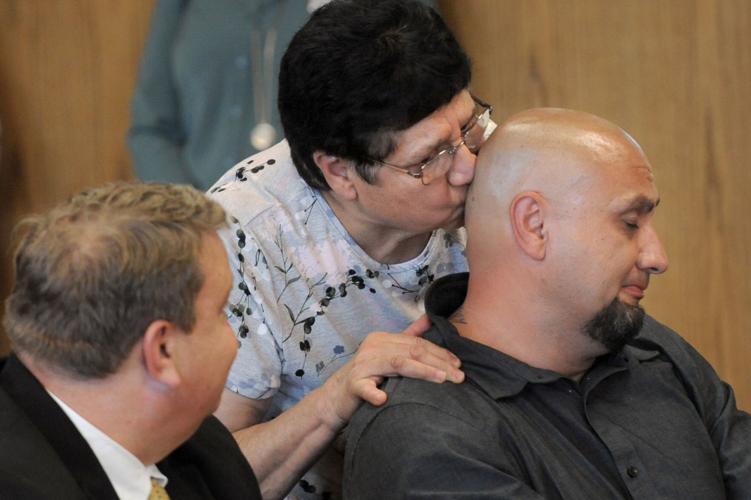
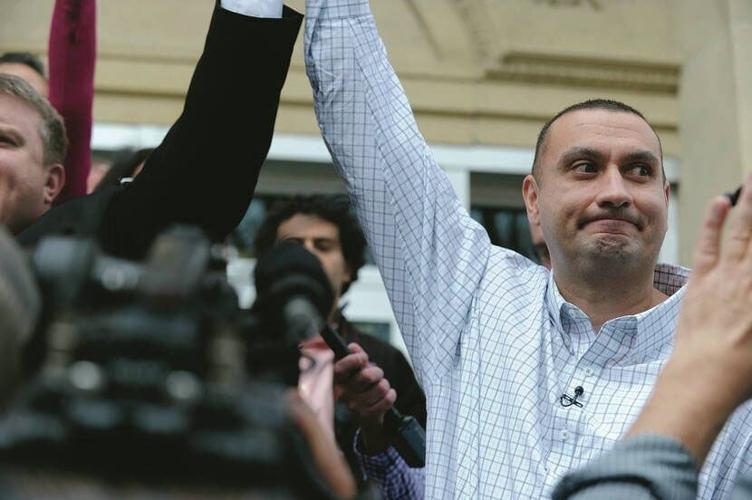
March 22, 2017, was the date on which Judge Alan Stephens ruled Tapp could go free after spending 20 years in prison after being wrongfully convicted for the 1996 rape and murder of Angie Dodge in Idaho Falls.
Tapp didn’t get many years to enjoy his long-sought freedom. He died Sunday following a freak accident in Las Vegas. He was 47.
Defense attorney John Thomas, who won Tapp’s freedom and worked with The Innocence Project to eventually clear his name, called the news “a sad day for all of Idaho Falls.”
Tapp’s cousin Athena Jenkins, serving as a family spokeswoman, said he had been hospitalized since Oct. 30 in Las Vegas after tripping and hitting his head, causing a brain bleed. Tapp was there for an unspecified event.
Funeral arrangements will be announced at a later date.
Tapp was released from prison following a resentencing agreement that vacated his rape conviction and allowed him to immediately leave prison in return for dropping challenges to his murder conviction. He was free, but he was not exonerated for another two years, following the arrest of Brian Dripps, who confessed to committing the murder alone.
“He used to call me (on the anniversary) … and say thanks for my help in getting him out,” said Heavey, a retired King County (Wash.) Superior Court judge and co-founder of Judges for Justice, a nonprofit that looks into potential wrongful convictions.
Heavey first started examining the case in January 2013 after meeting with Tapp’s defense attorney John Thomas, Thomas’ wife, Jolyn, and Dodge’s mother, Carol, in Idaho Falls. Carol Dodge had spent years poring over the evidence from her daughter’s case and had become convinced of Tapp’s innocence.
Over the years that Heavey worked on the case, he got to know Tapp well, visiting him in prison six times, and also became close to Tapp’s mother, Vera.
“I really feel for his mother,” Heavey said. “I’m very close to his mother. I still talk to her, probably once a month.”
Heavey and Vera spoke Sunday night after he got the news.
Vera’s devotion to Chris is well-documented. She was steadfast in her belief of her only child’s innocence, remortgaging her home to help pay defense attorneys and using a portion of her earnings from serving school lunches at A.H. Bush Elementary School to pay down the loan. She told the Post Register in 2014 that she had put about $100,000 into Chris’ defense.
Former Post Register reporter Bryan Clark spent most of a decade covering Tapp’s efforts to be released from prison. In January 2016, he accompanied Heavey to interview Tapp at the Idaho State Correctional Center in Kuna, where Tapp spent most of his adult life. The memory of that day sticks with Clark. He recalls guards leading them through the prison to a small broom closet where he interviewed Tapp for 90 minutes. Had Tapp been the vicious killer he’d been portrayed to be, why would they leave him alone in a room with outsiders surrounded by tools that could have easily been used as weapons?
“I thought to myself ‘Obviously the guards know this guy is not a threat,’” Clark said.
Over the course of reporting on Tapp and with the benefit of Judges for Justice’s expert researchers, Clark soon became convinced of Tapp’s innocence. Clark said he’d always had a healthy dose of skepticism about how well the justice system works, but the Tapp case exacerbated it.
The Judges for Justice investigation proved the polygraph interrogations that were key to Tapp’s conviction were both flawed and coerced.
“It seemed quite obvious they had the wrong man and yet it took years for anything to happen,” Clark said. “The evidence, I feel, was clear, probably by at least by 2010, that if there wasn’t proof that he was innocent, the evidence that he was guilty was so shaky, just sort of nonexistent, that it was clear he should’ve gotten out but took years for them to do anything about it.”
Clark was at the Bonneville County Courthouse on the day Tapp walked free.
“I wasn’t sure that day would ever come,” he said. “It was just kind of surreal, watching him walk into the courtroom in chains and walk out a free man,” Clark said.
Tapp was exonerated on July 17, 2019, and told a packed courtroom, “I am thankful that my mother will know that this last name is clean.”
Following Tapp’s exoneration, state Sen. Doug Ricks, R-Rexburg, sponsored the Wrongful Conviction Act, which Gov. Brad Little signed into law on March 5, 2021, to provide compensation to those wrongly convicted of a crime.
Tapp also sued the city of Idaho Falls in October 2020, eventually reaching an $11.7 million settlement with the city while also receiving an official letter of apology.
In June 2021, Dripps was sentenced to a minimum of 20 years and up to life in prison — a sentence shorter than the 30 years to life Tapp was ordered to serve.

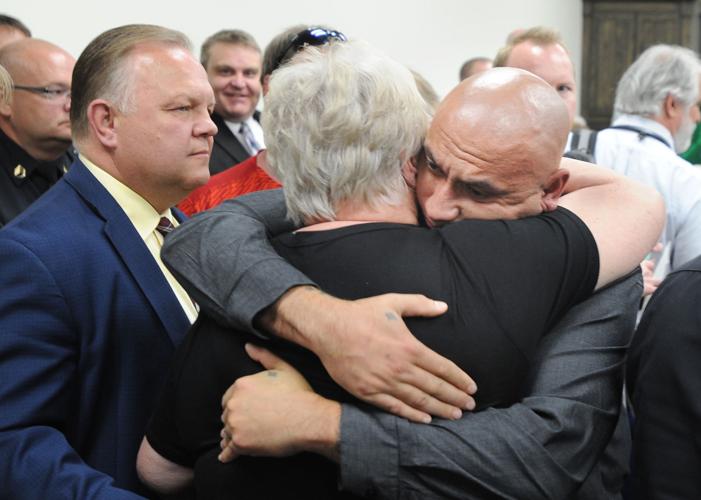
Christopher Tapp hugs Carol Dodge at the conclusion of a May 16 press conference where the Idaho Falls Police announced that Brian Leigh Dripp…
Thomas said that in the years since Tapp’s release, Tapp had lobbied the Oregon Legislature to change its laws with regard to compensation for wrongly convicted people and had served as an honorary diplomat on the Innocence Project’s board in New York.
“Chris was a great client,” Thomas said. “He was a fine man who served his time in prison and was exonerated.
“… (He) was always faithful that he knew that the truth was going to come out.”
In 2019, Tapp married, but he and his wife Stacy were in the process of divorcing when she died Aug. 14 in a car wreck.
Reflecting on the news of Chris Tapp’s death, Heavey’s heart goes out to Vera.
“She went through 20 years of hell with Chris being locked up and convicted, where the prosecutor asked for the death penalty, to seeing him get out in 2017 and the joy of that, and now she’s lost him again,” Heavey said. “Forever this time.”
Clark’s also had Vera in his thoughts.
“I’ve been thinking about how much time the state took away from him and it turns out he didn’t have that much time,” Clark said. “It’s just heartbreaking.
“My heart really goes out to Vera. … I don’t think she got the amount of time with him she should have. He should have lived longer as a free man being able to spend time with her.”

(0) comments
Welcome to the discussion.
Log In