

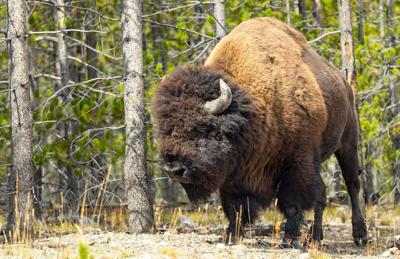
A 12-year-old was injured by a bison in Yellowstone National Park Friday morning.
The incident occurred at Mud Volcano, six miles north of Yellowstone Lake Fishing Bridge.
The injured visitor was transported to a nearby hospital by emergency medical personnel, according to a press release from the National Park Service. As of publication, no additional details on the accident have been released.
Bison encounters result in the most visitor injuries among YNP’s wildlife, said Nathan Varley, one of the co-founders of Gardiner-based wildlife tour company Yellowstone Wolf Tracker.
“They injure about half a dozen people a year. Bears only injure about one person every other year and wolves have not injured anybody since their reintroduction in the mid-1990s,” Varley said.
The relatively high frequency of bison-induced visitor injuries can be tied to two factors: their prevalence in high-traffic areas and the perception of bison as docile, said Sam Archibald, the field education manager at Yellowstone Forever.
With a population hovering around 5,000 animals, Varley describes bison as “accessible.”
Bison commonly congregate in predictable locations including around the boardwalks at Mud Volcano, where the Friday incident occurred, Varley said.
“On top of that, they’re not afraid of people. They tend to stick around, which makes them seem passive,” Varley said.
Park visitors can misinterpret this perceived indifference as a sign of docility and feel comfortable approaching the animals.
“The closeness triggers the aggressive behavior on behalf of the bison,” Varley said.
Bison, which can weigh between 1,500 and 2,000 pounds, are generally passive animals, Archibald said. Most human-bison conflicts result from the animals feeling threatened by a person getting too close.
“Generally speaking, bison are not interested in hurting people,” Archibald said.
Stress signs in bison include a raised tail, snorting and prolonged stares. Archibald said spectators should back up if they spot any of these signs.
“Going into Yellowstone is akin to going into someone’s home. We want to give wildlife the space and respect it deserves,” Archibald said.
Visitors are responsible for staying at least 25 yards away from wildlife, including bison, elk, deer and moose, per NPS guidelines. Additionally, at least 100 yards should be maintained between visitors and predatory animals like bears, wolves and cougars.
Varley said it’s important to not approach any wildlife, both for visitor safety and out of respect for the animals.
“They’re not here just to be photographed. You can get a better appreciation for their behavior and how they survive in a difficult landscape,” Varley said. “Let wildlife be wildlife and enjoy them for their sake rather than how you intersect with them.”
In the instance that one finds oneself less than 25 yards from a bison, Varley said the best thing to do is to back away while staying on the boardwalk.
“It’s very effective to just run away and back off really quickly. Then, they tend to leave you alone,” Varley said. “They just want you out of their space.”

(0) comments
Welcome to the discussion.
Log In