

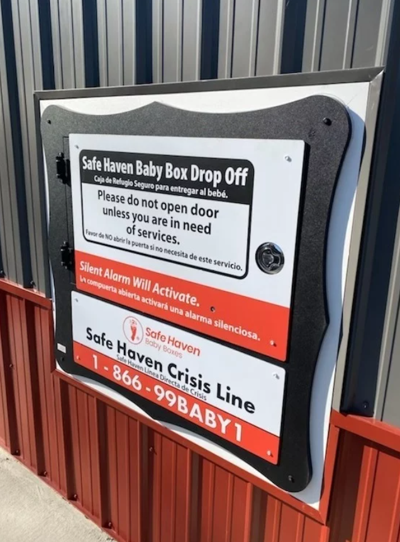

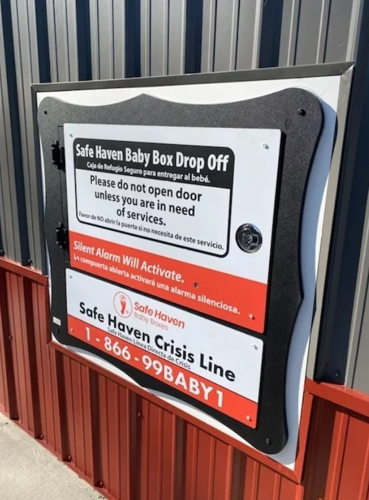
The Idaho House of Representatives on Tuesday unanimously voted to add a “baby box” option to the already existing Idaho Safe Haven Act.
Previously, the Senate passed the addition, also unanimously. All that remains now is for Gov. Brad Little to sign the bill into law.
When he does so, Idaho will become the 16th state to allow the anonymous surrendering of a baby through a newborn safety device, known as a baby box.
The bill to expand the Safe Haven Act began when a Blackfoot certified nursing assistant approached Senator Julie VanOrden, R-Pingree. The Blackfoot City Council, under the leadership of former council member Jan Simpson, had recently passed an ordinance allowing the use of baby boxes in the city. This concerned CNA wondered if the rest of the state would benefit from similar legislation.
VanOrden agreed. She wrote and introduced Senate Bill 1272, which passed both chambers with unified bipartisan support. When the new law goes into effect on July 1, assuming it is signed by the governor, Safe Haven facilities can add a baby box to their outer wall.
What exactly is a baby box? It is a ventilated, temperature-controlled space in an outside wall of a facility that has 24-hour staffing from medical responders. Such safe haven facilities include clinics, hospitals and fire stations. The box has a double access feature with an outside door for the custodial parent to use to place the baby in and an inside door for medical personnel to remove the baby. When the outside door closes, an alarm sounds and the infant is retrieved within minutes.
All in all, it is a smooth surrender system that saves babies from being abandoned in dumpsters, donation centers and doorways. It also allows the parent to anonymously relinquish parental rights, clearing the way for a better future for the baby.
The existing Safe Haven Act protects a parent who gives up their baby from being charged with child abandonment, but it requires the baby be personally surrendered at a facility. Not everyone is able to carry out this personal, often heart-wrenching, choice with people they don’t know. They may want their last moments with their baby to be private or they may fear repercussions or judgments by authorities in the facility.
Even with the baby box option, the three rules of the Safe Haven Act still apply: the baby must be under 30 days old, the custodial parent must be the one surrendering the baby and they must indicate they won’t be back for the baby. Though the parent may leave identification and medical information with the baby, if they wish, the facility is not allowed to try and figure out the parent’s identity. If they do recognize the baby, they must keep the parent’s identity confidential.
What happens to a surrendered baby? They are first given any medical care they need, and a physician will judge whether the child is under 30 days old. If the baby is older, the parent could be charged with abandonment. This is one of the only objections to this type of Safe Haven law, which every state has some version of. Some feel that the 30-day age limit is too soon for distressed or overwhelmed parents to really know if they can be a parent.
For a month, the surrendered baby is placed in sheltered care while law enforcement checks the national missing children information clearinghouse to be sure he or she isn’t part of a searching family. During this month the custodial parent can file to claim the child again, which starts a long process of proving their parentage and proving they can be a parent. And, sometimes, the baby is returned to the parent, so long as they can show they have found more support and can convince the court that they can be a responsible parent.
Otherwise, at the end of the month, if no claim is filed for the baby or a claim is denied, the original parental rights are severed by the courts and the baby is cleared to be adopted into a new family.
This inclusion of a baby box transfer option in the Safe Haven Act adds a compassionate and gentle way for a baby in a tenuous situation to safely find a stable home.

(1) comment
I have no babies to give away, but why not bump age limit up? If this is about saving a baby's life, let's take it seriously
Welcome to the discussion.
Log In