

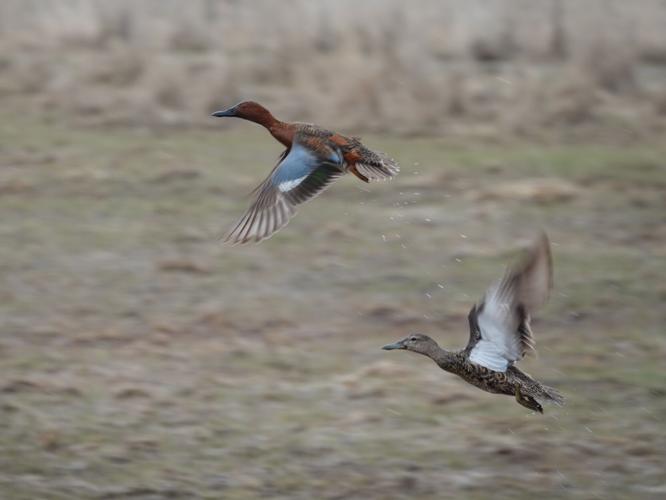


A duck species generally encountered early in the hunting season is the cinnamon teal.
The start of the waterfowl hunting season is on the horizon.
Depending upon where you hunt in Utah or Idaho, opening day can be on the first, second or third Saturday of October. This year’s national estimate suggests we are going into the season with 33.4 million ducks, which is slightly below last year’s estimate. Expect fewer puddle ducks such as mallards, teal and gadwalls this year, while the number of diving ducks to include redheads and canvasbacks are up.
Locally, the Great Salt Lake holds the largest concentration of waterfowl. This is reflected in the number of ducks harvested in Northern Utah’s Box Elder County, which ranks 29th out of the nation’s 3,115 counties. In contrast, the best duck hunting county in southeast Idaho is Caribou County, which ranks 588th nationally. If you look at waterfowl hunting opportunities at the state level, however, Idaho’s harvest ranks 16th in the nation which edges out Utah at 18th.

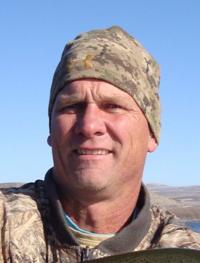
Brett Roper
People point to the use of science as the basis for the sustainable harvest of fish and game. Few other groups of species have more expansive research efforts than ducks and geese. That is because they migrate across and are harvested by hunters in Canada, the United States and Mexico. These data support the division of the North American continent into four flyways. Utah and Idaho are in the Pacific Flyway. The general regulations of our flyway allow for a daily limit of seven birds and a 107-day hunting season. This compares to the 60-day season and six-bird daily limit in the Atlantic Flyway.
The large amount of data has created a good understanding of the population dynamics of individual waterfowl species. This allows regulations to set a maximum daily limit for ducks and geese and have lower species-specific limits based on current populations. For example, Utah and Idaho don’t allow more than two canvasbacks, two hen mallards or three pintails in a seven-bird daily limit.
Despite having large and stable waterfowl populations, the number of waterfowl hunters has decreased 40% since the mid-1970s. One issue with this decline is duck and geese hunters are required to buy a duck stamp. Monies generated through these sales go to purchase and maintain wetland habitat. In 1970, more than 2.4 million stamps were sold. Recently, this number has been closer to 1.6 million. This reduction results in a loss of $20 million a year to buy waterfowl habitat. A suggested reason why the number of waterfowl hunters are down, are overly complex regulations.
An approach proposed to decrease complexity is to add the option of a daily limit of three birds a day without species specific limitations. The thought behind this change is that misidentifying ducks is keeping people from getting involved in waterfowl hunting. Identification can be tough early in the season when ducks have molted so even the drakes are decked out in drab plumage. Allowing hunters to purchase a license that chooses this type of limit is being tested in South Dakota and Nebraska. It will be interesting to see if this option will induce more people to start duck hunting. Given the average duck hunter in Utah and Idaho harvests slightly more than two birds a day, this change would have a limited effect on total harvest but simplify regulations.
Having a successful opening day this year may be difficult as water supplies are down around the Great Salt Lake and along the Snake River. The warm early fall weather has not started birds migrating southward. I visited the Bear River Migratory Bird Refuge last week, and they were beginning to add water to some of the diked hunting areas. These zones held a fair number of ducks, mostly teal and mallards. The problem was there was a lot of dry land between the dikes and the Great Salt Lake.
Hunting success through the duck season is usually bimodal. A peak occurs during the opening week due to lots of hunters and naive waterfowl. Then a second higher peak appears in November and December, as duck and geese migrate in from the north.
How long a person has hunted only partially explains their success. The best way to harvest more ducks is finding locations occupied by ducks that other hunters don’t bother. Studies on waterfowl behavior continue to show ducks and geese will spend their daylight hours in the same areas if not disturbed. It doesn’t matter if you are a novice or a nimrod, a dozen decoys and the ability to locate waters with limited pressure will result in greater success on public lands than any gear you might purchase.


(0) comments
Welcome to the discussion.
Log In