

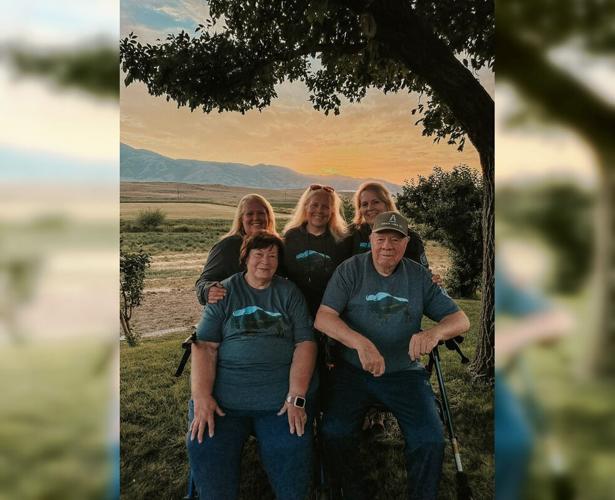
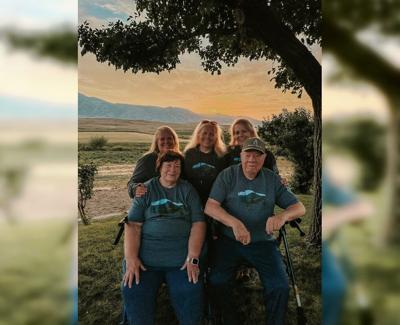
SWAN LAKE — The Abbott family is the recipient of the Idaho Century Ranch Award for 2025.
The Idaho Century Ranch Award recognizes families who have continuously owned and operated the same farm or ranch for 100 years or more. The award honors their agricultural legacy and connection to the land. The program began in 1990 as part of Idaho's Centennial Celebration and honors the deep roots, agricultural contributions and enduring value of these family operations to the state. Recipients receive a special sign to display on their property, designating it as an Idaho Century Farm or Century Ranch.
While the award was given to Brent and Vickey Abbott, the honor echoes back through 126 years of dedicated stewards of the land.
William Doris Hendricks originally homesteaded the 160-acre property from 1899 to 1911. His son, Orval Hendricks, owned and cared for the ranch from 1911 to 1967. James Abbott, Orval's son-in-law, took ownership of the ranch from 1967 to 1981. In 1981, Brent Abbott, son of James, and his wife, Vickey, took over the farm and continued the family legacy.
Although spanning more than 126 years, the stewards all had many goals and beliefs in common. They loved the land and the work it required. They believed in hard work and perseverance. They valued their families and ensured they were cared for. They worshiped God and served their neighbors and communities. They loved their children and provided them with opportunities for growth and education. They also made time for family fun and togetherness.
Several different livestock and crops have thrived on the Abbott Ranch. Livestock has included red and black Angus and Hereford cattle, horses, chickens and pigs. Crops have included alfalfa, grass hay, triticale, oat hay and wheat.
Brent Abbott dedicated himself to agricultural and community service. He served in the Cottonwood Grazing Association for three years as vice president and nine years as president, working to protect rights and improve conditions of the range. He also served as a director of the Ogden Grain Growers for seven years, becoming vice president and then president, where he supported farmers throughout the region. In addition, Brent worked nine years with the Downey Grain Growers Association, helping secure market access for farmers through co-ops across northern Utah and southern Idaho. He served as a member of the Bannock County Farm Service Agency Committee for nine years, supporting federal programs and local producers.
Brent lives each day with this in mind: "Oh no. Take time to ponder or think about decisions and reactions before acting quickly. Then it's fine."
Brent Abbott comes from a legacy of passionate and educated owners of the ranch. Original owner and homesteader William Doris Hendricks served as the first mayor of Richmond. He built the first gristmill in Richmond on High Creek, as well as two gristmills in Logan, all of which he owned until his death. He also worked as a railroad contractor, building the track and rails from Cache Valley to Butte, Montana, for the Narrow-Gauge Railroad. He became the largest stockholder in Thatcher's Banking Company at one time and invested in a gold mine. His last railroad contract in 1898 was from Milford, Utah, to the Nevada line, which he undertook with his son, William, as co-partners. Through these ventures, he built both community infrastructure and family prosperity.
Ezra Hatch, president of Thatcher's Bank, spoke at his funeral and said, "I never knew a man as honest as Mr. Hendricks. His word was as good as his bond. I would lend money to any man with just the name of Hendricks."
In 1915, Orval Edwin Hendricks was appointed secretary-treasurer of the Cottonwood Grazing Association, a position he faithfully held until his death. From 1930 to 1943, he served five terms as a member of the Idaho State Legislature, becoming the floor leader of the Democratic Party. He was recognized as a statesman and played a key role in elevating Idaho State University to a four-year university. Orval also served as a director of the Production Credit Association, was active in the Idaho Cattlemen's Association, participated in the Bannock County Fair Board since its creation and was a dedicated member of the Downey Grain Growers.
Orval's favorite quotation was "To thine own self be true and it shall follow as the night the day, thou cannot then be false to any man."

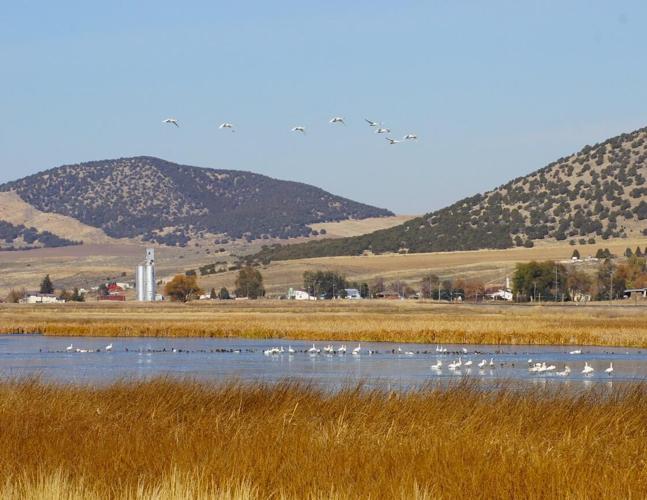
The Abbott family Ranch in Swan Lake
From 1953 to 1971, James Abbott served as Bannock County commissioner for 17 years before retiring in 1973. He was instrumental in consolidating school districts into the Marsh Valley School District, strengthening educational opportunities for families. Jim was known for his compassionate service, making frequent visits to nursing homes and assisted living centers to ensure residents' needs were met, a personal mission he undertook. From 1972 to 1976, he served one term as a state representative. Throughout his life, he also served as chairman of the School Board, a member of the Library Board and chairman of the Cottonwood Grazing Association.
A brother-in-law said at Jim's funeral that he was an example of what "King Benjamin before he died, gave a famous sermon on service toward the close of that service he said" Behold, I tell you these things that ye may learn wisdom that ye may learn that when ye are in the service of your fellow beings you are only in the service of your God.
In the early days of the ranch, only the men's names were recorded as legal owners because in those days it was rare for women to own property. However, the ranch had female owners who contributed equally to the ownership and legacy of the ranch as their husbands. None of this success could have been possible without the steadfast support and companionship of their wives. These women stood shoulder to shoulder with their husbands — feeding and caring for them, helping in the farm work, strengthening them in their church service and contributing to the social and community life of the ranch. It takes a husband and wife together, in partnership with God, to truly make a farm prosper. God tempers the weather, and with prayer and faith, fathers and mothers sought His help in both their labors and in raising their children.
Almira Davenport Hendricks, wife of William Doris Hendricks and first lady of Richmond, cooked for the hired men who worked with William. Almira helped organize the Daughters of Utah Pioneers Company in Benson Stake. She was honored as one of four wives of Mormon Battalion members and was among the first members of the James Hendricks Camp, established around 1917. Almira's whole thought and purpose in life was the rearing of her large family. "The chief business of each generation is to rear and educate the next."
Ella, married to second owner of the ranch Orval Edwin Hendricks, was a devoted homemaker, seamstress and cook. She raised a garden every summer on the ranch and often welcomed others into her home. She homeschooled her daughter, Erma, when she was too little to ride her horse to school in Oxford for a few years. She served in the church all her life, and many hours were spent helping others when sickness or death occurred. Ella also boarded teachers in her home who were teaching in Swan Lake. She was a loyal companion to her husband and supported him in all his farming work and political career. Erma was Orval and Ella's only child and the next caregiver of what is now known as the Abbott Ranch.
Erma Hendricks married James Abbott. She earned a teaching certificate at Idaho State University and taught for one year at Swan Lake, but due to policies against married women teaching, she left the profession after her marriage. Erma was active with service in the church all her life. Her motto in life would be "If you are going to do something, do it and do it right or the very best that you can." She became deeply involved in community and civic organizations, serving in many leadership roles, including charter member of the GFW Downing Study Club, state president of Idaho Federation of Women's Clubs, state president of Idaho Cowbells, president of county and district Cowbells, president of County Homemakers Council and president of the Downing Study Club. There is no doubt that Erma and James were both ambitious people and ranchers and helped set their son, Brent, and wife, Vickey Abbott, toward success as present-day co-owners of the Abbott Ranch.
Vickey Murdock Abbott grew up on a farm in Inkom and learned skills in riding horses, taking care of bum lambs, cattle, raspberries and strawberries, so she loved working on the farm with Brent, driving for him when he fed the cattle, riding on the range in the summer to check on the cattle and going to Farmers Young Ranchers Conventions. Vickey worked as an accessory specialist for Homes with Home Interiors and Gifts for 35 years. This work helped supplement the ranch income and supported her daughters in their education and provided opportunities for travel.
She was a 4-H leader for 15 years to help teach her daughters and youth in the community about the beef industry and riding horses. She spends each summer raising a garden and helps take care of the books for the ranch each year.
This harmony between husband, wife and God has been the foundation of the ranch's success and the legacy passed on from generation to generation. It is this shared stewardship, rooted in faith and family, that has preserved the ranch for more than a century — and with the same devotion, may the Abbott Ranch continue for hundreds of years to come.



(0) comments
Welcome to the discussion.
Log In