

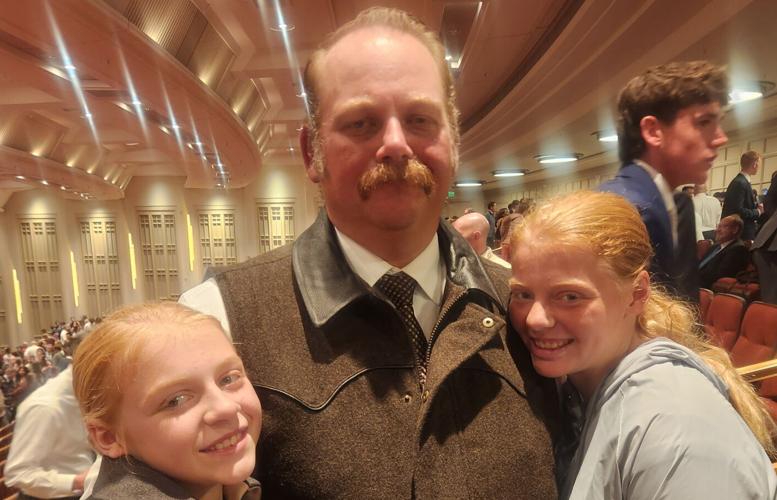

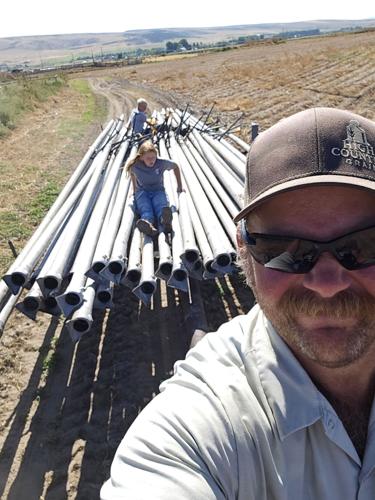
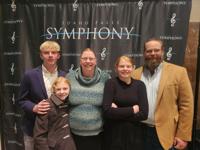
Devin Fielding is a farmer and feedlot operator near Shelley.
“We have a small custom feedlot and mainly concentrate on backgrounding calves since we can raise most of our own feed,” he said. “Our farm is just east of Shelley, and our primary crop is alfalfa. We’ve had our feedlot since the early 1960s; my dad’s uncle started it. The farm itself was started by my great-grandfather. I live in the house on the original spot where he started farming, in about 1910. I live in the house where my grandfather and my dad were both raised.”
Fielding continued, “We live on the original homestead. There were four brothers. My dad and his three brothers stayed here and farmed, and two of those families are still actively farming — my own farm and also my cousins who farm some ground around us and some ground up on the Goshen Bench. The operations are financially separate, but we still work very closely together. When you are the little guys in the neighborhood, you concentrate on building relationships — whether with family or neighbors — because we depend on each other. We have a good relationship with the other parts of the family and can help each other now and then.”
Over the years, they’ve raised several crops.
“My dad and I gave up potatoes about 20 years ago, however. Any potatoes we are involved with are just on some ground we lease to other farmers,” Fielding said. “We started raising corn in the past 15 years; it seems to be a nice fit for the feedlot and to rotate as a crop around our ground, but we primarily grow alfalfa.”
In the feedlot, they usually just feed cattle for other people, but occasionally buy some weaned calves to feed, when the market works for that, and they have extra space in the feedlot.
“We don’t have any mother cows, so we don’t have the chore of calving out cows. I’m kind of a big guy, and it’s hard to run very fast from a mad mama cow. We let other people raise the calves, and we can take those calves and grow them,” Fielding said. “Our customer base is ranchers around Blackfoot and Rexburg, and occasionally we feed for someone farther out. Many of the guys we feed for have been coming back for 20 to 30 years.”
Their feeding program has many repeat customers because the Fielding family does a good job with the cattle.
The ranchers bring their calves at weaning, and they are fed to grow to 800 pounds — ready to send to a finishing feedlot.
“A few guys might precondition their calves (keep them a few weeks after weaning), but primarily the calves come here bawling, right off the cows,” Fielding said. “Generally speaking, we have better facilities for weaning; our fences are better than theirs. Our fences are not perfect, but we are set up for this and some ranchers are not. We’ve seen some of our neighbors try to wean behind a barbed-wire fence, and that doesn’t work very well.”
Those calves try to crawl through to get back to their mothers.
Most of the ranchers who bring their calves depend on this custom feed yard to take care of their calves through the weaning process.
“We can take good care of their calves, and we’ve done this long enough that I feel like we’ve done a pretty good job of adapting to the challenges, and mitigating some of the risks when weaning calves,” Fielding said.
There are many breeds represented; various ranchers have different types of cattle.
“We see about everything, but many of our customers use Angus and Charolais genetics,” Fielding said. “That makes a good cross, with a big, fast-growing calf. Those calves can put on a lot of gain in a short time. We also see a lot of black baldies (Angus-Hereford cross — black with white faces) or some brockle faces with some Hereford in them. We don’t see a lot of Hereford bulls in this area, but you’d be surprised how many of the cattle have some Hereford in their background.”
That’s been a very dependable cross for cattle producers.
The feedlot operation fits very well with the Fieldings’ farming and is a good way to utilize a lot of the alfalfa they grow.
“There is always some hay that gets rained on or gets too mature and isn’t top quality, so it’s nice to have a use for that hay without having to try to sell it. It can be mixed into the diet of these calves, and it works nicely,” Fielding said.
It’s a good way to market their crops, through the cattle.
“On the farming side, when commodity prices are low, it’s nice to have some diversification,” Fielding said. “We can have a broader footprint and not take a hit so hard in just one area.”
You don’t have all your eggs in one basket.
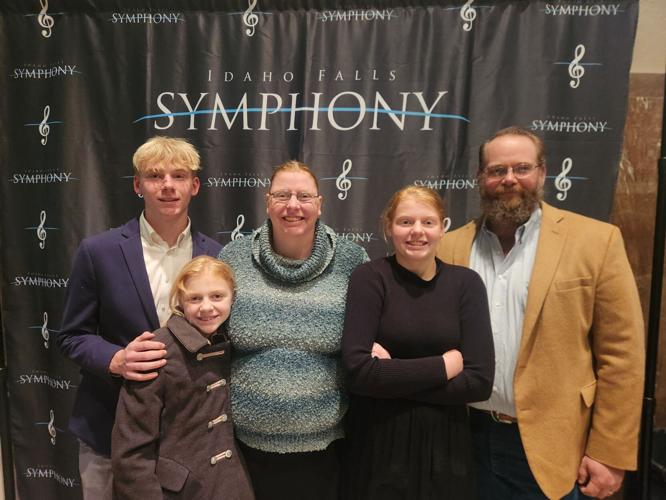
Devin and his wife Becky have three kids.
“Zach is 16, Dani is 13 and Elizabeth is 10. Our 16-year-old is turning into good help, but he’s also a junior in high school and busy with many things. We try to get the kids out on the farm when we can,” Devin said.
“My wife was born and raised on a horse training and boarding facility; they have a facility 3 miles up the road from where we live, with 60 to 70 head of horses. So my girls end up going that direction quite a lot. Horses and sports are their big interests. The kids all come to the farm and help, and they have different personalities, so it’s fun to see how which personality engages with different aspects of the farm and the work.”
A farm is a great place for kids to grow up.
Along with farming and the feedlot, Devin is active in the community and with issues that affect farmers. He is chair of the North Bingham Soil and Water Conservation District and a past president and current division representative on the board of the Idaho Association of Conservation Districts. He is also in the leadership of the Idaho Irrigation District.

(0) comments
Welcome to the discussion.
Log In