

The movie business has gone through some blockbuster and generational sea changes in recent years with the streaming revolution, the shutdowns of the coronavirus pandemic and ensuing 40-year highs with inflation and this year’s Hollywood writers’ and actors’ strikes.
All those upheavals in Hollywood have also been impacting movie theaters — from large chains with suburban cineplexes to hometown operators and historic venues that are often nostalgic downtown centerpieces in America’s small towns.
Owning and running a movie theater is not an easy business even in the best of the times.
It’s even tougher in the worst and most challenging times.
COVID and its shutdowns prompted an 83 percent drop in ticket sales and box office revenue from 2019 to 2020, according to Nash Information Services LLC.
Ticket sales and box offices have bounced back this year — led by strong showings by “Barbie”, “Oppenheimer” and “The Super Mario Bros Movie”. They are up from the depths of the pandemic and 26 percent from 2022.
With about six weeks to go in the year, 2023 box offices and ticket sales are off 28 percent from pre-COVID business in 2019.
Three women operating smaller movie theater businesses in Montana face very similar challenges and have very similar resilient love and passion for their tiny slice of “show business.”
A LABOR OF LOVE
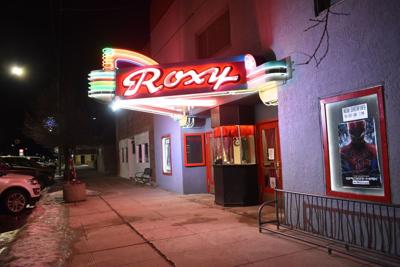
Sue and Larry Schilling bought the Choteau Roxy Theatre in 1988. The theater is in Choteau, Montana, just under an hour’s drive from the next closest cineplex in Great Falls, and 90 minutes from the Canadian border.
The Roxy was built in 1945 and first opened in 1946 with its first show on July 4. The Schillings added a stage several years ago to host other performances.
“We’ve had several plays and several live performances,” said Susan Schilling.
She said that has included local musical performances and events for community groups and nonprofits.
The husband and wife team added digital projection equipment and new surround sound systems in 2013 and 2014.
FAMILY FRIENDLY
Schilling said the theater shows top 10 movies on their first runs just like its larger cohorts. She said the theater operates in a small town of 1,700 people so it does try to avoid horror and other movies that might not mesh with community preferences.
“We have more family friendly stuff,” Schilling said.
The Roxy operates four days a week during the summer and three days a week (Friday, Saturday and Sunday) the rest of the year.
Schilling said her family-run movie theater faces competition from school activities and local sports during the fall and spring semesters of K-12 schools.
“School activities and sports kind of dig into (movie) attendance,” she said.
CHANGING EXPECTATIONS
Smaller theaters also have less space and ability to expand concessions, restrooms and other amenities seen at larger cineplexes in the suburbs and urban areas with as many 24 screens, multiple concession stands, party rooms and ample restrooms.
The Roxy has a small lobby and “only two bathrooms,” Schilling said. She said the movie going experience and moviegoers expectations have changed.
“It wasn’t about the experience, about eating popcorn,” she said.
But now, theaters face competition from other entertainment options as well as watching movies at home on big screen televisions and on streaming services. There are significantly more sports, especially football, on multiple days, competing for eyeballs.
“It’s got to be better than sitting in their living room,” Schilling said.
This summer’s slate of movies led by “Barbie”, “Oppenheimer” and the latest installment in Tom Cruise’s “Mission Impossible” franchise helped propel a strong movie season.
“Barbie” and “Oppenheimer” had worldwide box offices of $1.45 billion and $949 million, respectively, while “The Super Mario Bros. Movies” brought home $1.36 billion, according to IMDB, which tracks the movies industry.
“We built our own Barbie Box. We kind of hyped it up,” Schilling said. “People want a good experience.”
The “Barbenheimer” summer phenomena helped remind people of the joys of going to the movies after the shutdowns of the coronavirus pandemic and waves of superhero franchise movies turned off some moviegoers.
“They had a different attitude when they walked in the door. People are really happy to be here,” Schilling said.
Movie chains and smaller operators have also had to grapple with four-decade highs with inflation after all the monetary and fiscal infusions undertaken in the U.S. and worldwide during the COVID pandemic.
Many U.S. households are still feeling the pinch of high grocery prices, housing costs, car payments and health care outlays along with higher interest rates from the Federal Reserve aimed at lowering inflation.
In Choteau, the Roxy’s ticket prices are $8 for adults, $6.50 for kids and seniors with $7 for large popcorn.
“We stay very economical,” Schilling said.
TIME TO SELL
The 35 years owning the Montana theater has been a labor love but the Schillings, who had full-time jobs while operating the Roxy.
But now the couple wants to spend more time with their grandchildren who don’t live close by.
“We have grandchildren we want to go spend time with,” Schilling said.
The couple has listed the 4,800-square-foot theater for sale with an asking price of $284,000.
Phyllis Bechtold , a local realtor and owner of Buy N Sell Montana, said property, with its vintage look and signage, is also an important part of the small town community.
Schilling agrees.
“People are very appreciative that we are still operational,” she said.
BY THE NUMBERS
Movie theaters and cineplexes employ 155,000 workers nationally, according to a March 2023 report by the Cinema Foundation.
There were 38,474 indoor movie screens operating in the U.S. at the end of 2022, according to the National Association of Theater Owners. That’s 5 percent fewer than 2019 before COVID.
More than 48 percent of those screens are operated by the three largest cineplex chains — Kansas-based AMC Entertainment Inc., Knoxville, Tennessee-based Regal Cinemas and Dallas-based Cinemark USA Inc., according to the theater owners’ group.
But there are also plenty of smaller and regional operators across the country.
NEW REVENUE STREAMS
Becky Dupuis is a principal with Polson Theatres — a smaller chain with screen and properties in Montana and Idaho.
Dupuis and Candis Harrop, CFO of the regional operator, said they have started renting out theaters more for special events — including gaming, birthday parties, baby and wedding showers — to generate more revenue.
Parties, showers and other private gatherings include a private showing of movies.
“We’ve seen a big increase in people interested in private showings,” Dupuis said.
She said private showing interest started during and right after the pandemic but has continued. “It kind of surprised us,” Dupuis said. “We just had a 50th birthday party.”
They said they charge $200 for the first hour and $50 for each additional hour or a flat $150 to $250 rate depending on the time of the event. Harrop said the trend has made the Montana chain think about other revenue generating options and how some people forgot the enjoyment and American cultural experience of ‘going to the movies.’
“It’s been kind of eye opening for us,” she said, of the private showings and special events. “Those kinds of things have really helped.”
Other theaters across the country have also looked to private events — including ones hosted by businesses and nonprofits — and special showings of concerts, operas, old movies and pay-per-view MMA and other fights.
But Dupuis and Harrop said theaters, especially smaller ones with limited screens, waivers from movie studios and distribution networks if they supplant films already running at their properties.
That’s why special showings or private events are often in the mornings before regular movie times.
Polson Theatres has 22 screens in eight locations in Montana and Idaho, including theaters that first opened in 1914 and 1911. They are located in small, rural towns such as Dillon, Havre, Wolf Point and Lewistown, Montana, and Salmon, Idaho. They have populations ranging from 2,600 to 6,000 people.
“Most of our theaters are twins,” Dupuis said of the scheduling challenges that can arise from trying to book events and still abiding by studios’ contracts with cinemas.
‘BIG CONCERN’
While the writers’ and actors’ strikes have been settled with studios, the work stoppages are poised to offer some short-term challenges to theaters next year.
Some movies have had their release dates moved forward because of the labor disputes — including the next installments of “Dune” and “Mission Impossible.”
“It’s a big concern,” Harrop said.
Theaters have already seen the exponential growth of streaming services such as Netflix, Disney/Hulu, Apple TV and Amazon take movie and other productions from traditional venues.
Movie theater operators — especially in small towns — have also seen their lineup of films dominated by superhero franchises. Those might appeal to younger demographics and families but not necessarily older audiences.
“We have a very large older population,” Dupuis said.
Though the Montana movie theater operators see potential in Christian and other faith-based films pointing to the success of “Sound of Freedom” earlier this year.
Other theaters in states with larger Indian and South Asian populations have also shown ‘Bollywood’ films’ to attract other office segments.
‘THAT’S NOT NICE’
Like other theaters — large and small, the Polson chain has felt consumer pressure to offer more food and drink options.
“We’ve never done anything but candy and popcorn,” Dupuis said.
But now they are offering Italian sodas, nachos and pretzels. That’s still a way from the bigger national chains who offer sandwiches, pizzas, burgers and alcoholic beverages.
Movie tickets at the Polson theaters are $9.25 for regular showings, $6.25 for matinees and $5 on Tuesdays.
Keeping prices down for consumers is key with inflation coming off 40-year highs and many Americans living ‘paycheck-to-paycheck’ with high costs for housing, health care and car payments.
“We don’t want to raise our prices,” Dupuis said.
But she also said theaters are getting hit hard with higher costs — especially for repairs and replacing equipment as well as the costs of doing any kind of upgrades to their properties.
“It’s killing us,” she said, pointing to some technology-related repairs and upgrades that are 30 percent higher than pre-COVID inflation wave levels.
“That’s not nice,” Dupuis said.
‘HERE TO STAY’
Despite all the changes, the three Montana women at the two movie theater operations are optimistic the American cultural experience of ‘going to the movies’ won’t disappear even with younger demographics glued to their phones.
“The movie theater industry has gone through a lot of ups and downs — but it has never shut down,” Harrop said. “We made it through COVID. People love the movies and they can’t replicate the popcorn. I think it’s here to stay.”

(0) comments
Welcome to the discussion.
Log In